



Bánh mì is both the Vietnamese word for bread and, in everyday food talk, a sandwich built around a light, crisp roll. Its strength is contrast: warm bread, savoury filling, cool vegetables, herbs and a little acidity. Vietnam’s tourism board describes versions across the country, from egg-filled breakfast rolls to sandwiches with pork, pâté and pickles. That variety is why a single list of ‘required’ fillings misses the point.
Start with the bread
The roll should have enough crust to crack gently when bitten but still let you reach the filling. A bread-heavy sandwich can bury the vegetables and herbs; a very soft roll loses the contrast that makes the format memorable. Freshness matters more than a claim that every bánh mì uses exactly the same dough or shape.
Then look at the layers
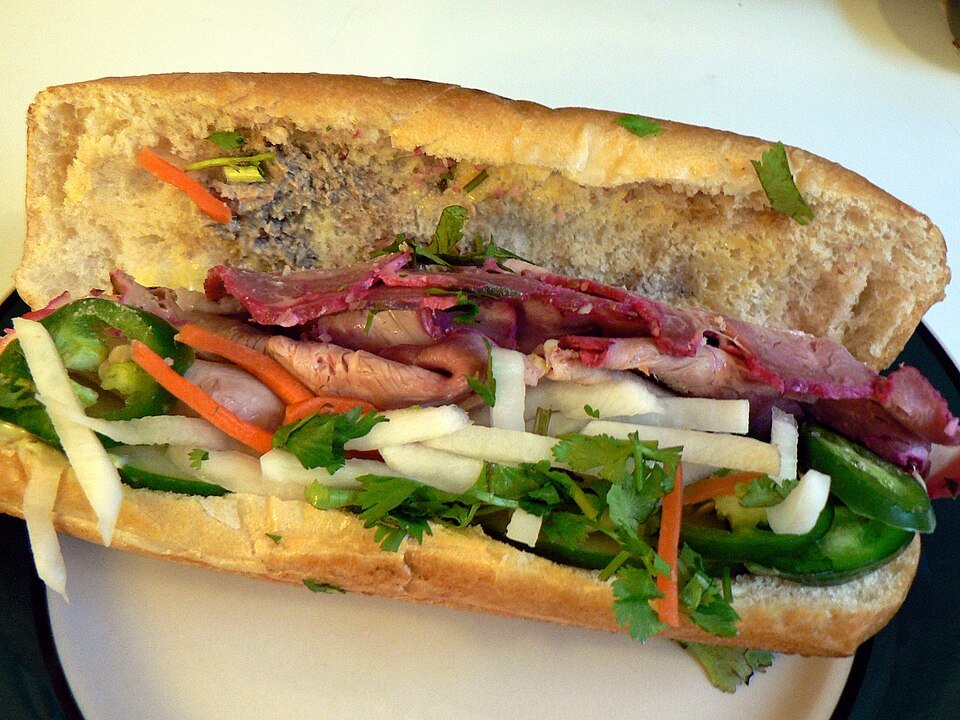
Many versions combine a spread such as pâté or mayonnaise, a protein, cucumber, pickled carrot and daikon, coriander and chilli. Vietnam Tourism also highlights egg, grilled meats and regional combinations. Ask what is in the spread and filling if you avoid pork, seafood or eggs; a vegetable-looking sandwich may still contain pâté or fish-based seasoning.
A street-food format that keeps changing
The familiar baguette shape reflects French colonial influence, but Vietnamese cooks and vendors have made the sandwich their own through fillings, condiments and serving styles. Rather than naming one version as the original or best, compare how bread, richness, pickles and herbs are balanced. In Hội An, Vietnam Tourism names several well-known sellers, but menus, queues and hours can change; check current information before visiting.
In the original cooking video below, creator Quang Tran assembles a bánh mì and explains his choices. Use it to see the layering, then adapt it to ingredients available to you.
Sources: Vietnam Tourism’s guide to bánh mì; Vietnam Tourism guide to Hội An dishes. Video: Quang Tran’s original demonstration. iCookAsia has not visited the vendors mentioned.