



Miang kham is small enough to eat in one bite, but it asks the diner to assemble several tastes at once. A leaf becomes the cup. Into it go little pieces of ginger, lime, chilli, shallot, toasted coconut or peanuts, then a sweet-savoury sauce. The result can be bright, hot, aromatic and crunchy together. Thailand’s tourism authority describes it as a traditional appetiser of herbs, aromatics and other ingredients wrapped in a leaf. Its Tak province example also shows how local versions can differ from the familiar combination.
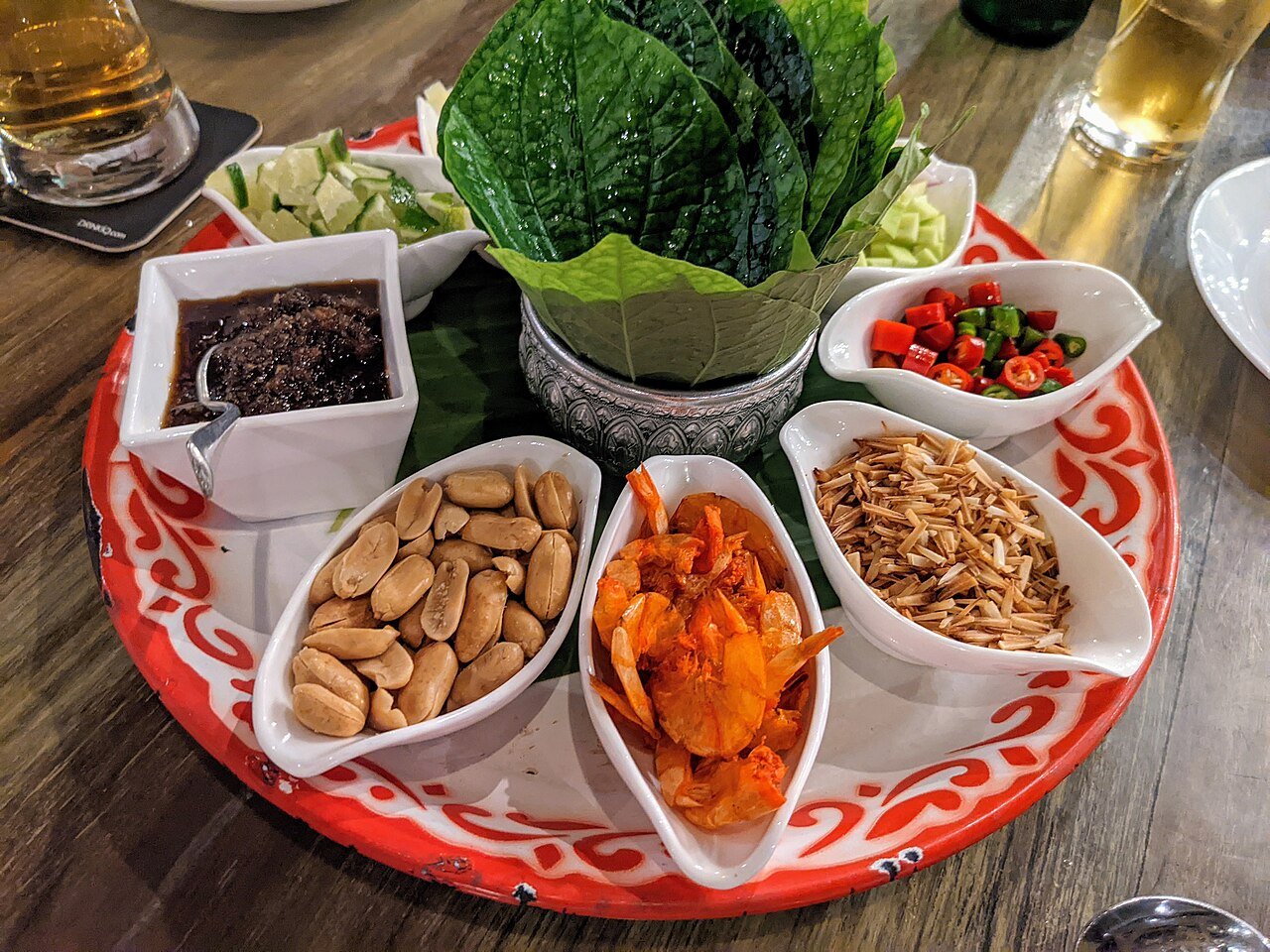
Build the bite in layers
Begin with one clean leaf, then add small amounts of the fillings. Lime brings acidity, chilli heat, ginger and shallot sharpness, and toasted coconut or peanuts a roasted crunch. A spoonful of sauce draws the pieces together. The trick is proportion: if one component fills the leaf, the bite becomes difficult to fold and the other flavours disappear. Dried shrimp is common in many versions, but check the ingredients if you avoid seafood. Peanuts are also a frequent component, so ask before eating if you have an allergy.
The sauce and leaf can change
A dark palm-sugar sauce is familiar, yet it need not taste only sweet. Salty and aromatic notes can make the lime and ginger seem brighter. A Tourism Authority of Thailand account of Tak describes a local sauce made with fermented soybeans and sugar cane juice, served with a choice of leaf or crisp black-sesame chip. This is a useful reminder that miang kham is a way of composing a bite, with room for regional ingredients and personal preference.
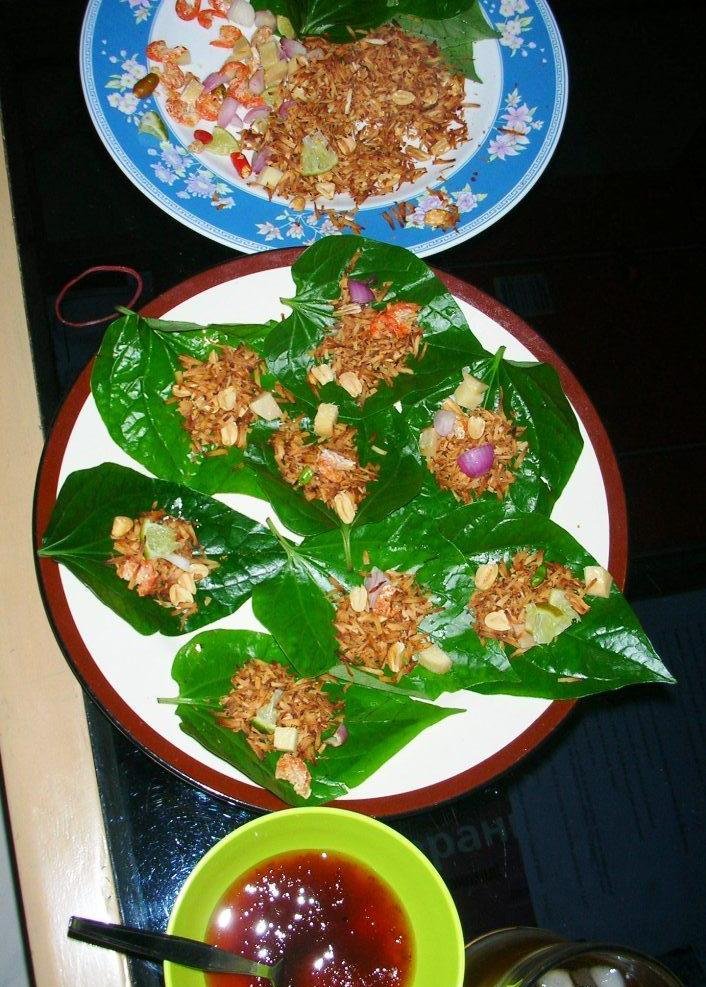
Try the first bite with only a little sauce, then adjust the next one. More lime can sharpen it; an extra pinch of coconut can soften the heat. A platter is social because everyone can build a different balance from the same ingredients. It also rewards attention: you can taste how a small change in one component alters the whole bite.
Watch how to assemble it
Thai cook Pailin Chongchitnant of Hot Thai Kitchen demonstrates miang kham in the video below. Her tutorial shows the sauce and the final assembly, making it easier to see how little of each filling is needed.
Video plays through Pailin’s original YouTube player.