Sticky Rice and Shared Tables: Why Khao Niew Sits at the Heart of Lao Life

Lift the lid of a small woven bamboo basket at a Lao dining table and you are likely to find warm sticky rice waiting inside.
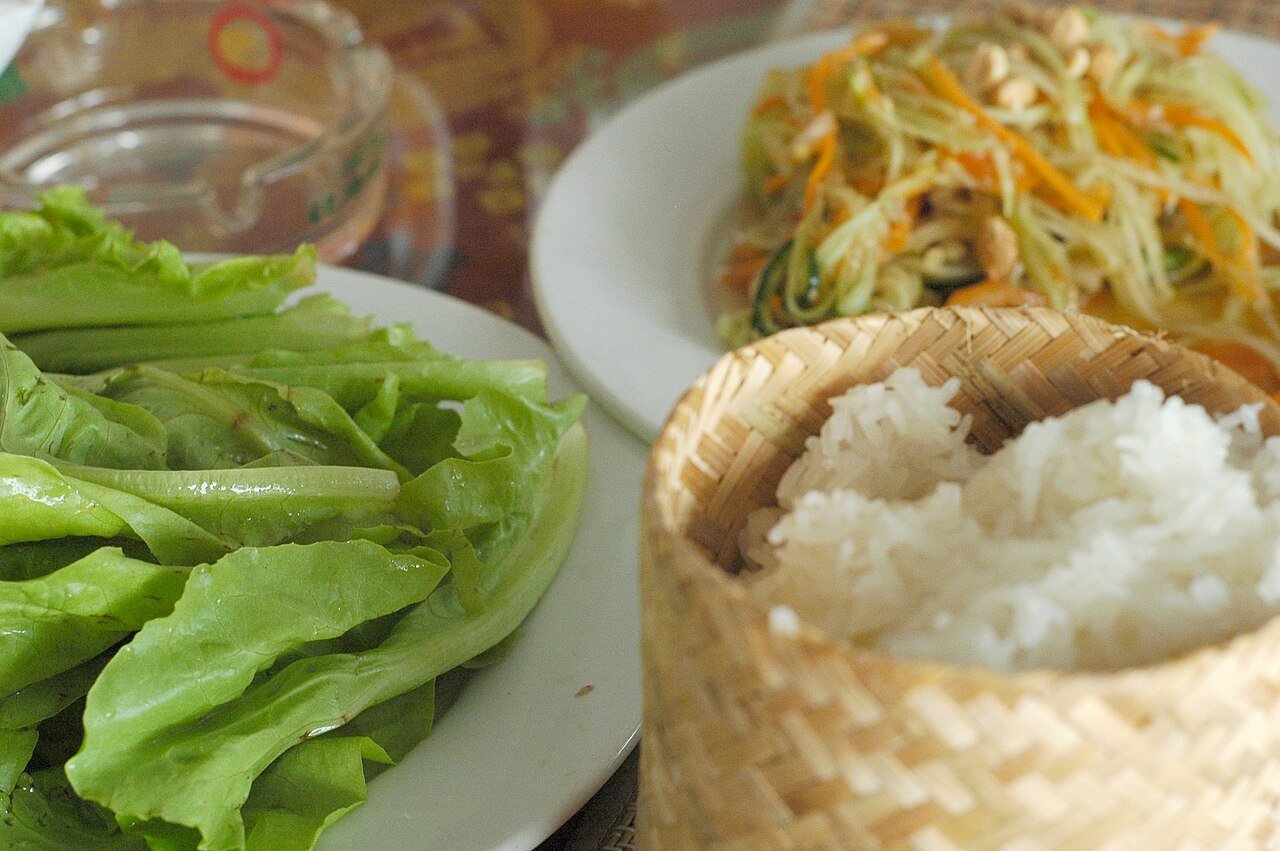
Known as khao niew, the rice is picked up by hand, gently pressed into a small ball and paired with dishes placed at the centre of the table. It might accompany larb, a fiery jaew dipping sauce, grilled meat, soup or tam mak hung, the Lao version of green papaya salad.
To a visitor, the basket might look like one component of the meal. Within Lao life, however, sticky rice carries a much deeper meaning. Tourism Laos describes it not merely as a staple, but as a symbol of the country’s culture, lifestyle and strong national bonds.
A food that helps define a country
Rice shapes daily life across Southeast Asia, but each community has developed its own relationship with it. In Laos, glutinous rice has become particularly central to national food identity. Its pleasantly chewy texture makes it easy to eat by hand and well suited to the powerful flavours of Lao cooking.
A small portion can be dipped into jaew, used to pick up pieces of food or eaten between spicy bites. Rather than remaining in a separate bowl, the rice becomes an active part of how the diner experiences the meal.
The basket is part of the experience
Sticky rice is commonly served in a lidded bamboo basket, often called a katip khao. The basket helps the rice retain warmth while allowing some air to circulate. It is also one of the most recognisable objects on a Lao table.
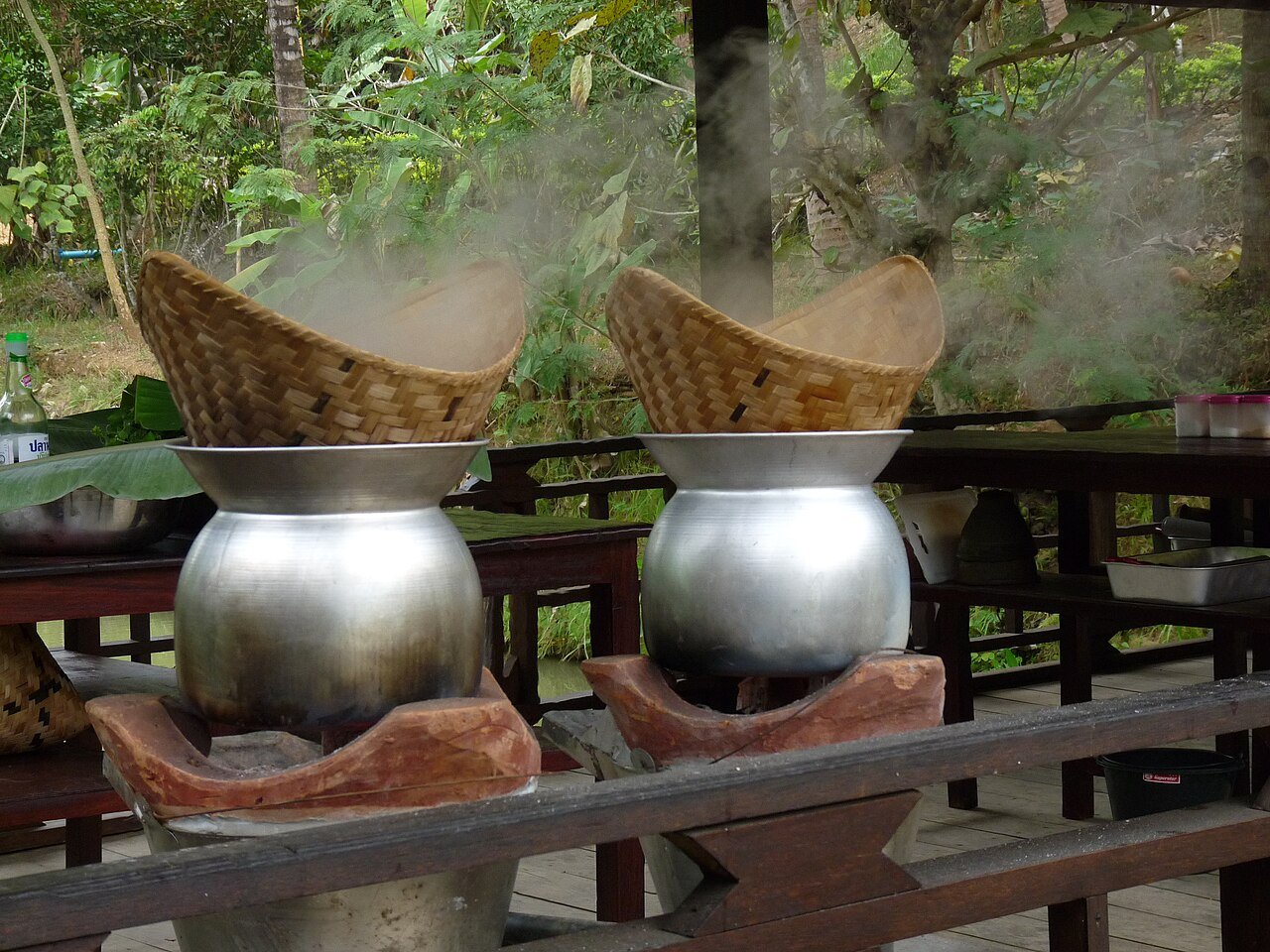
The rice is traditionally soaked before it is steamed in a conical bamboo basket called a huad, positioned over a pot. Steaming creates grains that hold together without becoming wet or porridge-like. Good results depend on soaking time, the rice itself and the cook’s ability to judge its texture.
Eating with the hands changes the meal
Eating sticky rice by hand brings the diner into direct contact with the food. A person takes a modest amount, presses it with the fingers and combines it with another flavour. Each mouthful can be adjusted. One may contain more herbs, another more chilli, and the next a gentler piece of grilled meat.
The practice also encourages diners to eat from dishes placed in the centre. Larb may provide freshness and savoury depth. Tam mak hung brings crunch, acidity and heat. Jaew adds smoke, chilli or fermented flavour. Fresh herbs and vegetables offer relief between stronger bites. Sticky rice moves easily between all of them.
A shared table rather than a single main dish
The structure of a Lao meal tells us something about hospitality. When dishes are placed in the middle, the meal becomes collective. Diners notice what others are reaching for. Portions are taken gradually, and the experience unfolds through conversation and repeated tastes.
This does not mean every Lao household follows an identical routine. Meals vary according to region, season, income, occasion and family preference. Yet the combination of sticky rice and shared dishes remains an important cultural reference point.
From the field to the morning kitchen
The cultural importance of sticky rice begins well before it reaches the table. Rice cultivation is tied to rainfall, seasonal work and rural knowledge. Planting and harvesting require cooperation, timing and a close understanding of the land.
Preparation also shapes the rhythm of the household. Because the rice must be soaked and steamed, somebody needs to plan ahead. In Luang Prabang and elsewhere, steam rising from bamboo baskets in the morning is part of the daily landscape.
Sticky rice and Buddhist practice
The relationship between sticky rice and Lao life extends into Buddhist practice. During Tak Bat, the morning alms-giving ceremony, devotees rise before dawn to prepare food for monks. Sticky rice is one of the offerings closely associated with this daily ritual.
The act transforms an ordinary staple into an expression of generosity and spiritual participation. Visitors may witness the ceremony, particularly in Luang Prabang, but should remember that Tak Bat is an active religious practice rather than a staged attraction. Observers should keep an appropriate distance, dress respectfully and avoid disrupting participants for photographs.
Familiar across borders, distinct in meaning
Sticky rice is also eaten in Thailand, Cambodia, Vietnam and other parts of the region. This shared ingredient shows how culinary traditions cross modern national borders. Yet a food can be regional and still carry a distinct local meaning.
In Laos, the frequency with which khao niew appears, the tools used to prepare it and its role in meals and ceremonies give it particular cultural weight. Similar ingredients do not make two food cultures interchangeable. Context matters.
Heritage that remains part of daily life
Some forms of heritage are preserved for special occasions. Khao niew has another kind of strength. It remains present in ordinary life. It sits beside family meals, supports the intense flavours of Lao cooking and appears in practices connecting communities with Buddhist temples.
It is not remarkable because it is rare. It is remarkable because it continues to be prepared, shared and valued so consistently. Inside one modest bamboo basket is a story about how food can hold a table, a community and a sense of belonging together.
Sources: Tourism Laos, Food & Flavours; Tourism Laos, Buddhism & Belief; Tourism Laos, Authentic Culture.


.jpg?width=1600)


Post Comment