



Kuy teav is a Cambodian rice-noodle soup commonly eaten for breakfast. Its clear, savoury broth is only the beginning: herbs, sprouts, lime, pepper and sauces let each diner finish a bowl to taste. Cambodian cook Thida Koeut describes the dish through three practical phases—broth, toppings and serving—which helps explain why the final bowl feels layered rather than complicated.
Build a broth that leaves room for toppings
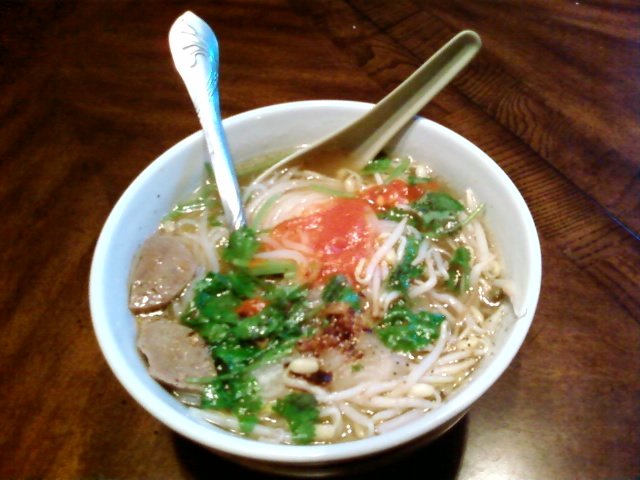
A traditional bowl may use pork stock and a combination of cooked pork or seafood. For a home version, begin with a well-seasoned stock that is clear enough to let the noodles and garnishes shine. Simmer aromatics gently, strain if needed, and taste before adding extra salt or fish sauce. Cook the thin rice noodles separately so their starch does not cloud the broth.
Place warm noodles in a bowl and add fully cooked toppings. Ladle over hot broth just before serving. Set herbs, bean sprouts, lime and chilli at the table: their freshness changes the bowl only when the diner is ready. The AngkorSpice demonstration offers a Cambodian home-cooking view of the longer broth method.
Eat it while the noodles are springy
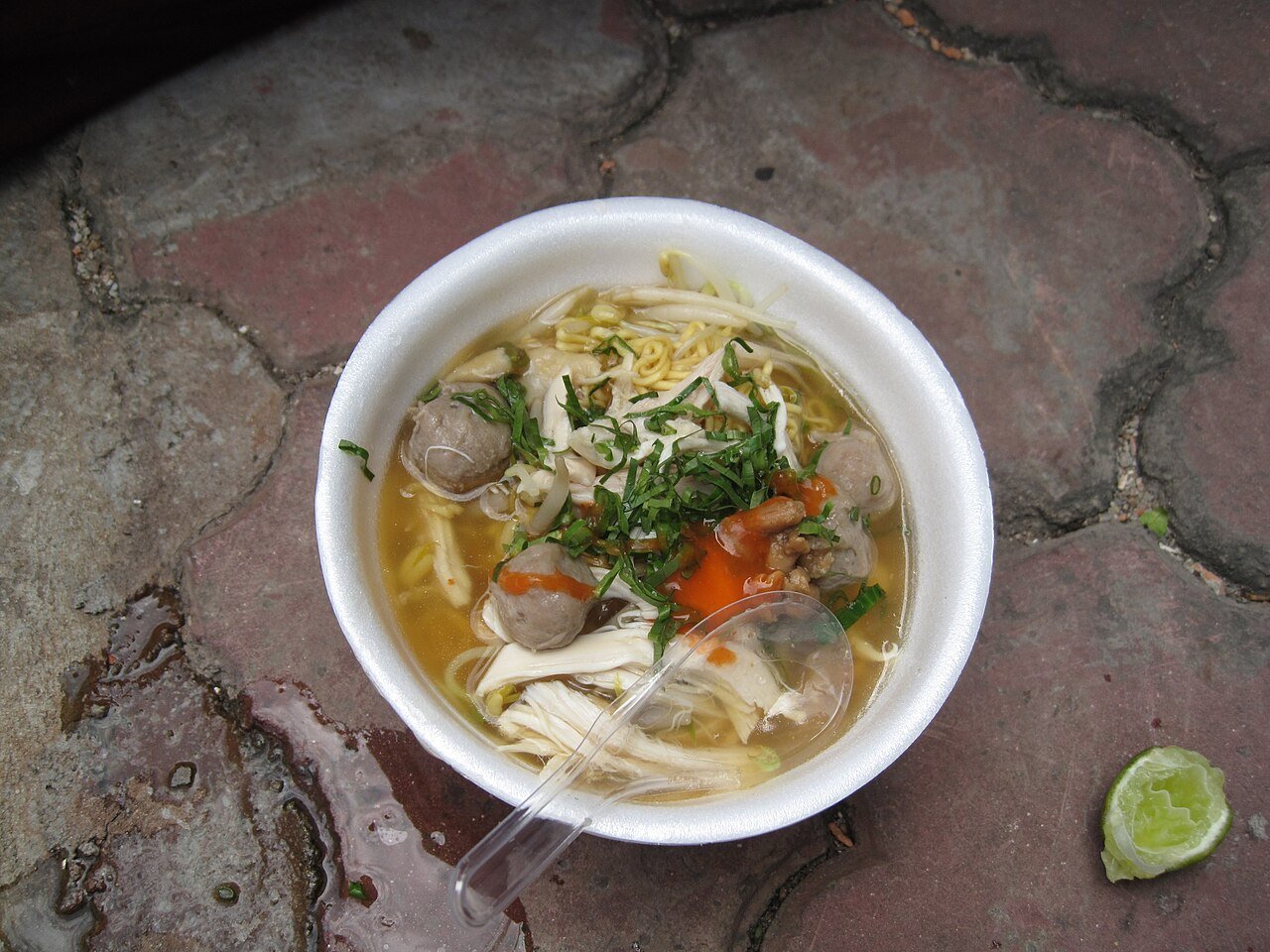
Serve the soup immediately and offer lime and sauces separately. This gives each person control over sourness, salt and heat without losing the broth’s character. If making components ahead, chill cooked meat and stock promptly and reheat the broth thoroughly before assembling.
Watch the soup come together
Video: AngkorSpice, Kuy Teav Phnom Penh.