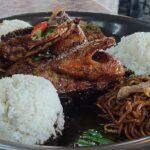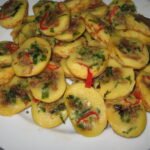




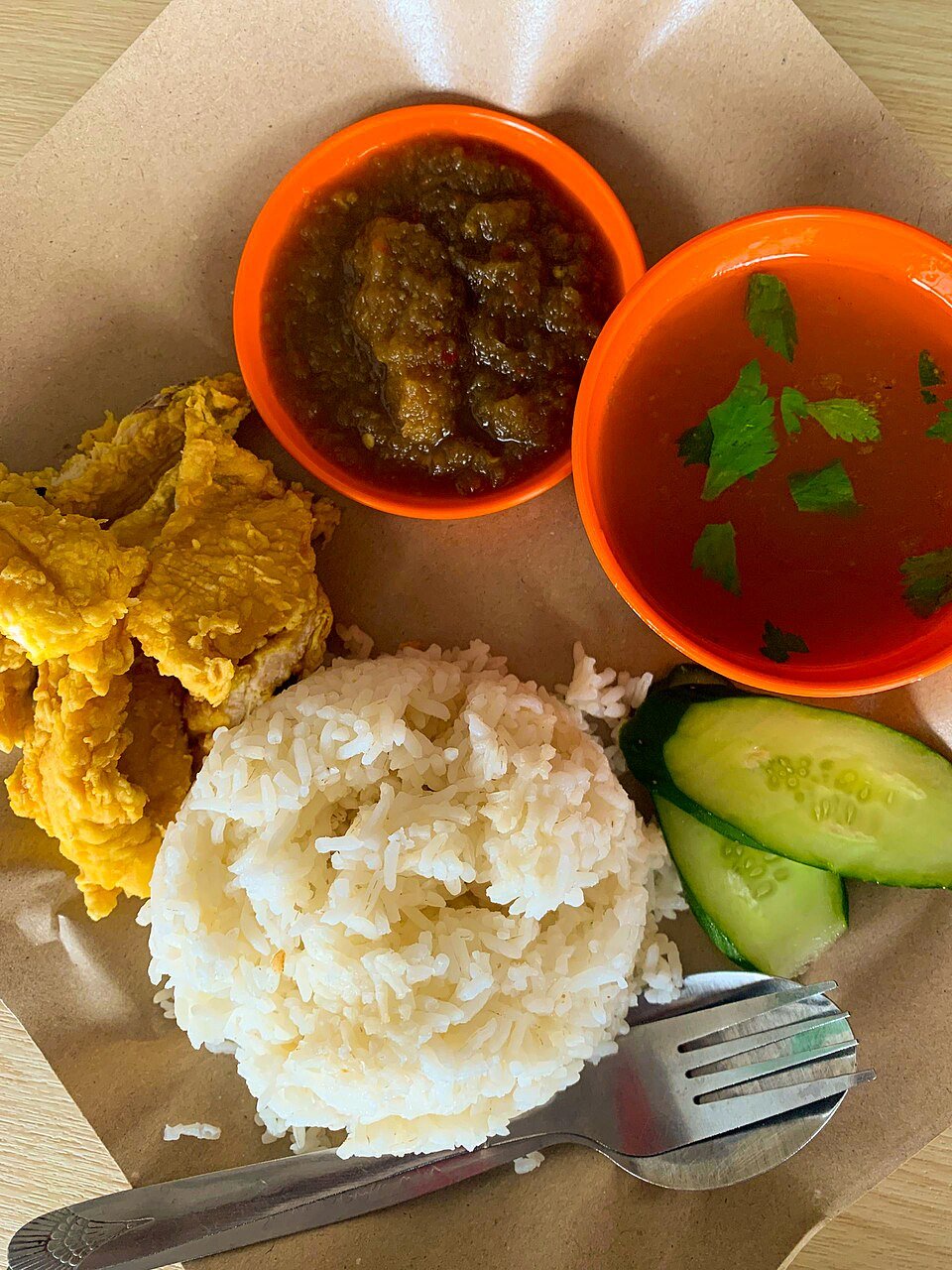
Three parts define a familiar Bruneian meal: rice, fried chicken and sambal. Nasi katok is often served as a compact takeaway packet, but the simplicity leaves plenty of room for each seller’s cooking style. Brunei Tourism describes that three-part combination as the constant across its many versions. The balance between plain rice, savoury chicken and a bold sauce is what makes the packet feel complete.
Rice is the quiet centre
Plain white rice gives the chicken and sambal space to stand out. Unlike a heavily seasoned rice dish, it does not need to carry every flavour on its own. In a takeaway serving, the rice also makes the meal practical: it sits beside a piece of chicken and catches a little sauce as the packet is opened. Portions and packing styles vary, so a restaurant plate may look different from a roadside parcel.
Chicken brings the savoury bite
Fried chicken adds the crisp or browned edge that contrasts with the soft rice. Marinades and coatings are not identical from stall to stall, and the chicken can be presented with different levels of spice. When judging a serving, notice whether the chicken still tastes good beside the sambal rather than relying on the sauce to supply all its flavour.
Sambal makes each version its own
The sambal is where one nasi katok can differ sharply from another. It may lean hotter, sweeter or more savoury; recipes are a matter of the maker’s preference. Brunei Tourism calls the sambal the highlight of the packet, while keeping its description open to those variations. Try a little sauce with rice first, then with chicken, to see how it changes both.
A name linked to knocking
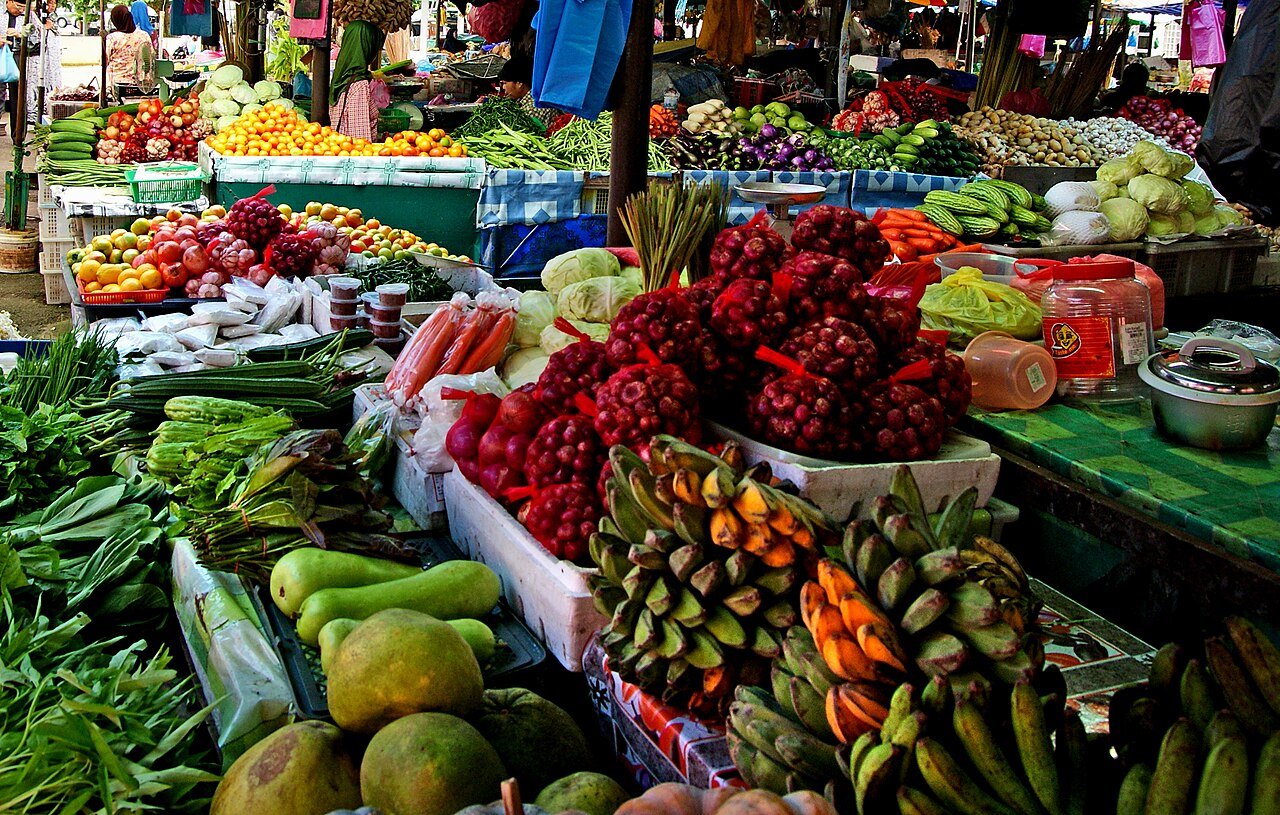
Brunei Tourism relates the name katok to knocking at a seller’s door to place an order. It is a memorable origin story, though today’s nasi katok can be found in many settings. That journey from a simple order to a widely recognised local meal helps explain why a short ingredient list carries so much cultural identity.
Watch a Bruneian cooking demonstration
The BFB Welfare Support video demonstrates one way to prepare the rice, chicken and sambal together. It is a useful visual starting point, while individual vendors may use different marinades and sambal recipes.
Video: BFB Welfare Support on YouTube; played through the creator’s original player.