


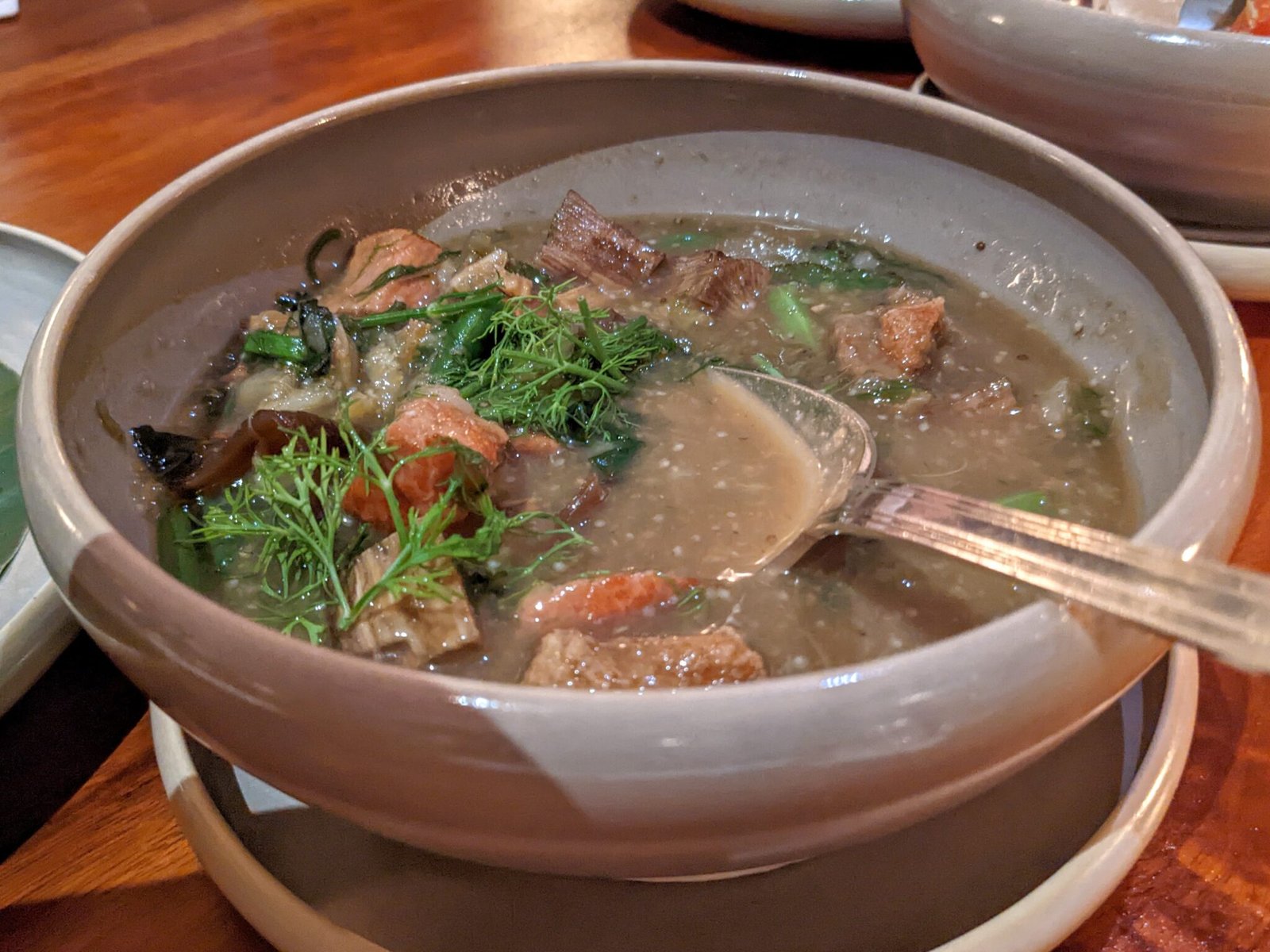

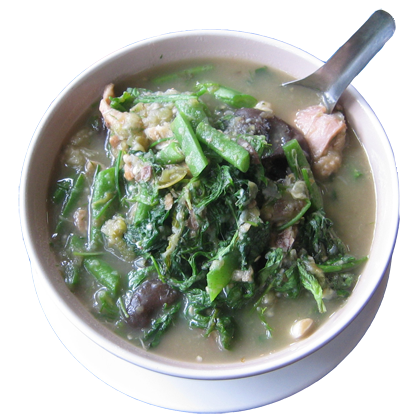
Or lam, also written ork lam or aw lam, is a stew closely associated with Luang Prabang. The city’s official tourism site lists it among the local dishes. It is a bowl to explore slowly: tender meat, vegetables, mushrooms and herbs share a broth with a gentle peppery warmth. The ingredients vary by cook and season, but the layering of textures is central to the experience.
The ingredient that shapes the broth
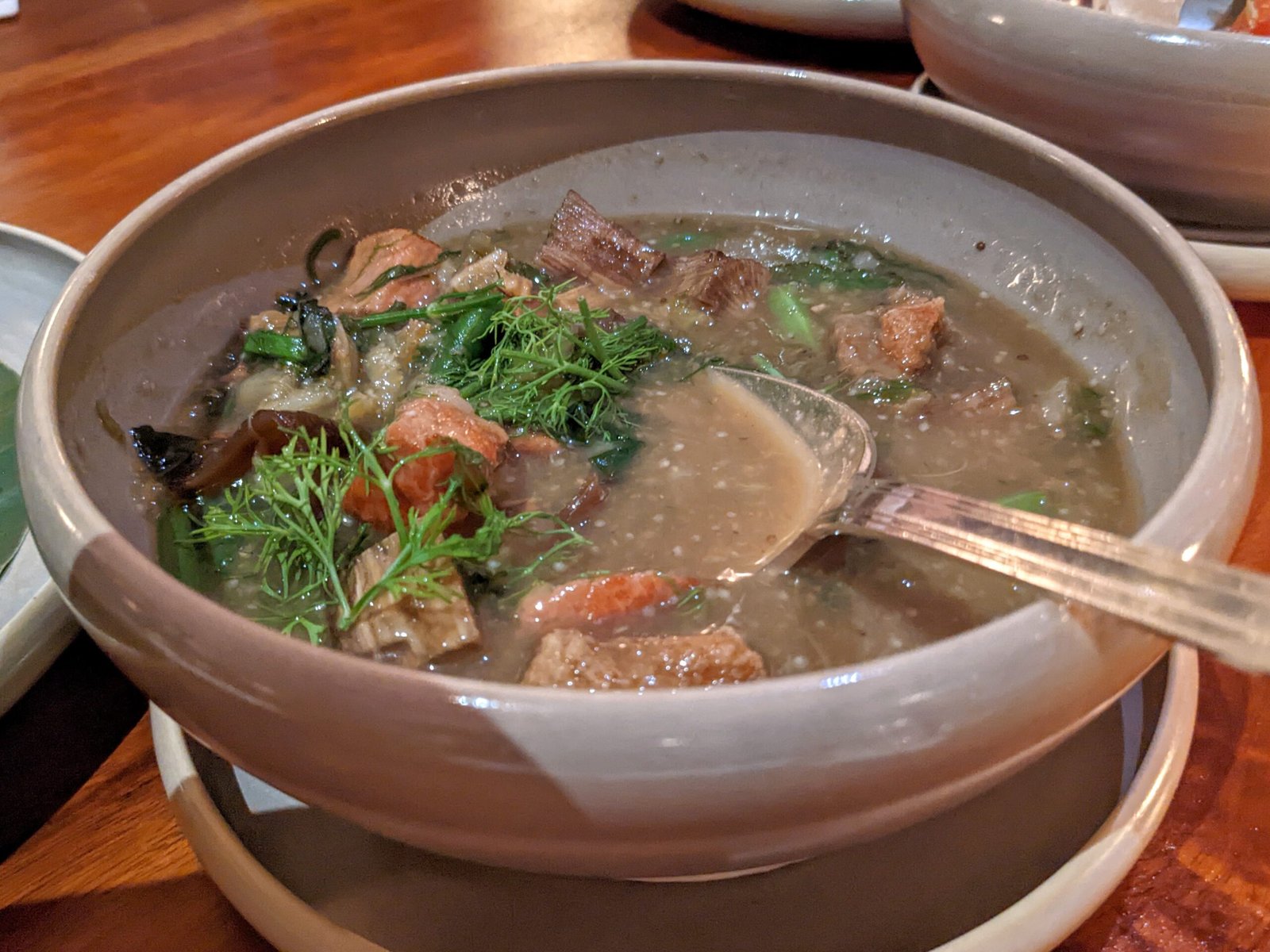
Many versions use mai sakhaan, a woody, peppery vine that contributes a distinctive warming sensation. It is simmered with aromatics rather than eaten like a tender vegetable. Lao chef Saeng Douangdara uses it in a beef version alongside lemongrass, galangal, mushrooms, eggplant, herbs and padaek, a fermented fish sauce. His version also includes cow skin. Those details show how a cook builds depth, while leaving room for other local versions of the stew.
Vegetables matter as much as the meat. Eggplant softens into the broth, mushrooms add chew, and herbs such as dill and Lao basil bring a fresh finish. In some preparations, pounded sticky rice gives the liquid more body. The result is neither a thin soup nor a heavy curry; its consistency changes with the cook’s choice of ingredients and the length of simmering.
How to taste the layers
Start with a spoonful of broth to notice the herbal aroma and peppery warmth. Then try a piece of eggplant or mushroom with the meat. Their different textures explain why or lam is more than a meat stew. If sticky rice is served alongside, a small amount can catch the broth. A strong bowl should let the herbs remain noticeable even after the richer ingredients come through.
Or lam is a useful entry point into Luang Prabang food culture because one dish brings together market vegetables, aromatic herbs and local seasoning. It also shows why a single ingredient list cannot describe every bowl served across the city.
Watch a Lao cook prepare or lam
In the video below, Saeng Douangdara prepares his beef version and explains the ingredients as he cooks. The video is one cook’s recipe, presented here to make the process visible.
Watch through Saeng Douangdara’s original YouTube player.