



Ambuyat can puzzle a first-time diner. It is glossy, stretchy and mild, and a spoon does not quite explain how to eat it. The pleasure of the dish becomes clearer at the table: a portion is twirled up, dipped into a tangy or spicy sauce, and eaten with the other dishes set out for sharing. In Brunei, the dip is part of the point.
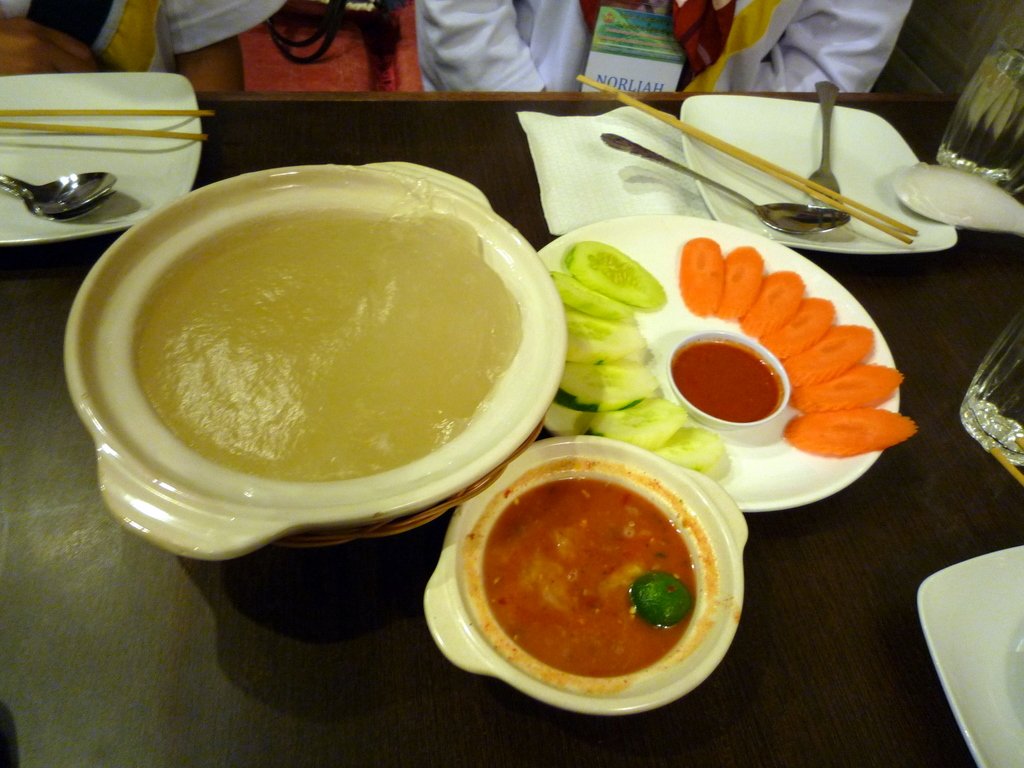
What is ambuyat?
Ambuyat is made from sago starch, which becomes a smooth, sticky mass when prepared with hot water. On its own it has a restrained taste. That makes its texture, sauces and side dishes central to the experience. Brunei Tourism describes ambuyat as served with cacah, usually a sour and spicy dip. Different households and restaurants may prepare their dips differently, so there is no single sauce to expect.
How to eat it
The traditional tool is a candas, a joined, V-shaped pair of bamboo sticks. Insert the tips into the ambuyat and rotate them to gather a small portion. Lift it out, dip it in the cacah, and eat it. You need not master a perfect twirl on the first try; start with a little and let the sauce lead. Brunei Tourism explains the same twirl-and-dip method in its guide to local delicacies.
Ambuyat is often part of a fuller meal. Look at the vegetables, fish, meat or other accompaniments offered alongside it, and taste how each changes the next bite. The contrast between the gentle starch and the sharper dip is what makes the meal memorable. If you are new to it, try the sauce sparingly first, then return for more heat or sourness.
See the technique
The video below shows ambuyat being handled and eaten in Brunei. It is a useful visual companion to the description above; the creator’s meal is one example, not a rule for every table.
Context: Brunei Tourism, Local Delicacies. Video: How to Eat Sago Palm Starch (Ambuyat and Cacah).