



The first spoonful of sinigang is about the broth. Sourness leads, but the soup is also savoury and full of vegetables. Tamarind is a familiar way to give it that sharp edge, yet it is not the only one. The Philippines National Nutrition Council lists other souring ingredients, including kamias, green mango, guava and batuan. That range helps explain why two bowls called sinigang can taste different while remaining recognisably part of the same tradition.
Build flavour around the sour note
In a tamarind version, the fruit’s acidity cuts through the richness of pork or the sweetness of shrimp. Tomato and onion can round out the liquid; fish sauce may add salt and savoury depth. The amount of souring ingredient is a matter of taste, so cooks often adjust it near the end. An official Philippine Embassy food guide describes sinigang as a family of stews made with fish, prawns, pork or beef and soured by fruits such as tamarind, kamias or tomato. The dish is better understood through that balance than through one fixed recipe.
Vegetables have more than a supporting role
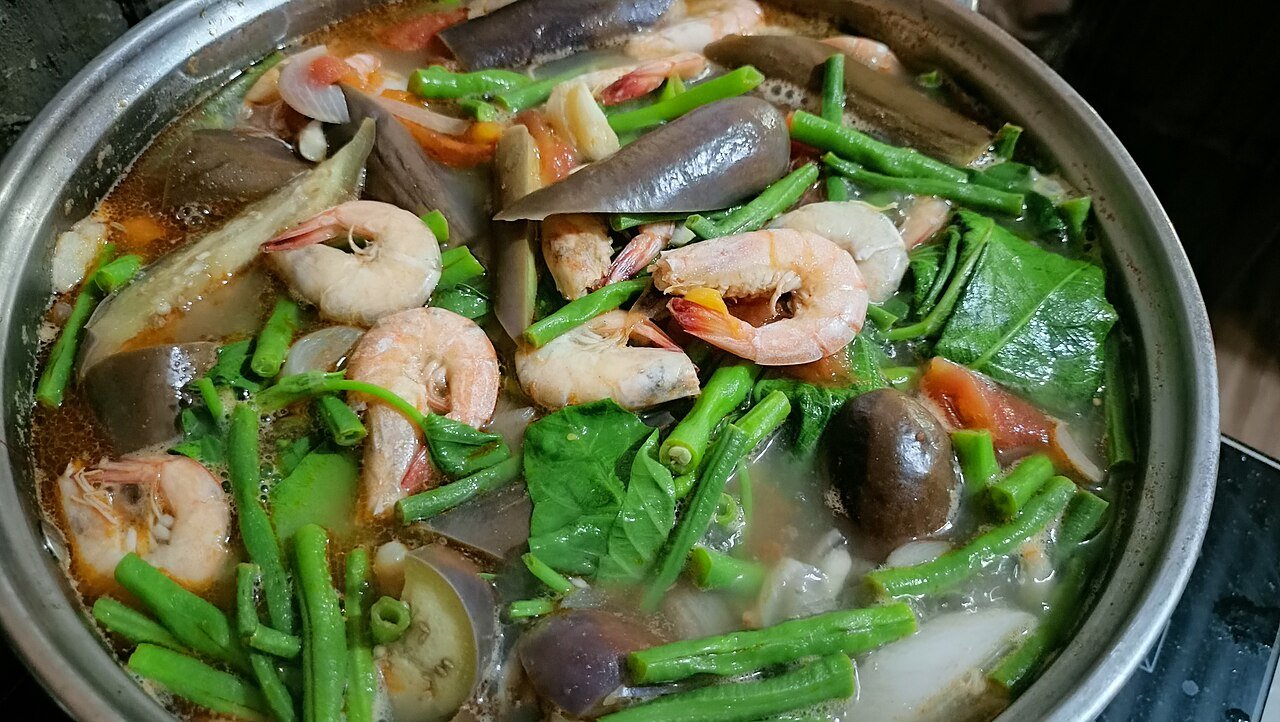
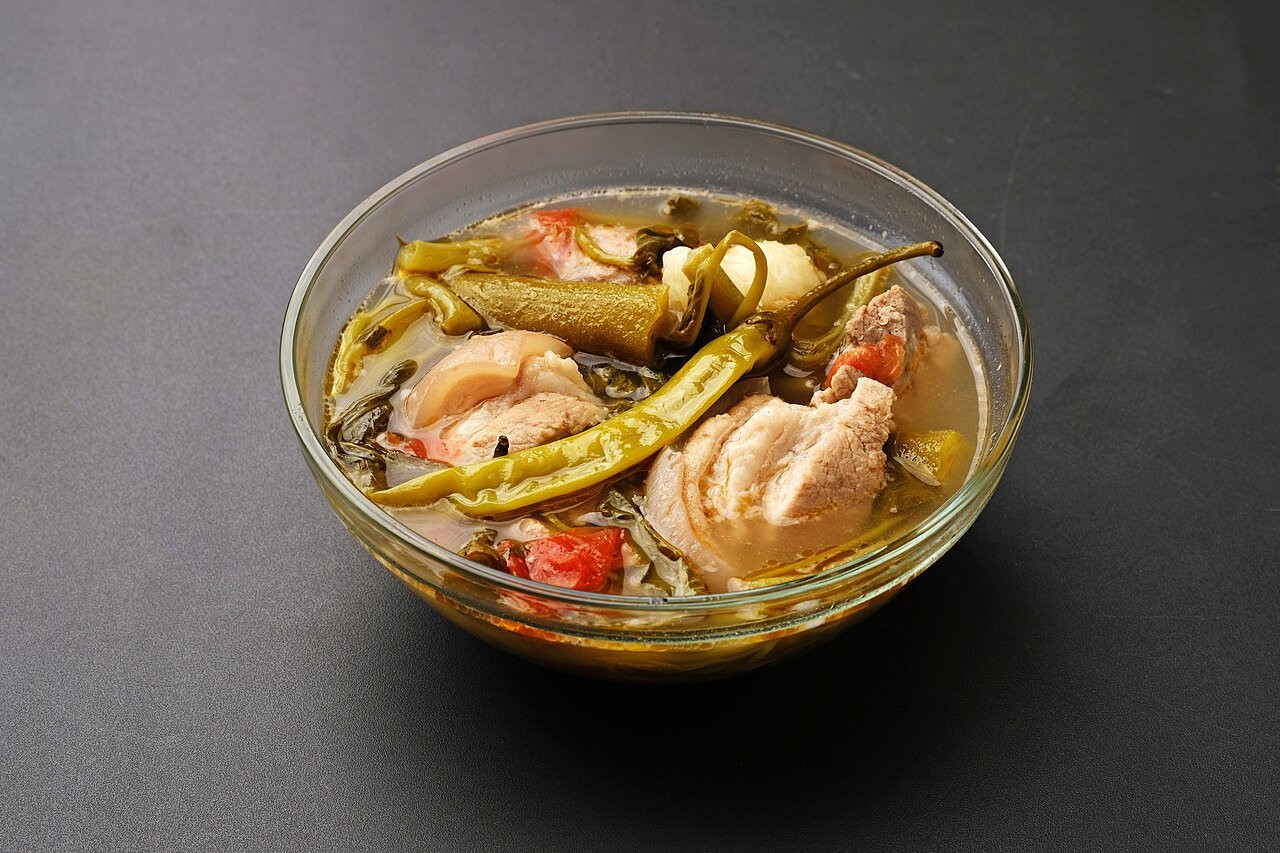
Radish absorbs the broth, long beans hold some bite, and leafy greens soften quickly. Eggplant, tomato, okra and taro can change the body of the soup again. Their cooking times differ: firm vegetables need longer, while greens are best added later so they retain colour and shape. The photograph above shows a shrimp version with several vegetables in the pot. The next photograph shows pork sinigang served in a bowl. Both are examples, rather than a claim that every sinigang contains these exact ingredients.
How to taste a new bowl
Try the broth first before adding any extra seasoning. Then taste a vegetable and the meat or seafood together; the sourness can feel gentler in a complete bite. Some diners pair the soup with rice, which gives the bright broth a soft base. If you are ordering for a group, ask which protein and souring ingredient the kitchen uses. This is useful for allergies and for understanding what kind of acidity you can expect.
Watch a home version
Panlasang Pinoy demonstrates sinigang na baboy with gabi, a pork and taro version. Watch how the vegetables enter the pot and how the broth develops. The video illustrates one home method; the shrimp pot in the first photograph is a different variation.
Video plays through Panlasang Pinoy’s original YouTube player.