



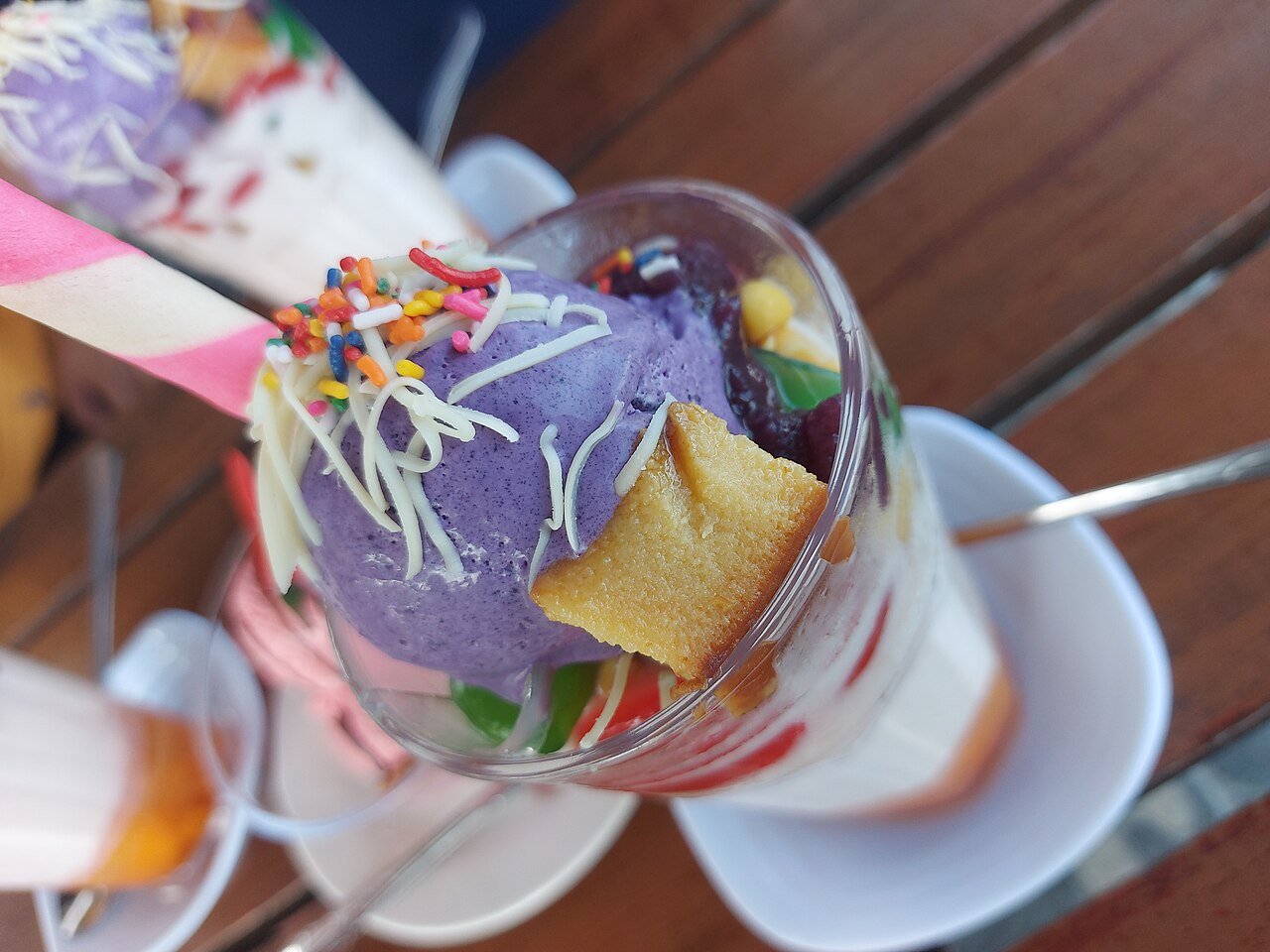
A glass of Filipino halo-halo can look like a colourful tower: sweetened fruit and beans below, a mound of finely crushed ice above, and milk poured through the layers. Ube, leche flan or ice cream may finish it. Then comes the action in its name: halo-halo means “mix-mix.” The Guide to the Philippines describes the dessert as something to stir thoroughly before eating, while also noting how much recipes change from place to place. The pleasure is in both the first view and the mix of textures after the spoon goes in.
Build the layers from the bottom
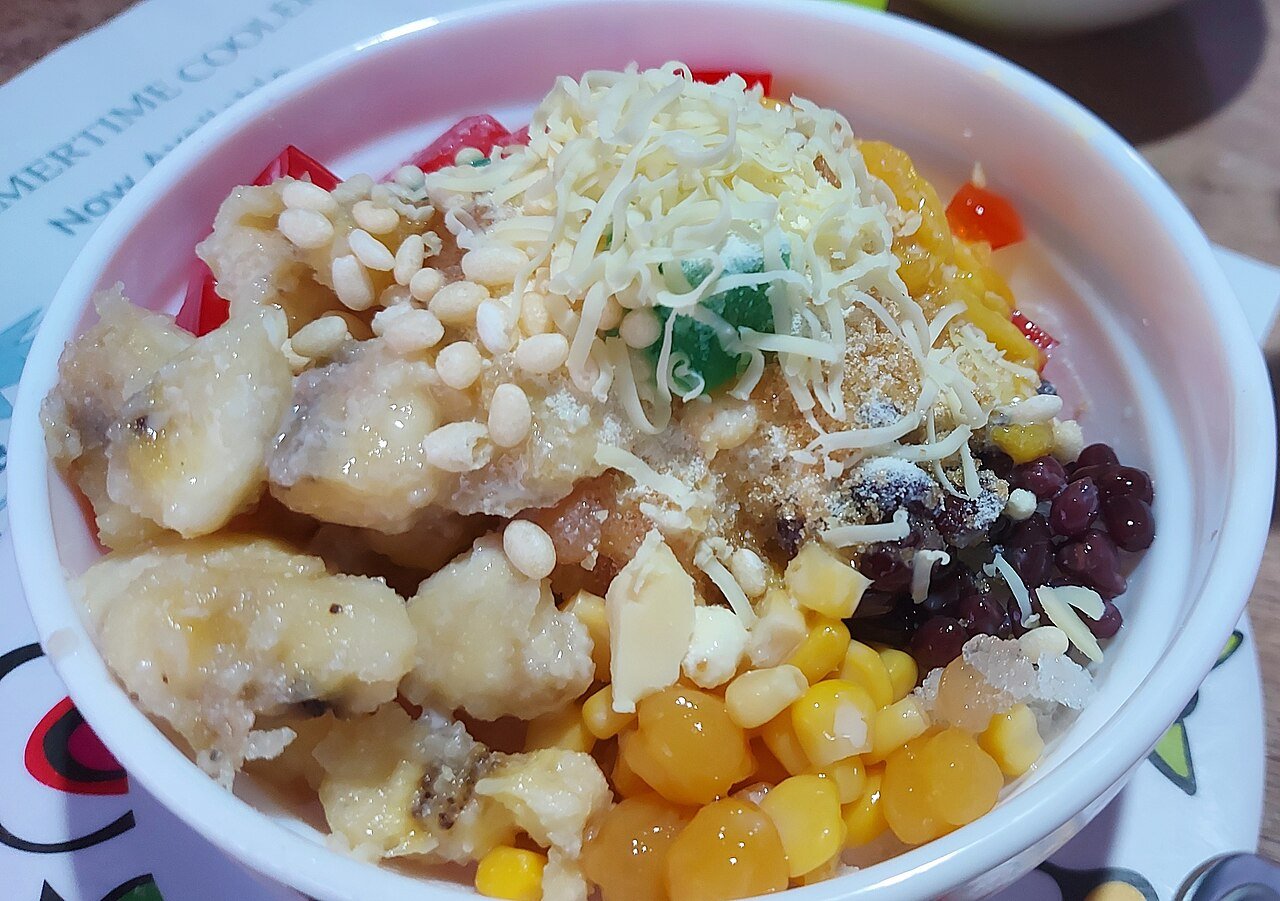
Sweetened ingredients often go into the glass first: beans, fruit preserves, jellies or pieces of jackfruit are among the possibilities. They bring different levels of chew and sweetness. A generous layer of shaved or finely crushed ice cools the mixture and gives the milk a path down through the glass. Evaporated milk is common, while some makers add a richer or sweeter milk. The proportions matter more than a fixed ingredient count: enough ice keeps the dessert refreshing, while enough fillings make each spoonful different.
The top can change the character
Ube halaya or ube ice cream adds a purple finish; leche flan brings a soft custard layer. Some versions include pinipig, the toasted rice flakes that add crunch. None of these is mandatory in every glass. Regional makers use local preferences and ingredients, and the Guide to the Philippines notes versions with cheese in Bicol, coconut-water ice in Iloilo, and a much simpler Pampanga style. Looking at two glasses side by side can show how flexible the dessert is without treating one recipe as the only authentic one.
Stir, taste and adjust
Before mixing, the dessert is a set of separate flavours. Stirring brings the milk, melting ice and sweet ingredients together. Take a spoonful from the top, then stir further if you want a more even sweetness. At home, chill the fillings and prepare the glasses before shaving the ice so it does not melt while you assemble the layers. Start with modest portions of the sweetest ingredients; they can be added, but they are difficult to remove once mixed.
Watch a Filipino cook assemble it
In the embedded video, Filipino cook Erwan Heussaff demonstrates a version of halo-halo. Watch how the ingredients are layered before they are mixed. The clip shows one approach to a dessert with many regional and personal versions.
Video played through the creator’s original YouTube player.