



A bowl of Khmer red curry can look richly coloured without being fiercely hot. Coconut softens the chilli, while aromatic paste gives the broth its character. The Tourism Cambodia food guide describes Khmer red curry as a milder coconut-based dish that may contain chicken, beef or fish and is often served with baguette. The exact protein and vegetables vary, so the dish is best understood as a family of home and restaurant versions rather than one fixed formula.
Aromatic paste before the simmer
Khmer cooks use aromatic pastes known as kroeung in many dishes. Lemongrass, galangal, turmeric, shallots and other ingredients can be pounded or blended to form a fragrant base. A Tourism Cambodia account of local cooking describes kroeung as a mixture of fresh herbs and spices used in soups, sauces and other preparations. For red curry, the paste meets chilli and coconut, then simmers with the chosen protein. The balance of paste and coconut matters more than chasing a particular shade of red.
Vegetables and the liquid around them
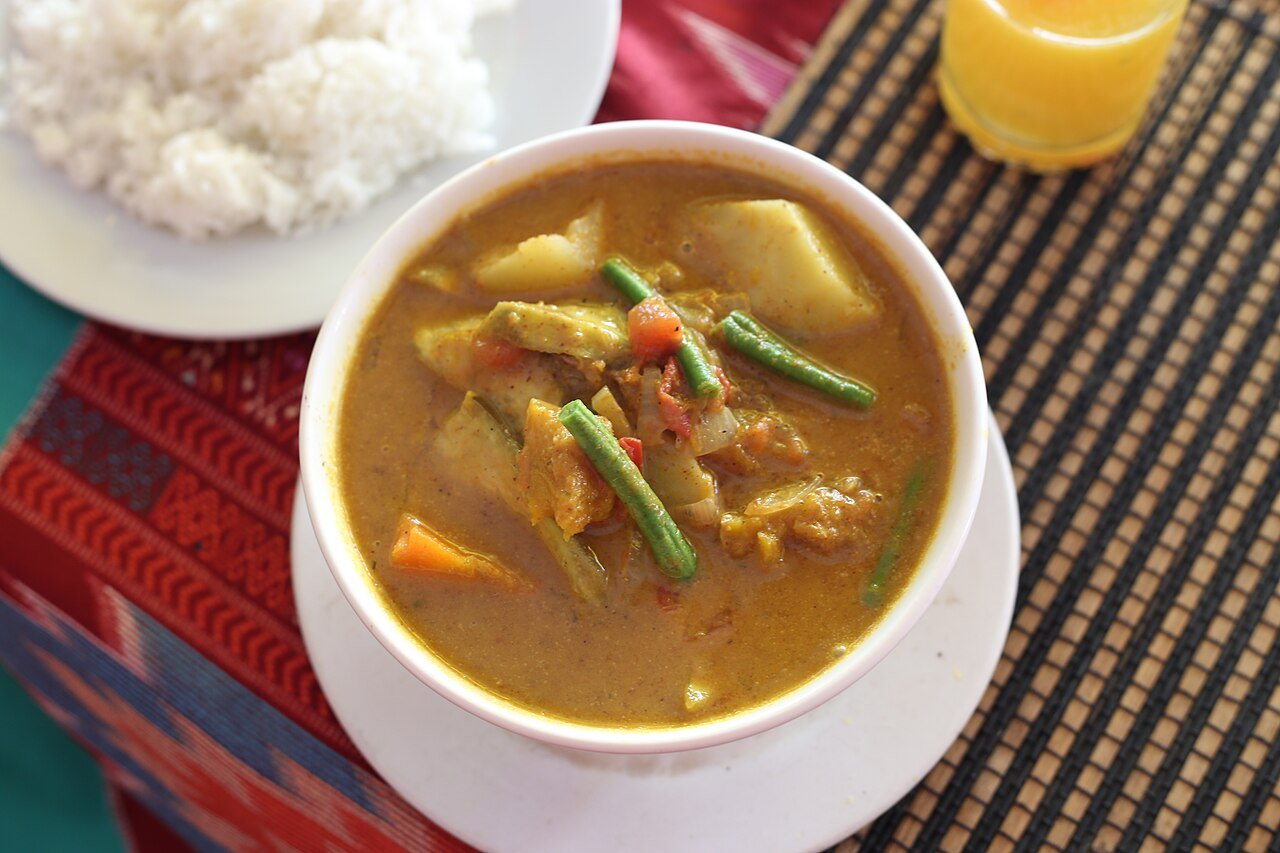
Potato, sweet potato, carrot or beans can make the curry more substantial. They absorb some of the seasoned liquid while giving each spoonful a different texture. Add firm pieces early enough to cook through and tender pieces later so they do not disappear. Some bowls are thick enough to coat rice; others have enough broth for bread to soak up. The photograph above shows potatoes and green beans, but those are features of that particular bowl rather than requirements for every Khmer curry.
Serve the curry in the centre of the table and let people choose rice or bread. This way of sharing puts attention on the sauce as much as the meat and vegetables. When ordering, ask about the protein and any shrimp or fish ingredients in the paste if you have an allergy or dietary restriction. A gentle first taste can reveal lemongrass and coconut before the chilli becomes apparent.
Watch a Cambodian home version
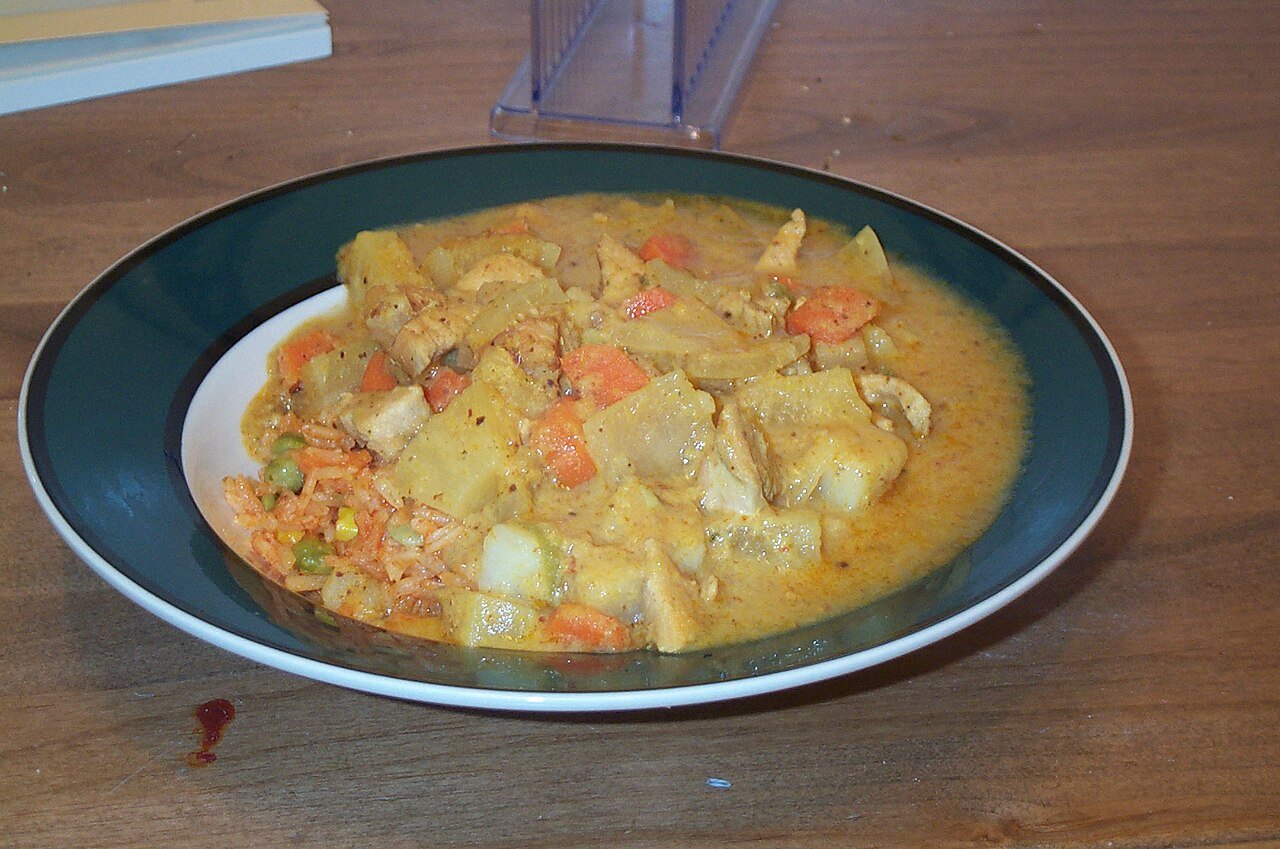
Dany Kao, a Cambodian cook, demonstrates a red curry with chicken, coconut and potatoes in the video below. Her preparation is one home interpretation; compare its texture and serving style with the two photographed bowls.
Video plays through Dany Kao’s original YouTube player.