



Few foods announce themselves quite like bibingka cooking over heat. This Filipino rice cake comes warm, often in a banana-leaf lining that adds aroma to the cake. Its top may be golden or lightly charred, then finished with butter, grated coconut, cheese or slices of salted egg. The Philippines National Nutrition Council describes bibingka as a familiar holiday treat associated with Simbang Gabi, the series of dawn masses before Christmas.
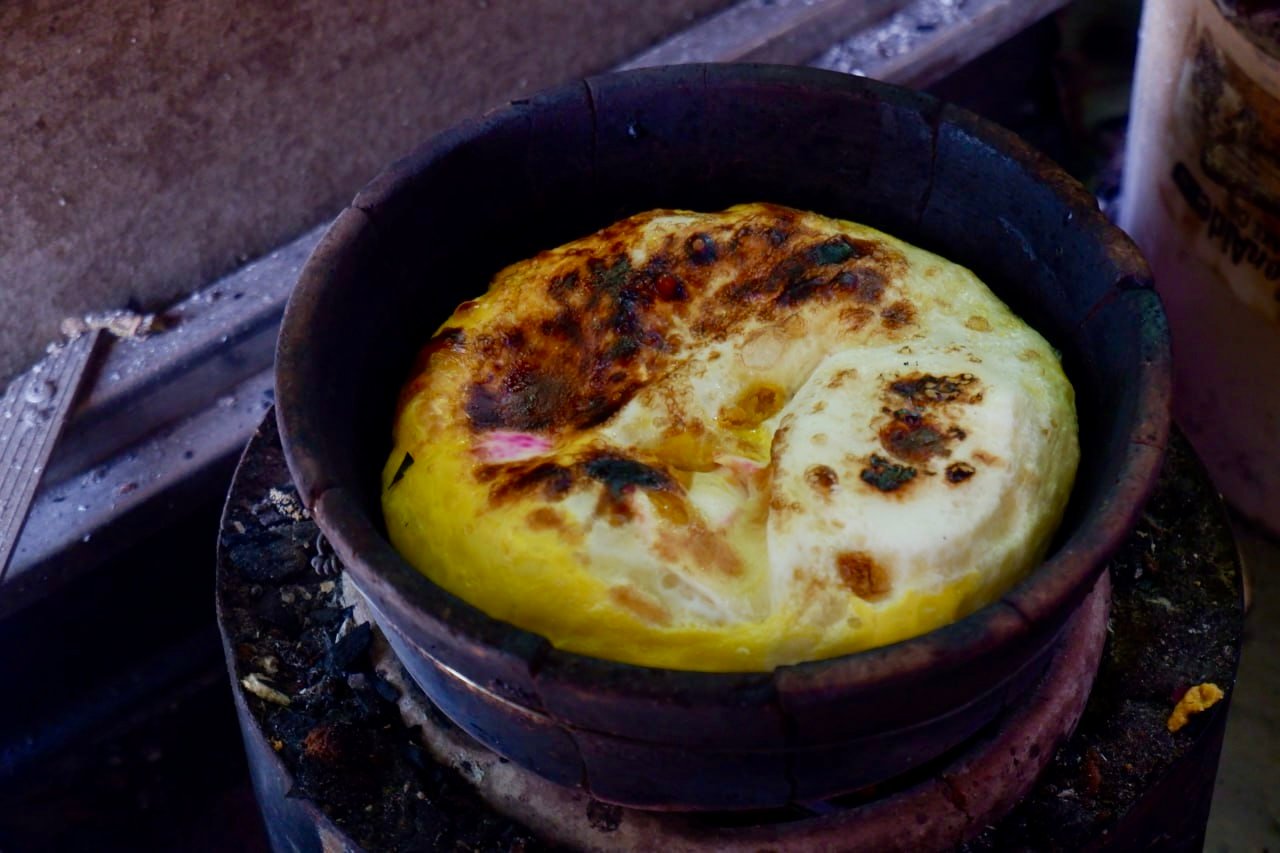
Rice batter and banana leaf
Bibingka begins with a rice-based batter; recipes use ground rice or rice flour, often with coconut milk, sugar and eggs. The banana leaf is warmed so it bends into a mould or pan without tearing. Once lined, the batter is poured in and baked. In a traditional charcoal setup, heat can come from beneath and above. Home cooks may instead use an oven. The Philippine Department of Agriculture’s recipe for a black-rice variation shows the same useful sequence: line a pan with banana leaf, add batter, bake and finish with toppings.
The leaf does more than keep the cake from sticking. Its scent is part of the eating experience, especially while the bibingka is still hot. Look for an edge that has set, a soft centre and a surface with some colour; exact textures vary by recipe and region.
The pleasure of choosing toppings
A little butter makes the warm surface glossy. Salted egg and cheese bring savoury notes against the cake’s gentle sweetness, while grated coconut adds another texture. The National Nutrition Council also mentions brown sugar and white cheese in some servings. These are choices, not a compulsory checklist. Taste a small piece of the cake before adding extra sugar so its rice and coconut flavours remain clear.
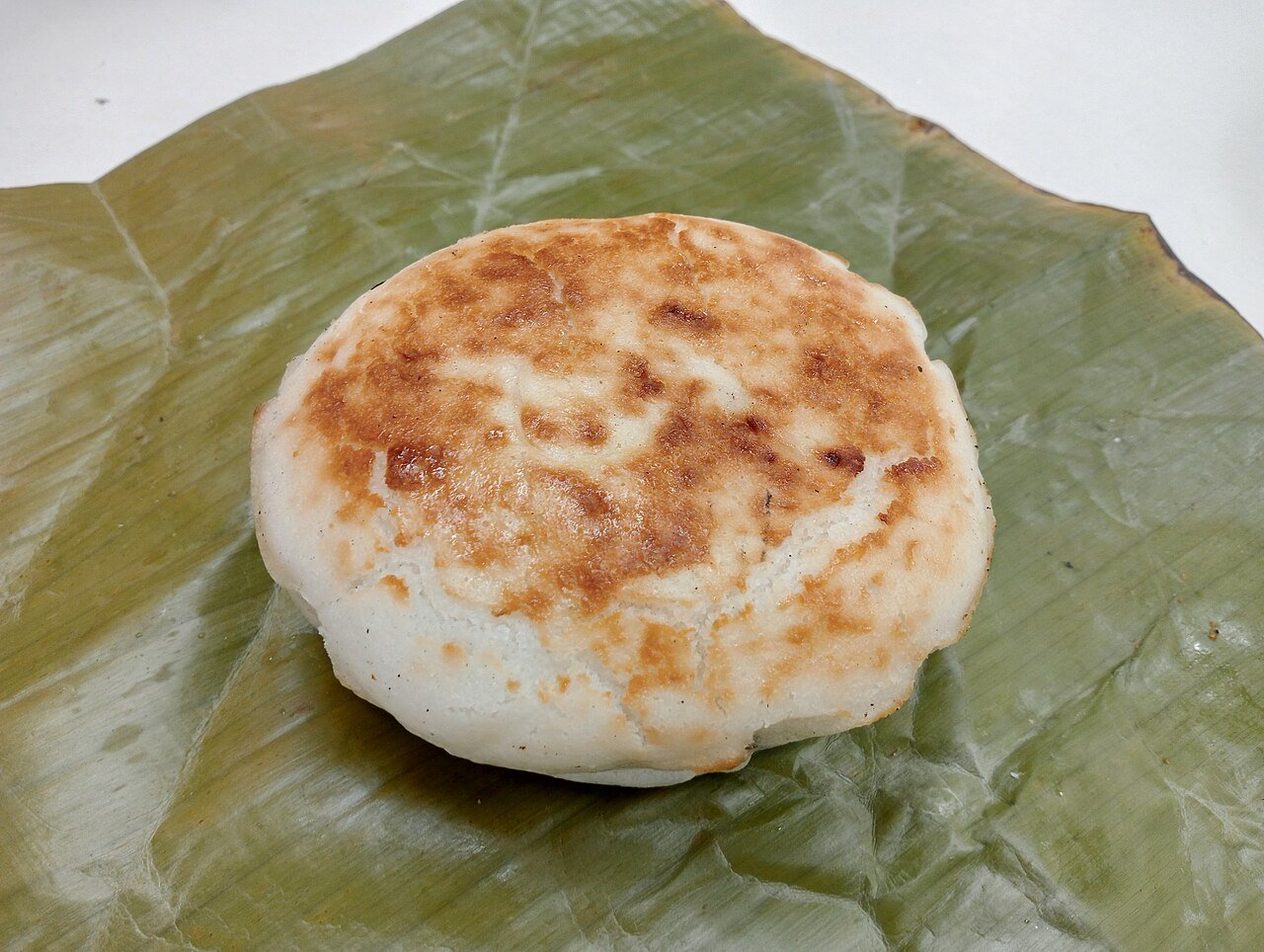
Bibingka is often eaten as a snack as well as during the holiday season. Regional styles can be denser or lighter, and toppings differ from stall to stall. Comparing two versions is a good way to notice the role of the leaf, the cooking heat and the balance between sweet cake and salty finish.
Watch a home version
Culinaryan’s video demonstrates an oven-baked bibingka with banana leaf, coconut milk, cheese and salted egg. It offers a clear view of the method while keeping the traditional charcoal version shown above in perspective.
Watch through Culinaryan’s original YouTube player.