




There are dishes made to satisfy hunger, and there are dishes that tell everyone in the room why they have gathered. In Indonesia, tumpeng does both.
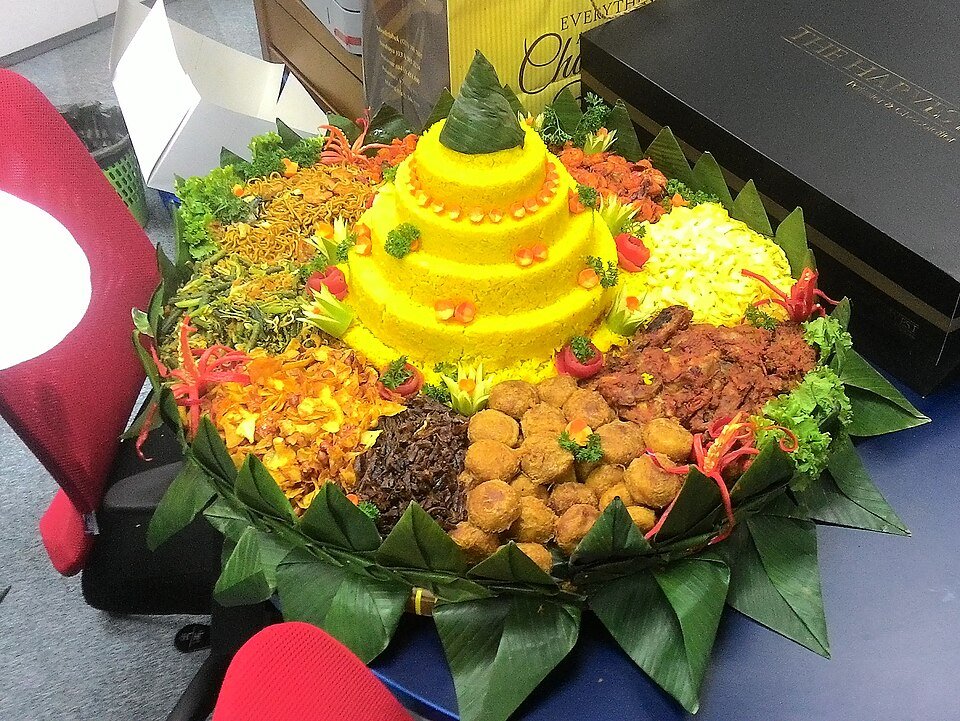
At first glance, the centrepiece is unmistakable: rice shaped into a tall cone, surrounded by a generous arrangement of vegetables, eggs, tempeh, chicken, sambal and other side dishes. It is colourful, abundant and immediately festive. Yet the shape, arrangement and way it is served carry meanings that go far beyond appearance.
Tumpeng often appears at birthdays, anniversaries, openings, weddings, housewarmings and community events. It can mark a personal milestone or a collective achievement. Whatever the occasion, placing it at the centre of the gathering turns the meal into a public expression of gratitude.
A mountain placed at the centre of the table
Tumpeng is closely associated with Java, although it is now recognised and served throughout Indonesia. Its most distinctive feature is the cone of rice, a form often linked to mountains and to ideas of elevation, sacredness and the relationship between people, nature and the divine.
The rice may be white, but yellow rice is especially familiar at celebrations. Turmeric gives nasi kuning its golden colour, which is widely associated with good fortune, prosperity and dignity. Indonesia’s official tourism website notes that yellow rice is commonly served for occasions such as weddings, birthdays, anniversaries, the arrival of a baby and housewarmings.
The cone is not presented alone. It rises from a base filled with lauk, or accompanying dishes, making the whole platter resemble a small edible landscape. The visual effect matters because tumpeng is designed to be seen together before it is eaten together.
The side dishes are part of the message
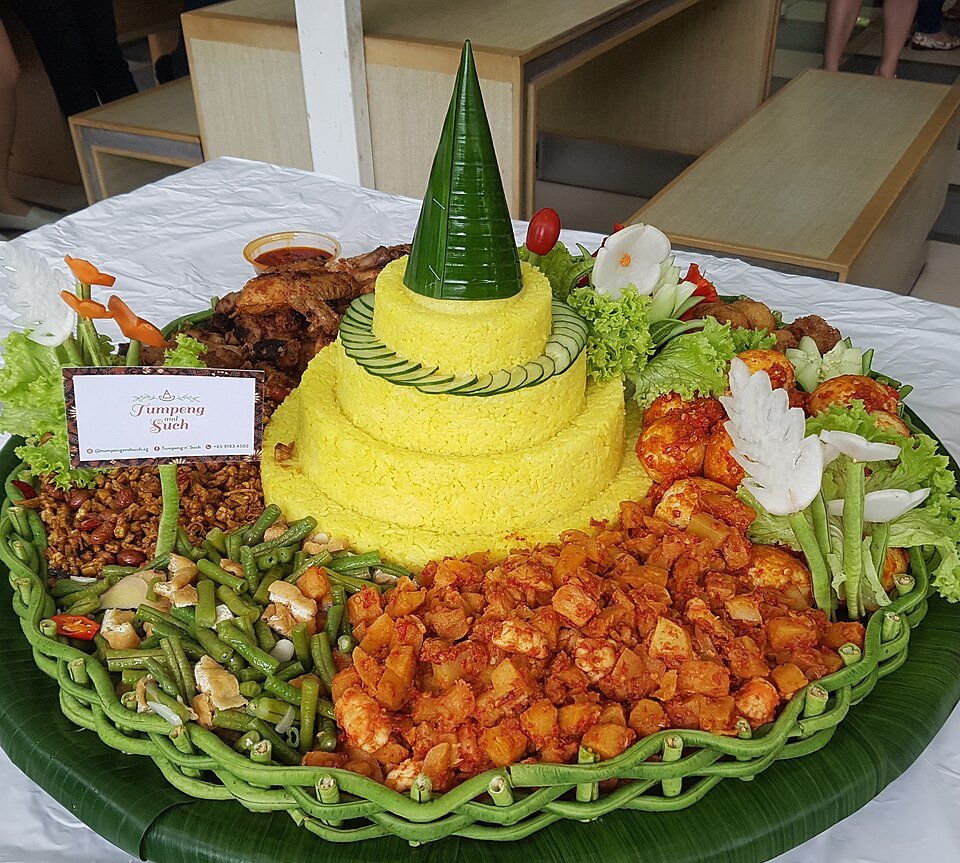
There is no single fixed tumpeng menu. Fried or grilled chicken, shredded omelette, tempeh, tofu, urap vegetables, potatoes, noodles and sambal are among the many possible accompaniments. Regional ingredients and family preferences can change what appears on the platter.
This flexibility is important. Tumpeng is not simply one standard recipe that must be copied exactly. It is a format through which people can express place, purpose and identity. A celebration in one part of Indonesia may look different from another, while the central idea remains recognisable.
Some ceremonial versions attach symbolic meaning to particular foods or to the number of dishes served. Other modern versions are assembled mainly around the tastes of the people attending. Both approaches keep the tradition alive. Culture survives not only by remaining unchanged, but also by giving each generation room to participate.
The first serving becomes a small ceremony
One of the most memorable moments comes when the top of the rice cone is cut and presented to someone considered important to the occasion. It might be a parent, an elder, a respected guest, an employee or the person whose birthday is being celebrated.
This gesture creates a gentle order within an otherwise communal meal. It recognises contribution, respect or affection before everyone begins sharing the food. The person receiving the first portion is not merely getting the best-looking piece of rice. They are being acknowledged in front of the group.
That is why photographs of tumpeng ceremonies often focus as much on the people as on the food. The platter provides the stage, but relationships are the real subject.
A feast built for sharing
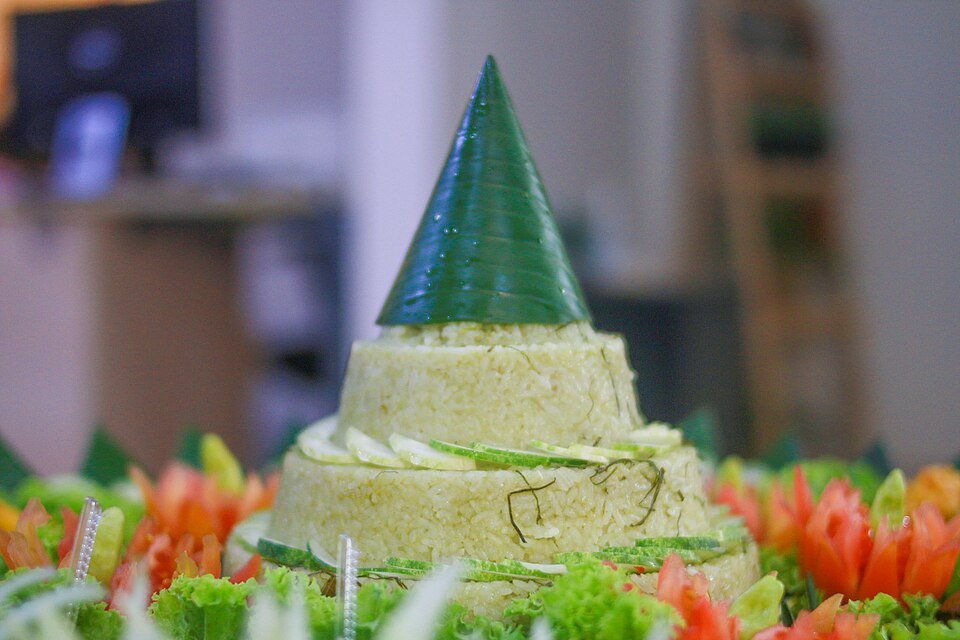
Tumpeng makes little sense as an individual meal. Its generous scale and circular arrangement assume the presence of other people. Even before anyone eats, the platter encourages guests to stand close, admire the display and talk about what has been prepared.
Once the cone is cut, the carefully constructed centrepiece gradually becomes a shared meal. That transformation is part of its charm. Something formal and symbolic becomes warm, practical and social.
Across Southeast Asia, this feeling is familiar. Many of the region’s most meaningful meals are served from a common centre, whether on a large platter, over banana leaves or across a table crowded with dishes. Food becomes a way to recognise that an important moment is never carried by one person alone.
Tradition without being trapped in the past
Tumpeng remains visible because it continues to adapt. Caterers now create compact versions for smaller gatherings. Mini tumpeng portions make the form practical for offices and events. Some cooks change the grains, colours or side dishes, while others build elaborate platters for social media.
These changes can look contemporary, but the essential grammar remains easy to recognise: a central mound, an abundant circle of accompaniments and an occasion that calls people together.
The dish also travels well beyond strictly traditional ceremonies. It may celebrate a company’s anniversary, a school achievement or the opening of a small business. In each setting, tumpeng gives a modern milestone the emotional weight of a communal ritual.
Why the tradition resonates across the region
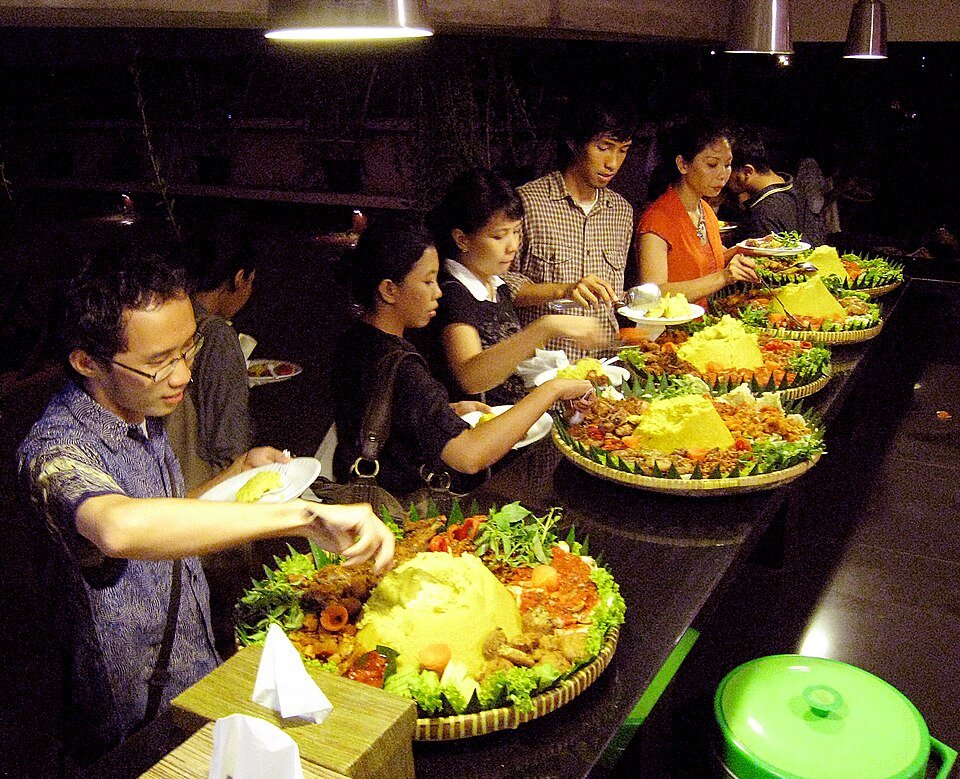
Tumpeng is distinctly Indonesian, but the emotions around it are widely understood in Southeast Asia. Respect for elders, gratitude for collective effort and the instinct to mark important moments with food all cross national borders.
The dish also reminds us that presentation can carry cultural knowledge. A cone of rice is not only decorative. The placement of food, the order of serving and the decision about who receives the first portion can communicate values without a speech.
For visitors, it is tempting to see tumpeng primarily as an impressive photo opportunity. Looking closer reveals something richer. It is a meal that asks who is being honoured, what the group is thankful for and why the occasion matters.
The centrepiece is really the community
After the photographs are taken and the first portion is presented, the perfect cone eventually disappears. Rice and lauk move from the platter onto individual plates. What remains is conversation, memory and the feeling of having shared an occasion properly.
That may be tumpeng’s most enduring lesson. The dish is designed to command attention, but its purpose is to redirect that attention towards the people gathered around it.
In a region where hospitality is often expressed through abundance, tumpeng offers a particularly beautiful example. It turns everyday ingredients into ceremony and ceremony into a meal everyone can share.