



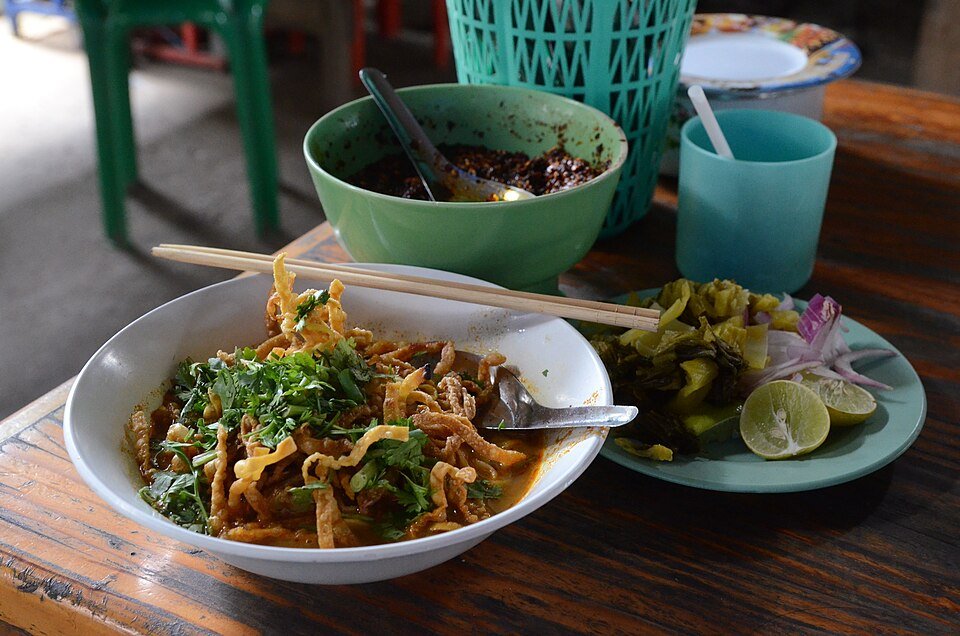
When travellers think of food in northern Thailand, khao soi is often the first dish that comes to mind. The coconut curry noodles deserve their popularity, but one bowl cannot explain an entire food culture. To understand how a northern Thai meal can bring people together, it helps to look at the table itself.
- The table changes the way people eat
- A meal made from relationships between dishes
- Hospitality that asks guests to slow down
- When dinner also becomes performance
- Tradition can live in ordinary restaurants too
- How to approach a khantoke experience respectfully
- The centre of the meal is not a single dish
- Sources
Khantoke, also written as khan toke, refers to a low, round pedestal tray traditionally used for serving a selection of dishes. Diners sit on mats or cushions around it, sharing rice, curries, vegetables, chilli dips and other accompaniments. The arrangement creates a meal that is communal by design.
Today, many visitors encounter khantoke dinners in Chiang Mai through cultural performances and restaurants. Yet behind the tourism experience is a deeper idea associated with Lanna hospitality: guests are welcomed by being invited to sit close, eat from a generous spread and take part in the occasion.
The table changes the way people eat
A khantoke table sits low to the ground. This simple difference changes the mood of the meal. Diners gather in a circle rather than facing a stage or sitting in separate rows. The dishes occupy the centre, within reach of everyone.
The Tourism Authority of Thailand describes the tradition as continuing the dining customs of old Chiang Mai and the Lanna Kingdom. It notes that people sit on mats or cushions and choose from a variety of dishes served in individual bowls.
There is no need for one plate to carry the whole story. The meal develops through small combinations: sticky rice with a chilli dip, vegetables after a rich curry, or a bite of sausage followed by something fresh. Sharing encourages conversation about taste and makes eating feel exploratory.
A meal made from relationships between dishes
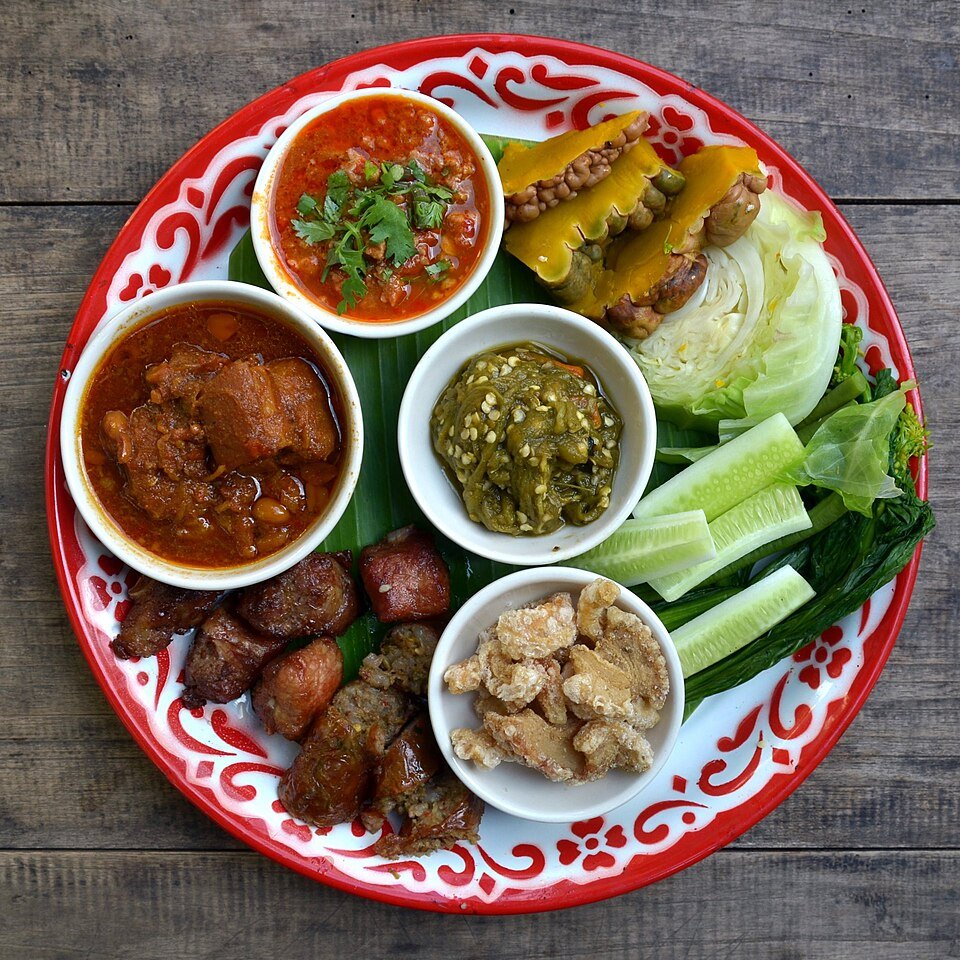
Khantoke is not one fixed menu. Common spreads can include sticky rice, curries, fried chicken, vegetables, crispy pork skin, sausage and nam phrik, the family of Thai chilli dips served with fresh or cooked vegetables.
Northern Thai food has its own flavour logic. Thailand’s official tourism materials highlight the region’s mountain ingredients, herbs, vegetables and preference for sticky rice. Some dishes feel rich and warming, while chilli dips, pickles and vegetables provide contrast.
This balance matters more than identifying a single star dish. A khantoke spread works because its components support one another. The diner moves between spicy, savoury, herbal, crunchy and cooling tastes.
Sai ua, a northern herb sausage, is a good example. Its fragrance comes from an aromatic mixture that may include lemongrass, makrut lime leaves, galangal and spices. Served beside sticky rice and vegetables, it becomes part of a sequence rather than an isolated snack.
Hospitality that asks guests to slow down
A shared spread cannot be rushed in quite the same way as an individual meal. Someone passes a bowl, recommends a dip or notices that a guest needs more rice. Eating becomes a pattern of small acts of attention.
This is one reason khantoke resonates beyond Thailand. Across Southeast Asia, hospitality is often expressed through abundance and insistence. Hosts encourage guests to eat more, try another dish and avoid leaving the table hungry. The exact foods vary, but the emotional language is familiar.
The circular arrangement also softens hierarchy. Everyone can see one another and reach towards the same centre. Even when the meal marks a formal occasion, the physical act of sharing creates intimacy.
When dinner also becomes performance
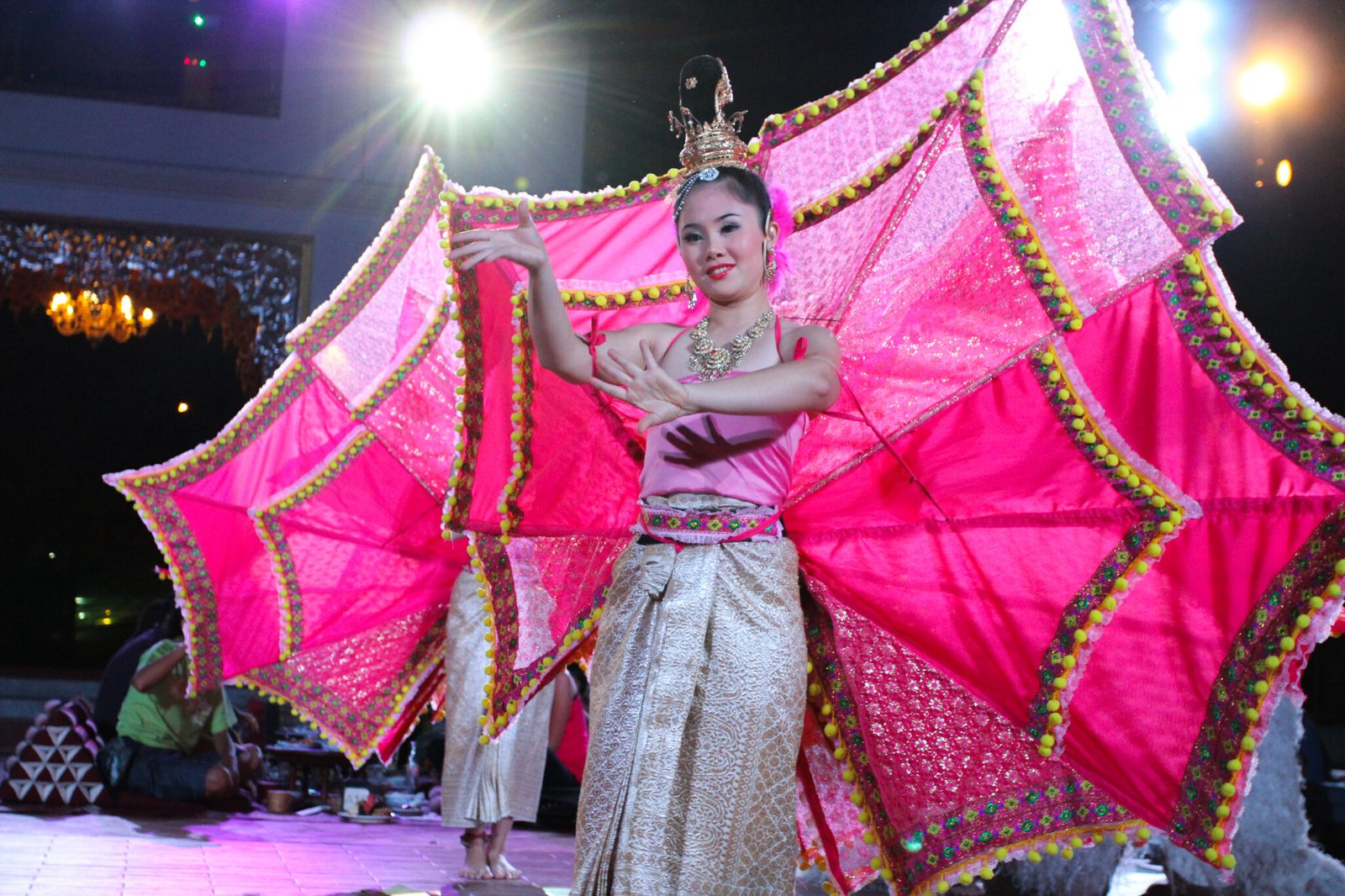
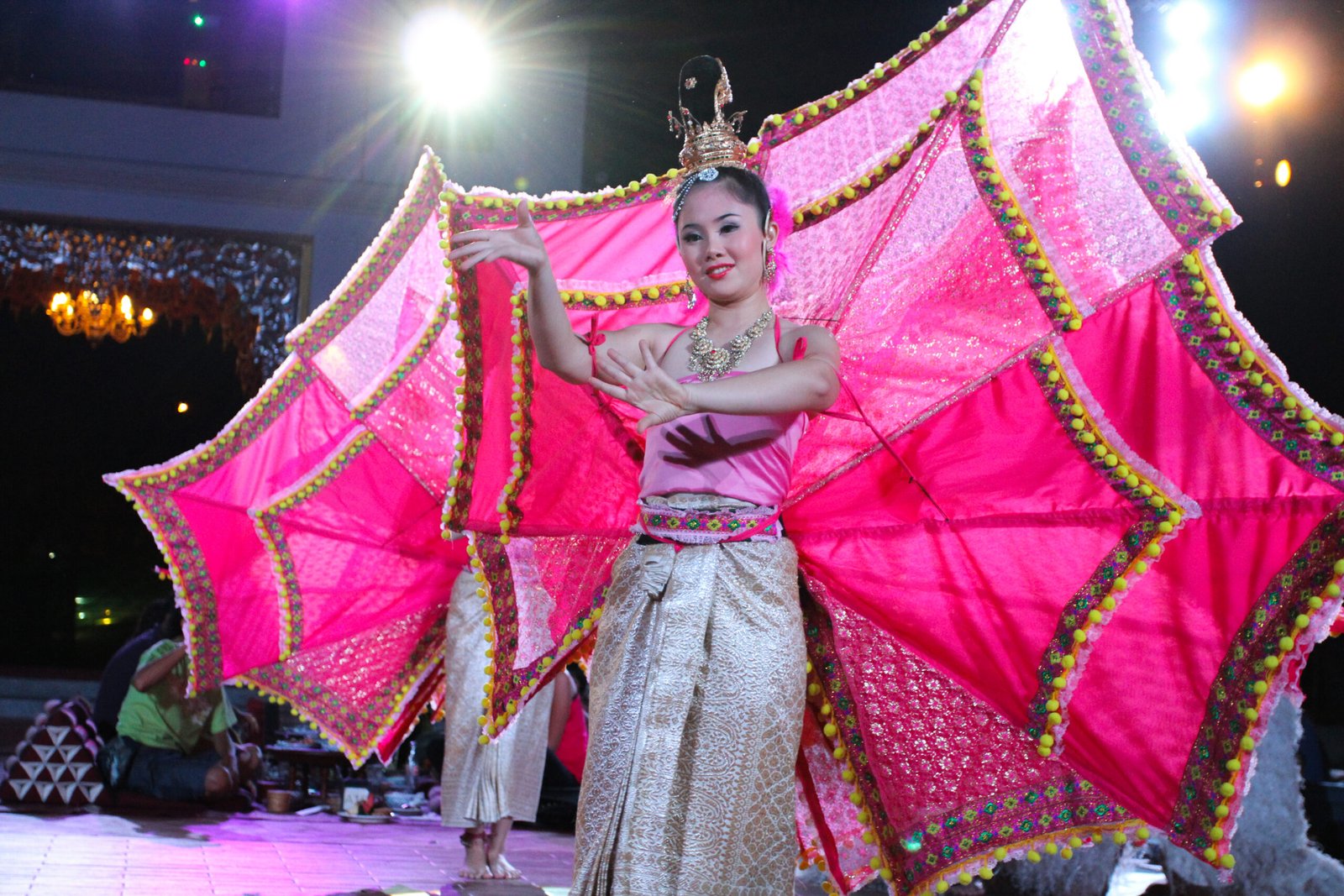
Many contemporary khantoke dinners include traditional music, dance and sometimes sword performances. For visitors, this creates a vivid introduction to Lanna culture. A meal becomes an evening in which food, clothing, movement and sound share the same space.
There is value in that accessibility. A traveller who may not enter a private home or community ceremony can still encounter northern dishes and performance traditions together. At the same time, it is useful to remember that a staged dinner is a curated presentation, not a complete picture of everyday life.
Culture is always more varied than a single show. Some families eat northern dishes at regular tables. Restaurants may mix khantoke seating with conventional chairs. Menus and performances change according to the venue. The tradition remains meaningful without requiring every experience to look identical.
The best approach is curiosity. Notice how dishes are arranged, ask what accompanies the sticky rice and pay attention to the stories presented alongside the meal.
Tradition can live in ordinary restaurants too
Khantoke does not belong only to large cultural shows. The Tourism Authority of Thailand also points to northern restaurants in Nan where diners can choose low khantoke tables and eat in the traditional style. This quieter setting reveals how an old dining form can remain practical.
A tradition survives when people can adapt it to different occasions. It may appear at a welcoming ceremony, a family gathering, a community event or a restaurant meal. The setting changes, but the low shared centre continues to encourage togetherness.
Modern diners may photograph the spread before eating, choose vegetarian dishes or combine traditional recipes with contemporary presentation. These changes do not automatically erase cultural meaning. They can give new participants a way into it.
How to approach a khantoke experience respectfully
Visitors do not need to arrive as experts. A few simple habits are enough. Follow the host’s lead, sit where directed and observe whether shoes should be removed. Take modest portions at first so everyone can share, then return for more. Ask before photographing performers or other guests closely.
It is also worth learning the names of several dishes instead of treating the meal as an anonymous platter. Knowing the difference between nam phrik ong, sai ua and a northern curry makes the experience more memorable and gives credit to the food traditions being presented.
Most importantly, do not focus only on getting the perfect overhead photograph. Khantoke is best understood through participation: passing food, tasting contrasts and sharing time with the people around the table.
The centre of the meal is not a single dish
The visual beauty of khantoke comes from many bowls gathered in one place. Its cultural beauty comes from the same principle. No individual dish carries the entire occasion, and no guest experiences it alone.
That is what makes the tradition relevant across the region. It reminds us that food culture is not only about recipes. It is also about furniture, posture, pace, generosity and the distance between one diner and another.
Northern Thailand’s khantoke table may be low, but the idea behind it is expansive: a good meal creates a centre that everyone can share.