




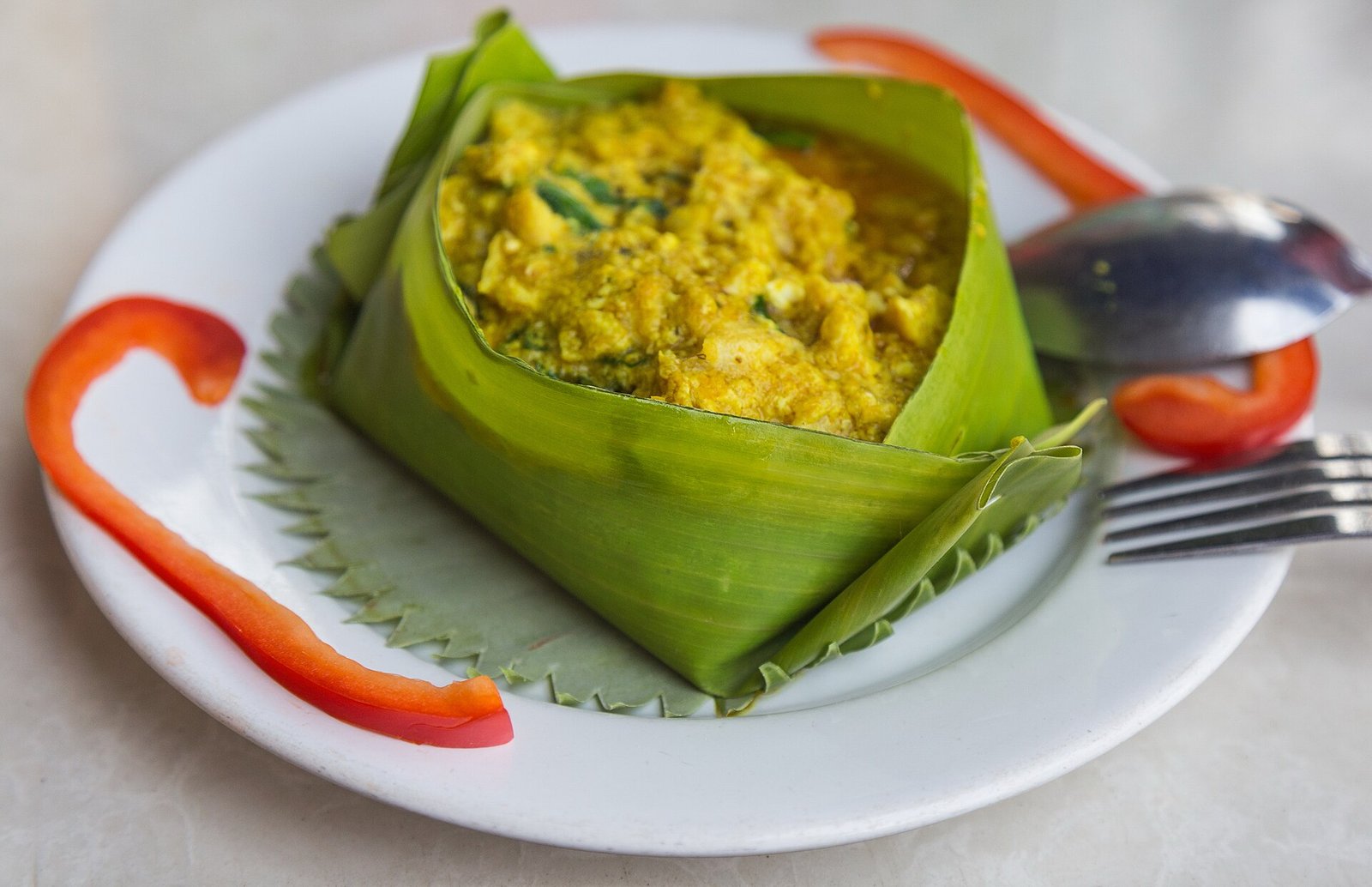
Fish amok is one of Cambodia’s most recognisable dishes, yet a photograph of the finished curry tells only part of its story. The flavour begins with kroeung, an aromatic paste, while gentle steaming gives the fish and coconut mixture its soft, custard-like texture. Some servings arrive in folded banana-leaf cups; others are associated with noni leaves. The leaf, paste and cooking method are useful things to notice before taking the first spoonful.
Why kroeung matters
Kroeung is a family of Cambodian aromatic pastes rather than one fixed mix. Lemongrass, galangal, turmeric, garlic and other aromatics can be pounded together to form the fragrant base. The Cambodian Ministry of Tourism’s food guide describes fish amok as a fish curry made with kroeung and steamed inside a leaf. The paste gives the coconut-rich mixture its character; the exact balance can vary from cook to cook.
A gentle steam, then rice
Fish is coated with the spiced coconut mixture and cooked gently until set and cooked through. This differs from a loose curry simmered in a pot: a properly steamed portion holds together while remaining tender. Leaf cups also make individual servings practical. Banana leaves are a familiar presentation, although the tourism guide specifically describes steaming in noni leaves; neither image on this page should be read as a rule for every Cambodian kitchen.
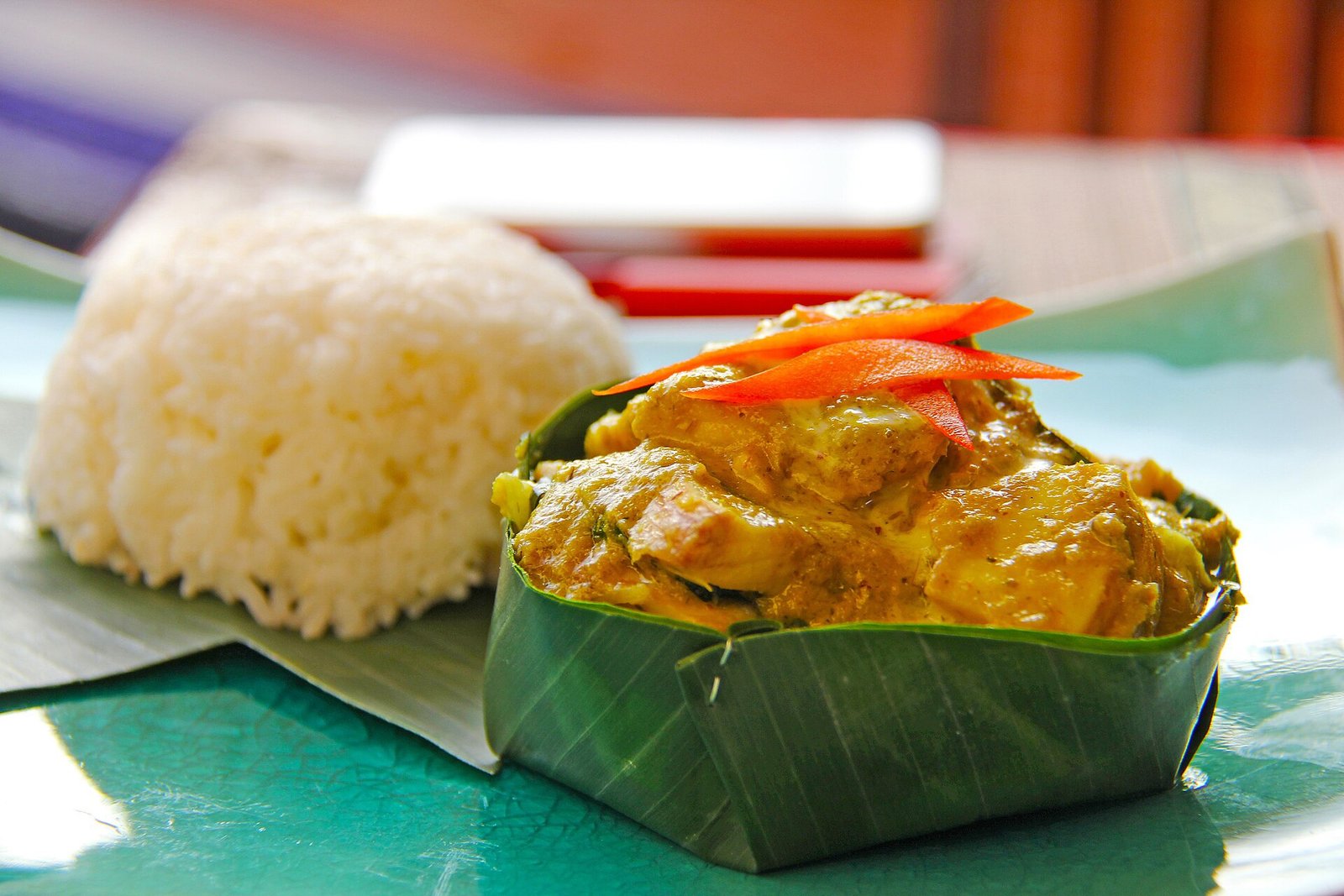
Serve the amok with rice, which lets its creamy, aromatic sauce remain the focus. The second photograph shows a separate serving photographed in Siem Reap, not the same plate as the Phnom Penh image above.
Watch a chef prepare it
In this embedded demonstration, Cambodian chef Nite Yun prepares kroeung, coats the fish and steams portions in banana-leaf pockets. It shows one chef’s method rather than a single definitive recipe.
Video: Make Amok, Fish Curry Steamed in Banana Leaves. Cultural context: Cambodian Ministry of Tourism. Photography and locations are credited in the captions.


.jpg)
