


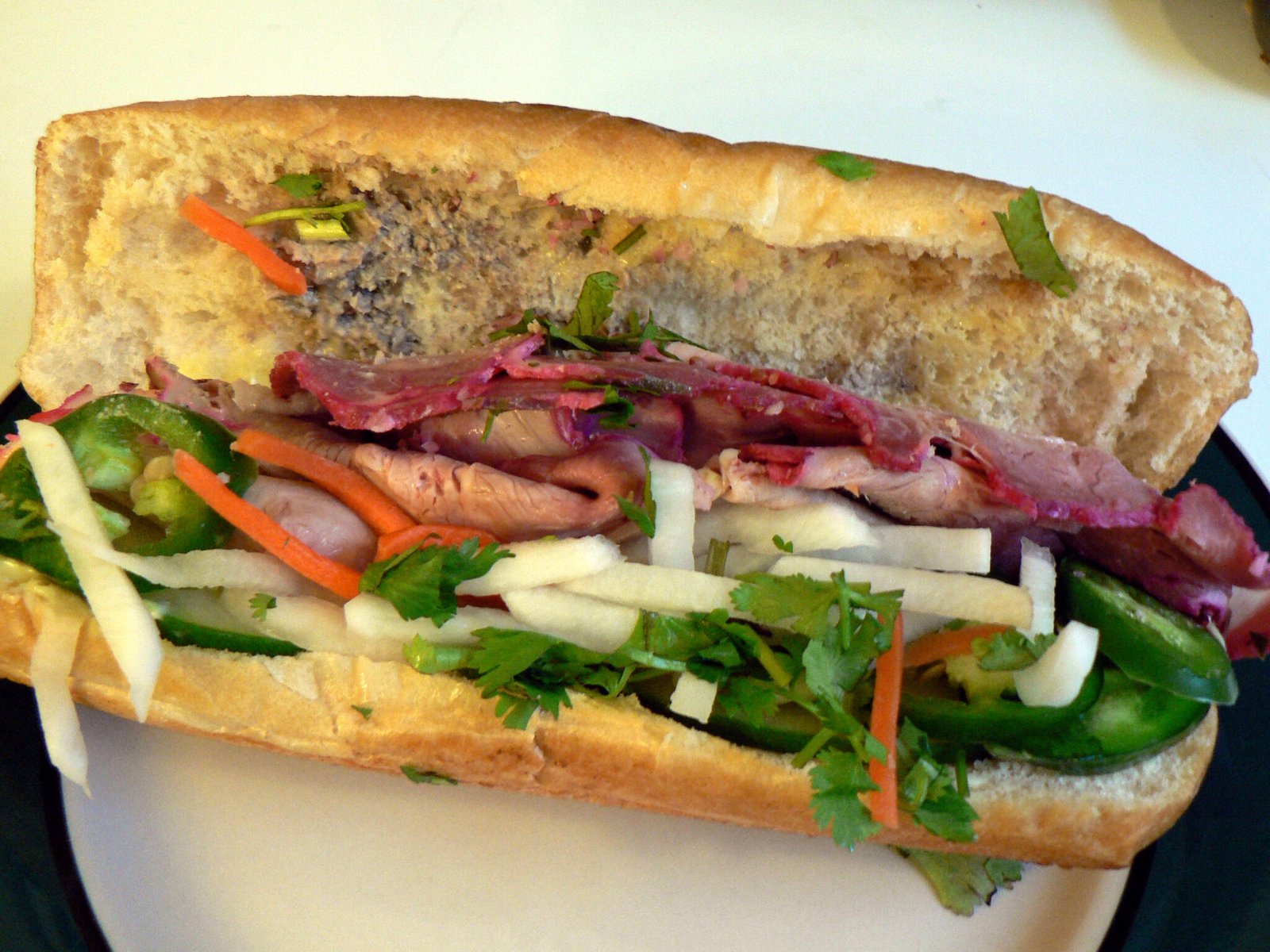

A bánh mì can be assembled in minutes, but its appeal comes from several contrasts at once: crisp bread, rich filling, cool herbs and sharp pickles. The Vietnamese street sandwich is a useful reminder that the bread matters as much as what goes inside it.
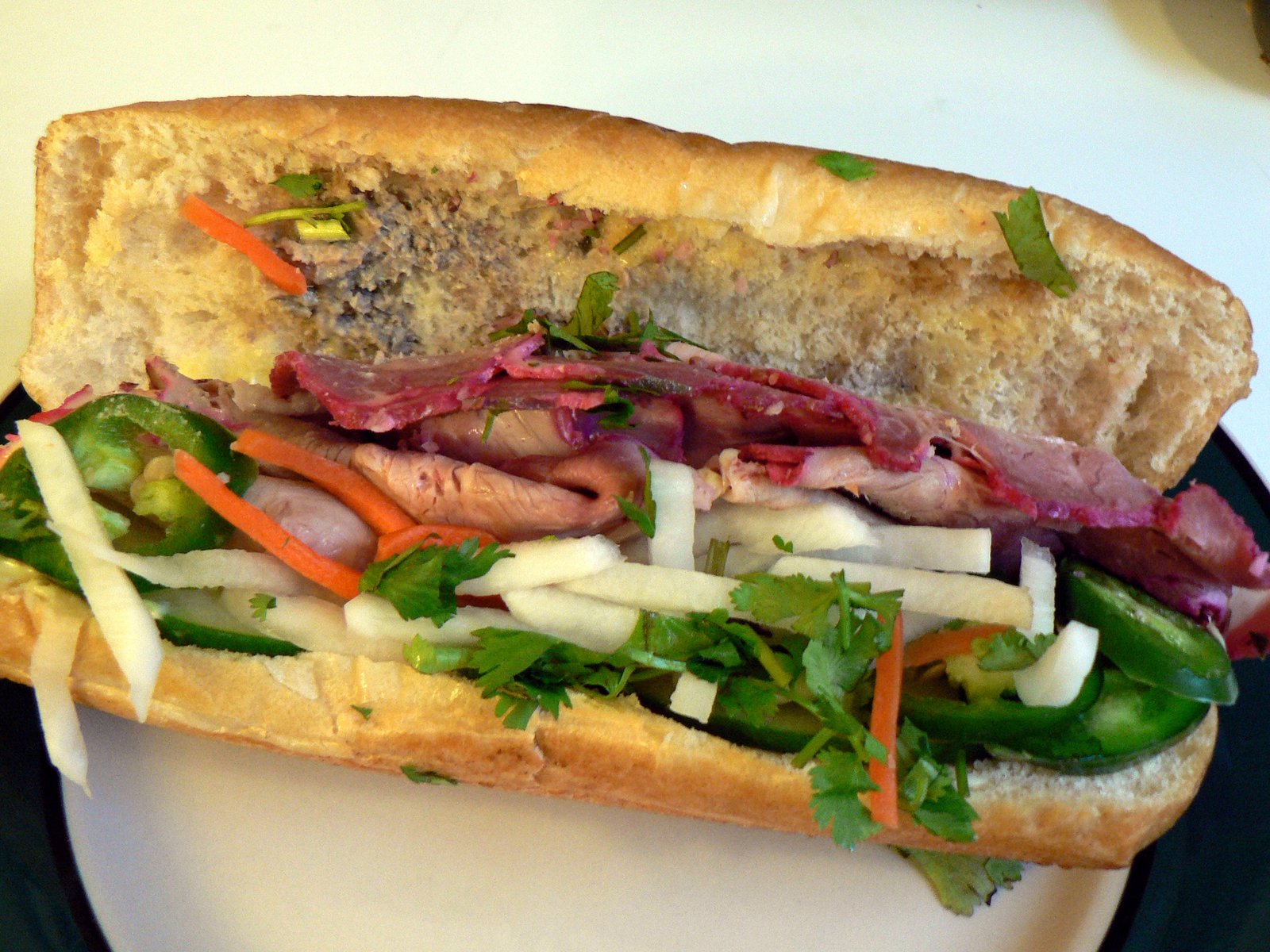
Start with the baguette
Vietnam’s national tourism site calls the baguette the centrepiece of bánh mì and describes variations in different parts of the country. A good roll should hold its shape around moist fillings while staying pleasant to bite. The sandwich developed from the baguette brought during the French colonial period, then took on distinct Vietnamese combinations.
One familiar version layers pâté or a spread with meat, cucumber, herbs, chilli and pickled carrot and daikon. That is a starting point, not a fixed definition. The Vietnam Tourism guide to seven styles includes roast pork, egg, fish cake and even bread served with a red wine stew.
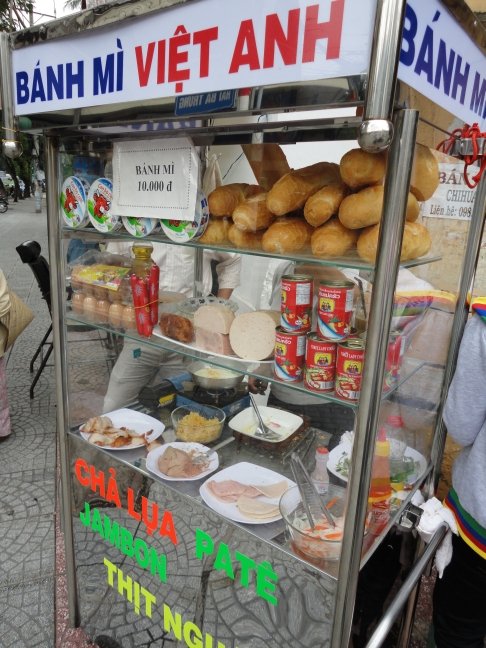
What to notice at a stall
Watch the order of assembly. A spread coats the bread; the main filling adds substance; vegetables and herbs keep the next bite lively. Ask what is inside before ordering, since pork and pâté are common in some versions. An egg or other filling may be available, but ingredients differ by vendor.
The best way to understand bánh mì is to compare a few stalls rather than search for one definitive recipe. Listen for the crackle of the bread, notice how much pickle is added, and see whether the herbs still taste fresh alongside the warmer filling.
See it on the street
The Vietnam Tourism Board’s egg bánh mì video shows one approachable home version. Its filling differs from the meat sandwich pictured above, illustrating how flexible the format can be.