




At a Thai market, khanom krok is easy to spot: a cook pours batter into a pan of round wells and lifts out small coconut pancakes, often serving two halves together. The contrast between a browned edge and a soft centre is part of their appeal.
Why the pan matters
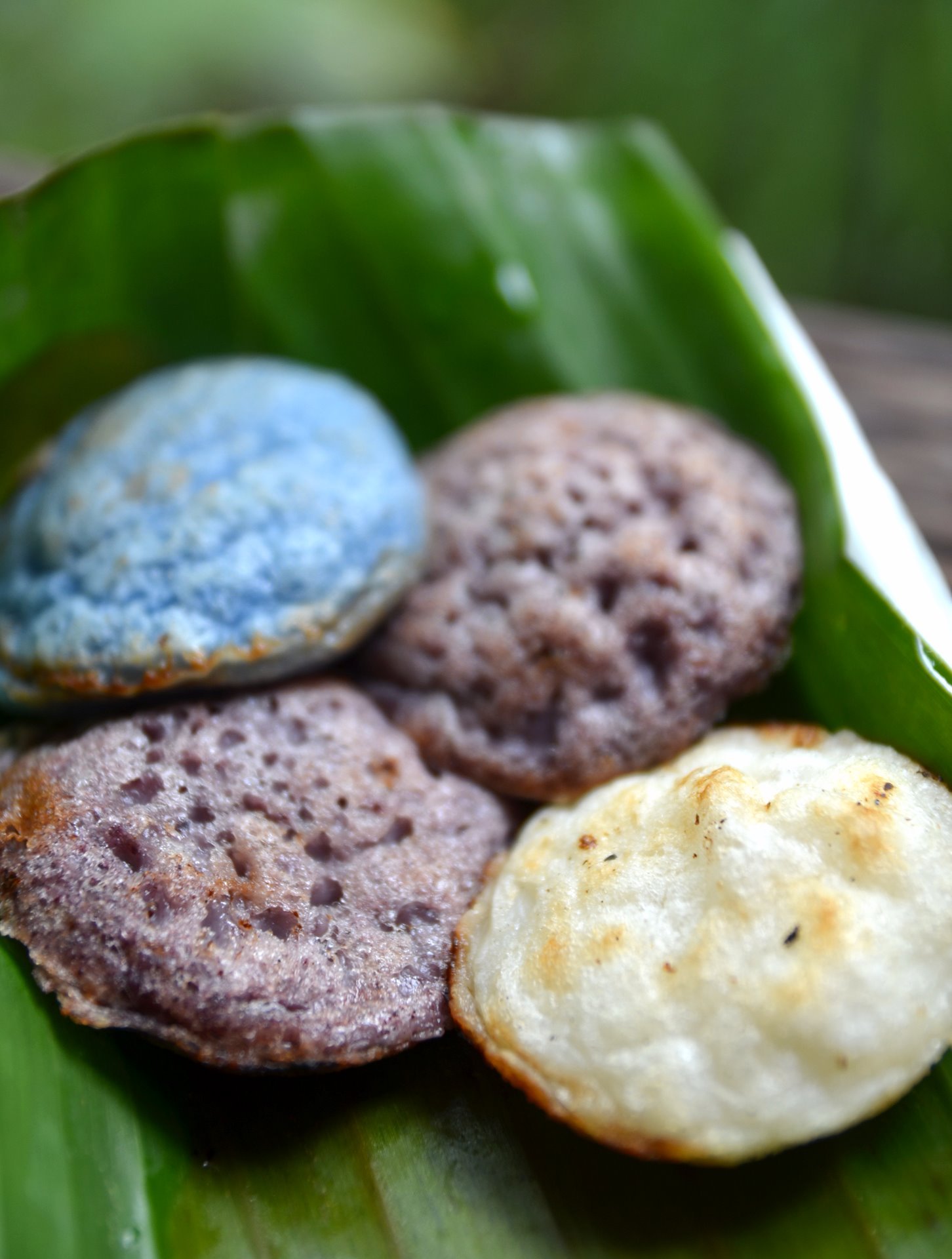
The shallow wells give each portion its shape and let the batter set against a hot surface. Thailand’s government food feature describes khanom krok through its crisp and soft textures and the importance of coconut milk. A photo in the Wikimedia Commons collection also shows how the small cakes may be paired as two halves.
Rice flour and coconut milk commonly form the base, though ratios and method vary. Heat, the amount of batter in each well and the time before lifting the cakes all affect whether the outside browns while the centre stays tender.
Sweet, savoury and shared hot
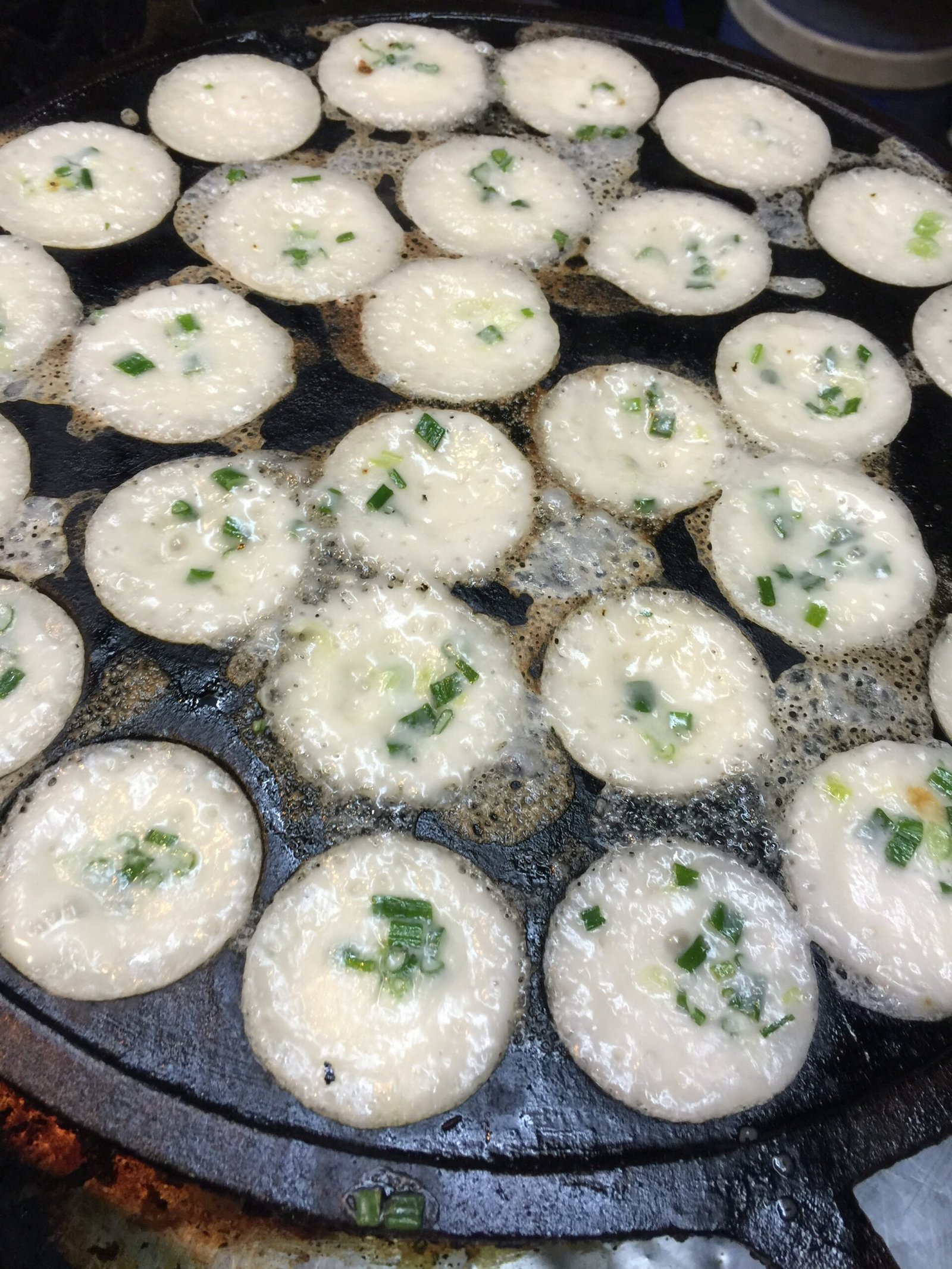
Some vendors add corn, coconut or chopped spring onion. A savoury topping against a slightly sweet coconut base may surprise first-time tasters. The choice of topping is part of the fun, so it is worth watching a batch being made before deciding which to try.
Freshly cooked khanom krok is best understood as a street snack, not simply a miniature pancake. The pan, the coconut aroma and the quick handover from cook to customer are all part of the experience.
Watch a batch being made
This khanom krok cooking tutorial shows the batter, pan and finished cakes. It is one maker’s method rather than a single standard recipe for every Thai stall.