



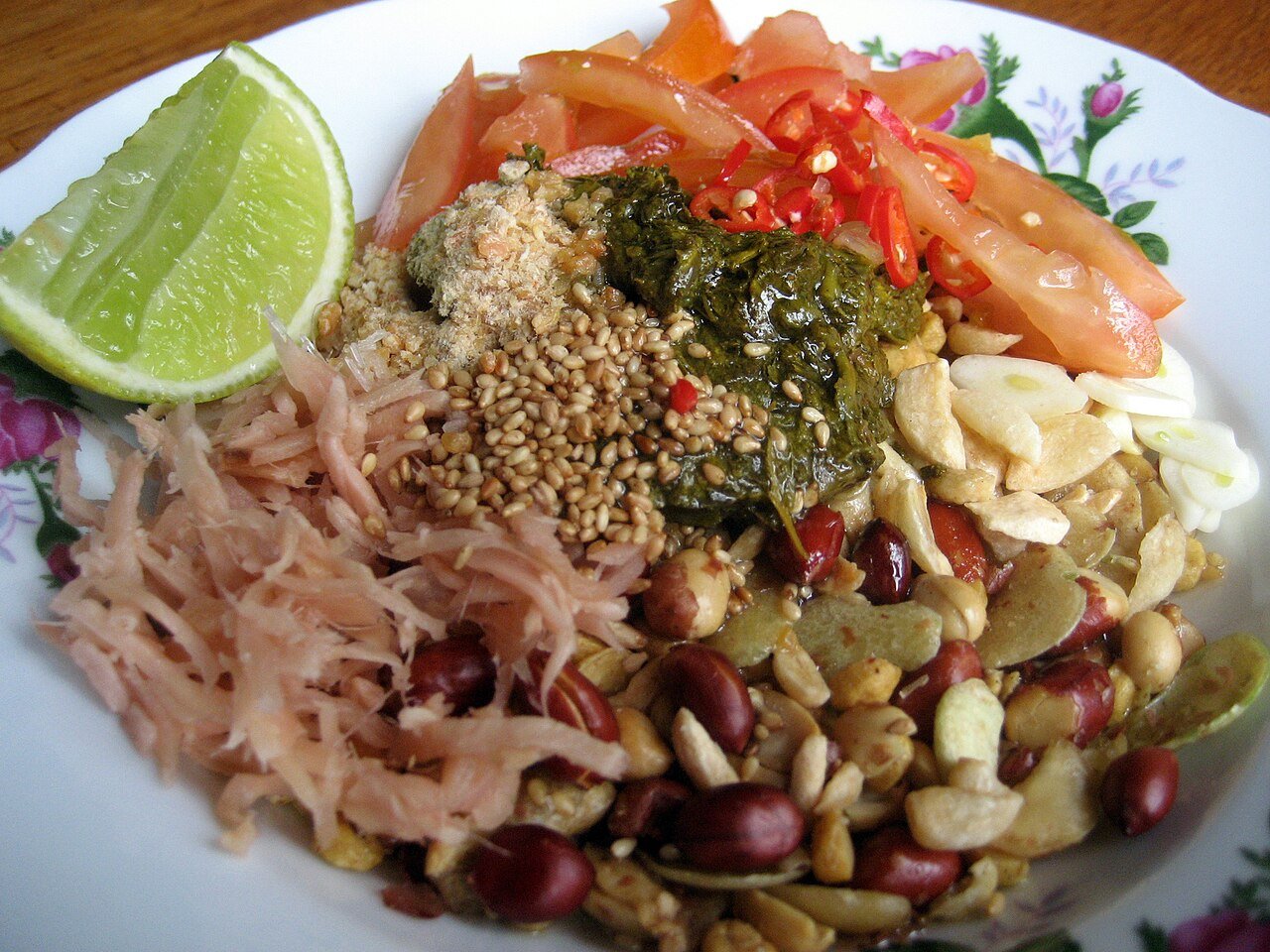
In Myanmar, tea can be eaten as well as drunk. Laphet thoke combines fermented tea leaves with crunchy beans or nuts, fresh vegetables and a bright dressing. The tea leaves give the salad a distinctive tang and gentle bitterness, while the toppings make each mouthful different. Burmawala Kitchen’s recipe shows the contrast of tea leaves, fried beans, peanuts, garlic, tomato and onion.
The tea is the centre
Use food-grade fermented tea leaves prepared for eating, not dry tea from an ordinary tea bag. Toss a small amount with shredded cabbage or other fresh greens, tomato and onion. Add roasted peanuts, fried beans or crispy garlic for crunch. A squeeze of lemon or lime lifts the dressing. Taste before adding salt: packaged laphet may already be seasoned.
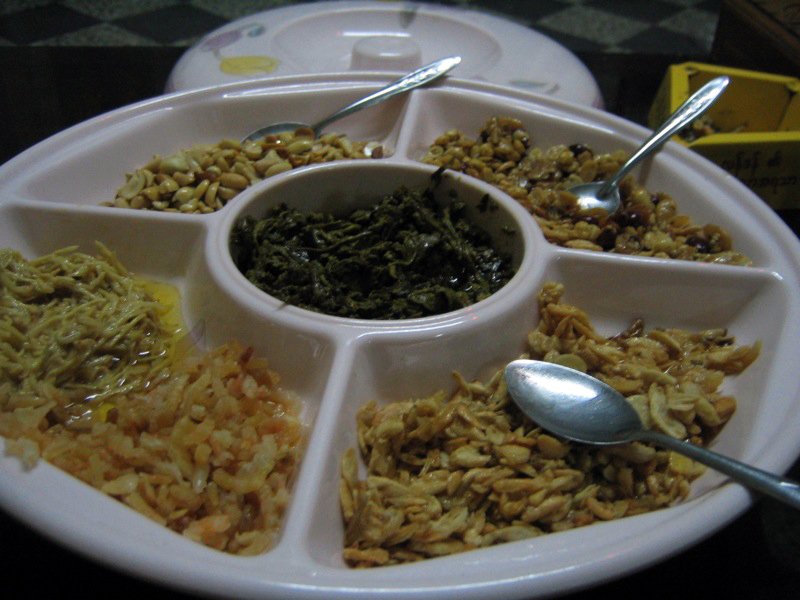
Some presentations keep the ingredients in separate piles until the table, so diners see the colours and textures before mixing. Others arrive fully tossed. Both make sense; what matters is keeping crunchy ingredients crisp until serving. Check for peanut or other nut allergies before sharing.
Start with a small plate
The flavour of fermented tea is assertive, so a small shared serving is a good introduction. Serve it alongside other dishes rather than trying to make it taste like an ordinary green salad. The video below demonstrates one home version; regional and family methods differ.
Watch a home preparation
Video: Burmese Tea Leaf Salad Recipe. Ingredient reference: Burmawala Kitchen.