



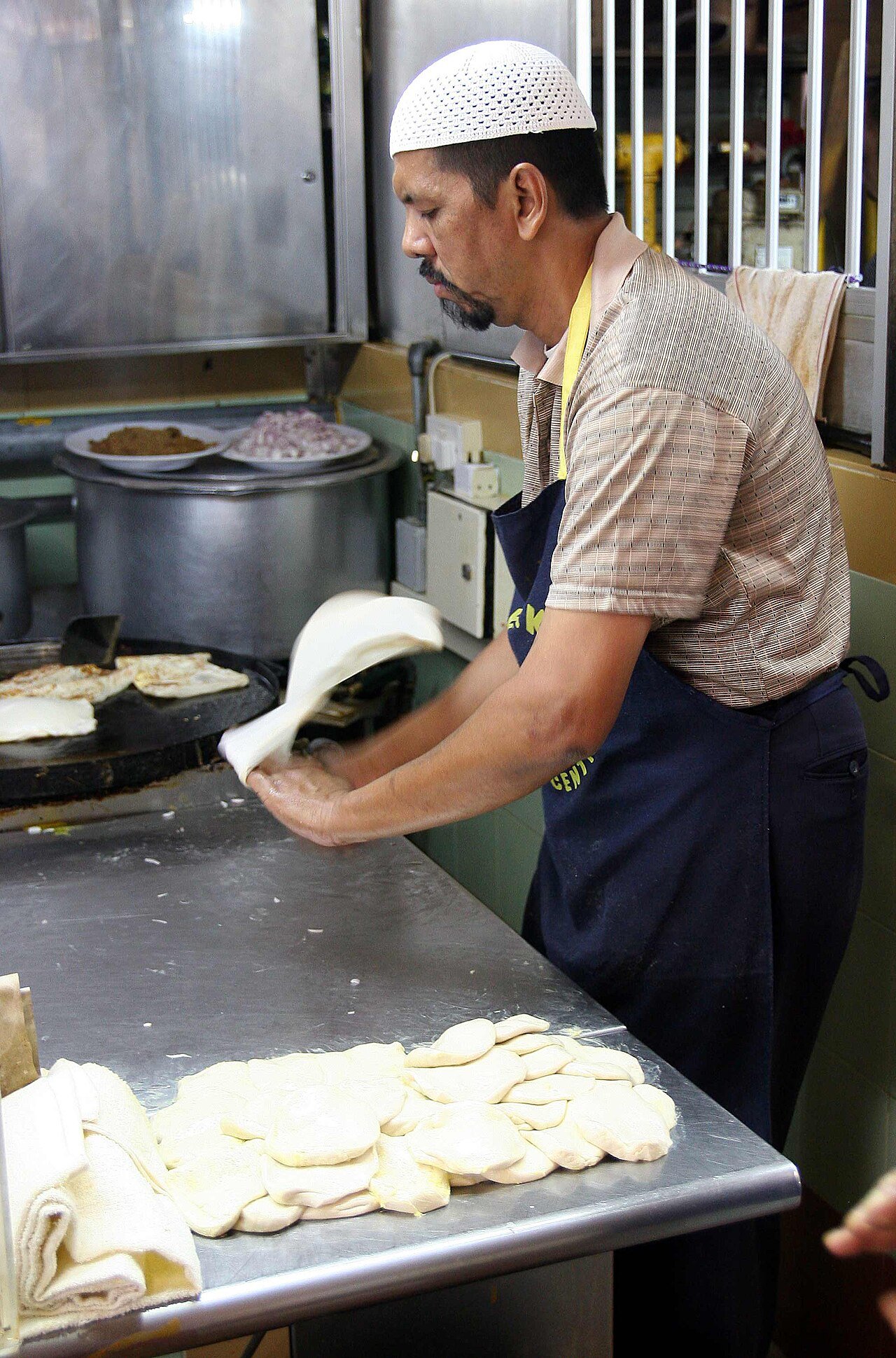
Watch a prata maker lift a piece of dough and the attraction of the dish becomes clear before the first bite. The sheet stretches thin, folds back on itself and reaches the griddle, where its layers turn golden. Singapore’s tourism board describes roti prata as a flatbread introduced by Indian immigrants, commonly eaten plain or with egg and served with curry or sugar. The familiar plate is as much about the dough’s texture as its accompaniment.
Rest, stretch and fold
A workable dough must stretch without tearing at once. Singapore food writer Leslie Tay explains in his detailed home guide that flour choice, kneading and rest affect how the dough behaves when flipped. The rest gives it room to relax before it is spread into a thin sheet. A maker may toss the dough in the air, but the aim is the thinness, not the spectacle. Folding that sheet creates the layers that later separate when cooked.
Heat changes the texture
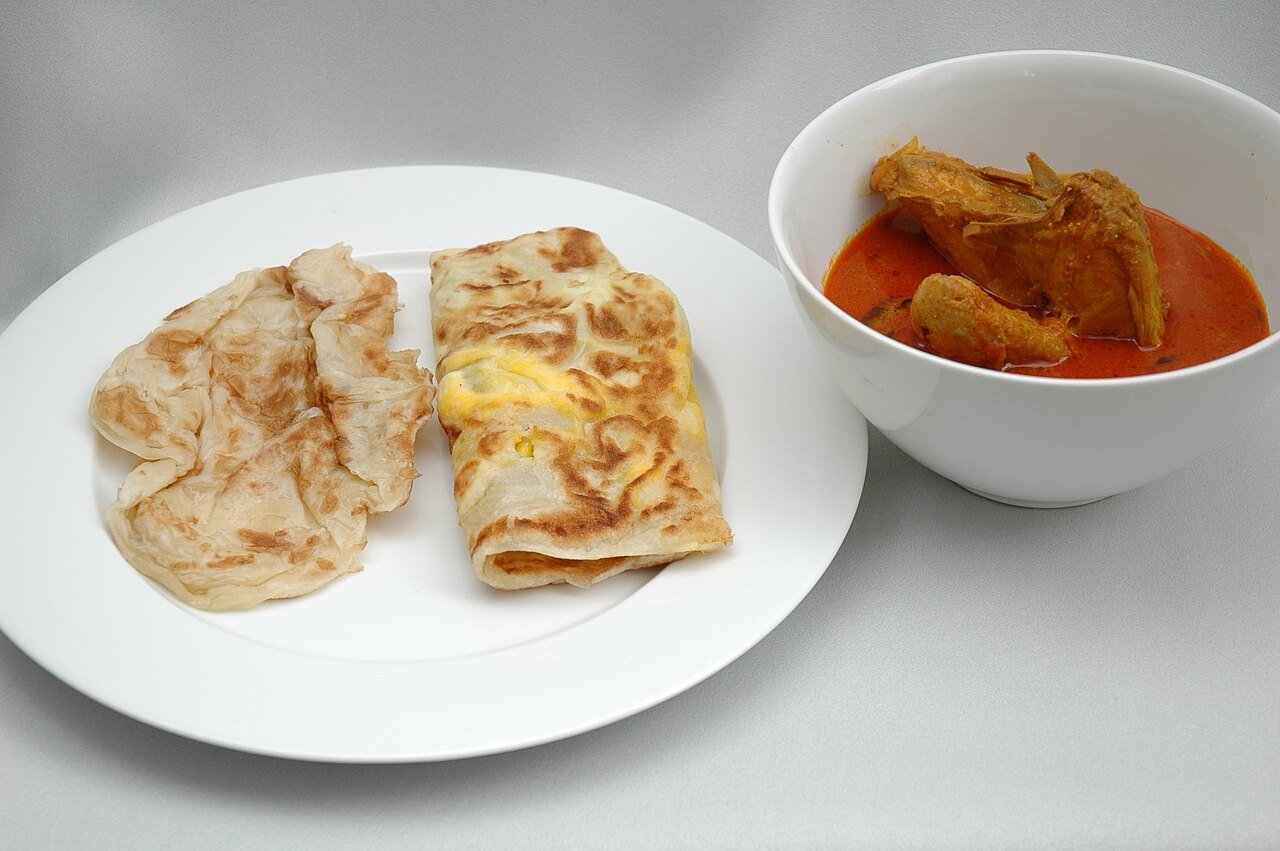
On the hot griddle, oil or fat helps the folded dough colour and crisp. A plain prata leaves the layers easy to see, while egg prata adds a softer centre. The finished bread can be crisp at the edges and tender within; how thinly it was stretched and how long it cooked both matter. Tear off a small piece first and notice the contrast before dipping it. A home cook does not need to match a hawker’s speed to appreciate what the technique does.
Curry changes each bite again. The plate above pairs prata with chicken curry; other stalls may offer a different curry, while some diners prefer sugar. The curry’s liquid softens the crisp edge, so dipping a little at a time preserves more of the contrast. Ask about the curry’s ingredients if you avoid meat or have an allergy. These choices are part of why roti prata suits breakfast, a snack or a shared meal without requiring an elaborate setting.
See the flip up close
Leslie Tay demonstrates the prata flip in the video below, including how a thin sheet is made before folding. His original video is a useful companion to the photographs: it shows a movement that a still image cannot capture.
Video plays through ieatishootipost’s original YouTube player.