



Bánh cuốn starts with a sheet so thin that it can look almost translucent. The freshly steamed rice batter is lifted, folded around a savoury filling and served while still soft. Vietnam Tourism describes a common version filled with minced pork and wood ear mushrooms, finished with fried shallots. The contrast between the tender sheet and the toppings makes it memorable.
Why the sheet matters
The wrapper is made from rice batter spread in a thin layer and steamed. It must be supple enough to roll without breaking, yet delicate enough to stay light on the plate. That is why watching a maker lift the cooked sheet is often as interesting as eating the finished roll. A thick wrapper would change the balance with the filling; a thin one lets the savoury centre come through.
Filling, toppings and sauce
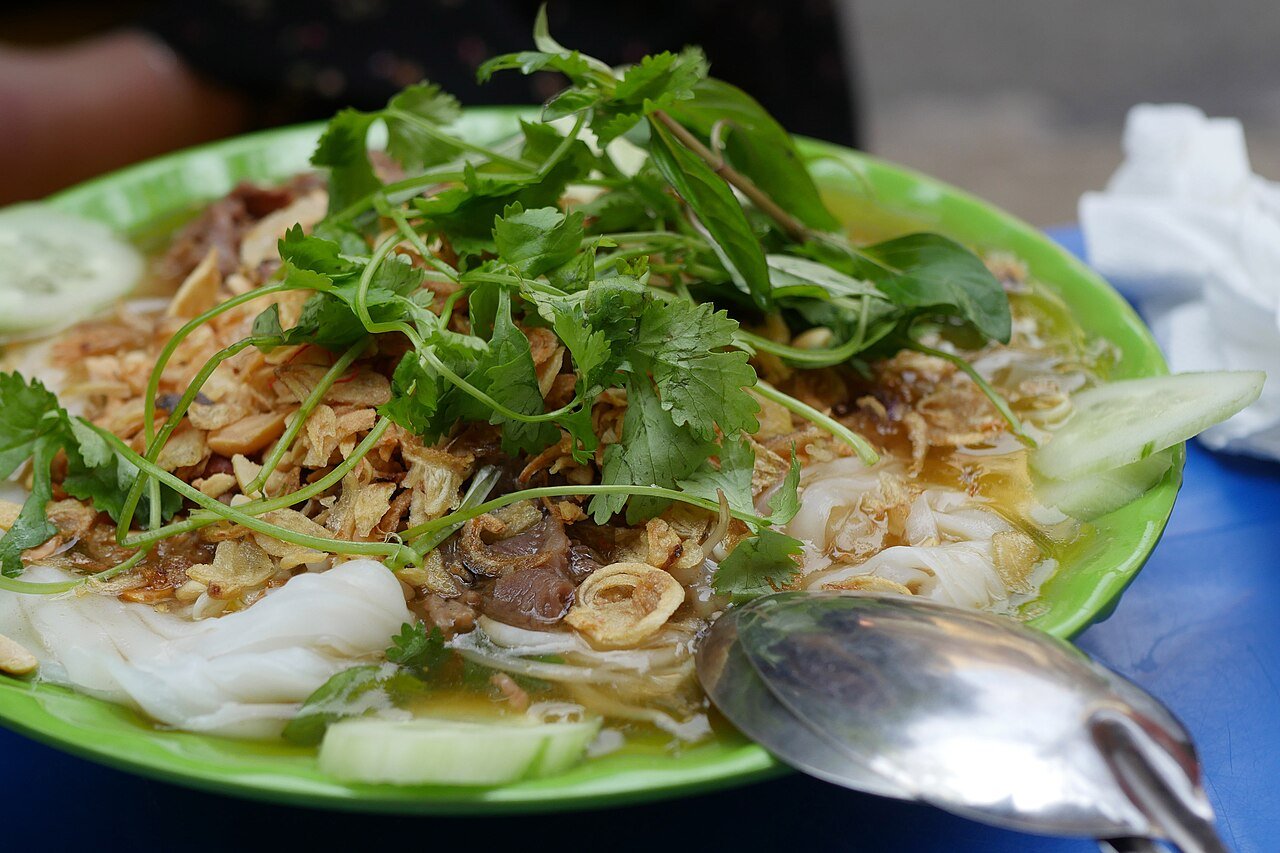
Minced pork and wood ear mushroom are a familiar combination, but servings differ by region and shop. Fried shallots add a crisp, fragrant finish. Fresh herbs and cucumber bring a cooling note, while a fish-sauce-based dip adds saltiness and brightness. Vietnam Tourism also notes the steamed rice sheets and pork-mushroom filling when introducing the dish to visitors.
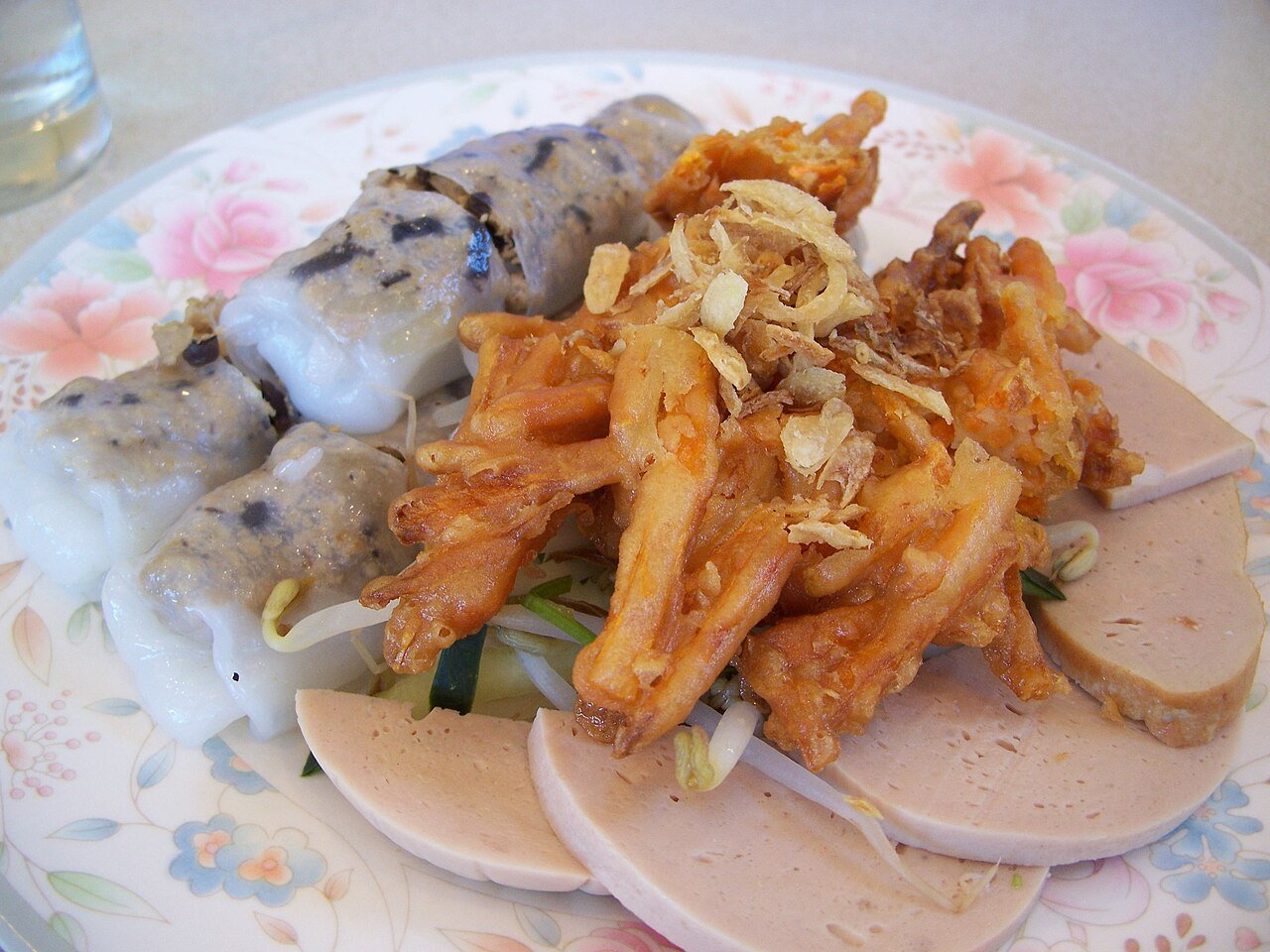
When ordering, notice what comes beside the rolls before pouring on the dip. Some plates include Vietnamese sausage or other sides; the photograph above shows one such presentation, not a fixed rule for every stall. Try a piece of the plain roll first, then add sauce and herbs to see how each changes its soft texture and savoury filling.
Watch the making process
Hanoi Radio and Television follows bánh cuốn makers in Thanh Lương. The video is in Vietnamese, but the handling of the thin steamed sheet is visible throughout and gives useful context to the finished dish.
Video played through Hanoi Radio and Television’s original YouTube player.