



At a Filipino gathering, a platter of pancit is practical: noodles can be cooked in a generous batch and shared from the middle of the table. Bihon and canton create different textures. Bihon is a thin rice noodle that turns tender and absorbs sauce; canton is a wheat noodle with a firmer bite. Filipino cook Vanjo Merano shows both together in his pancit canton at bihon recipe, while noting the dish also suits ordinary days.
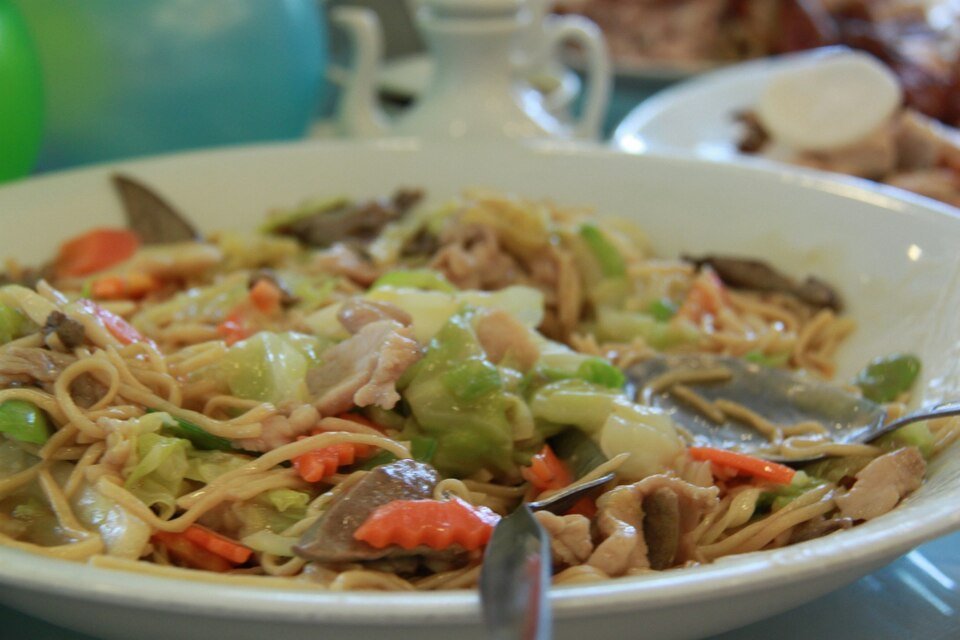
Two noodles, two ways to carry flavour
Merano’s combined recipe starts by soaking bihon, then cooking meat and vegetables in a seasoned liquid. Canton goes in before the soaked bihon, allowing the thicker noodle to soften first; both are tossed until the liquid is absorbed. This order is more useful than treating the noodles as interchangeable. Add liquid gradually if adapting the dish at home, because the amount needed depends on the noodle brands and pan.
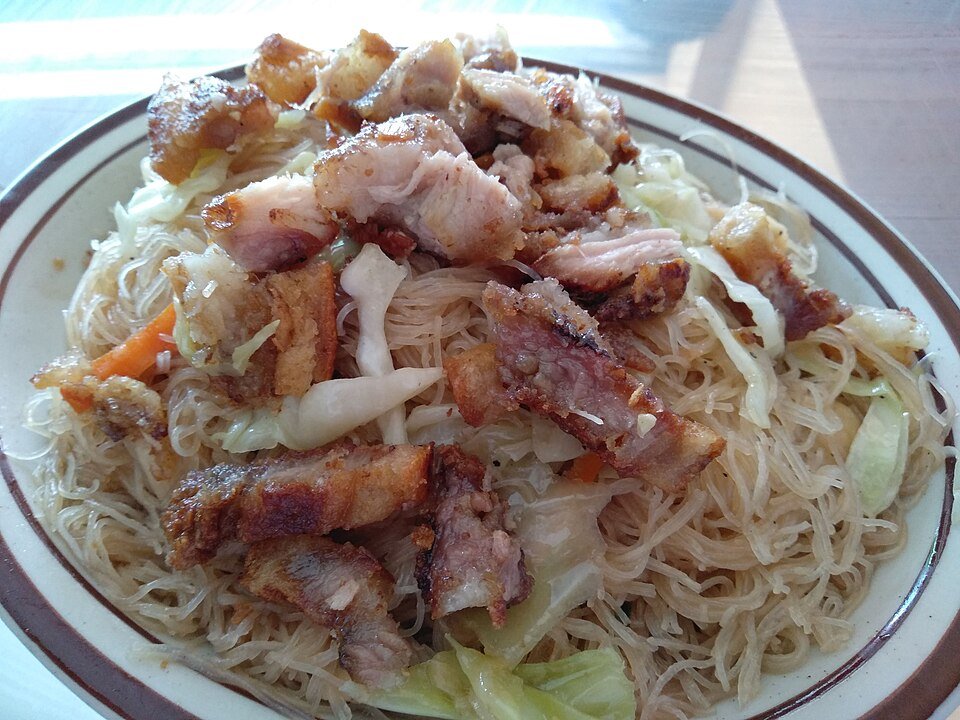
Bihon gives a softer, lighter-looking platter, while canton offers chew. The mixed version makes those differences obvious in each serving. Neither one is a fixed ‘party rule’: families and cooks choose their own meats, vegetables and seasonings.
What to serve and what to ask
Put calamansi or another citrus option on the table if you like a sharp finish, and let each person season their own plate. For guests with dietary restrictions, check the sauce and stock as well as the toppings: shrimp, pork, chicken, oyster sauce or fish sauce may be present depending on the recipe. A vegetarian version needs its own stock and seasoning choices rather than simply omitting the meat.
The creator’s original cooking video below shows the order in which he adds the two noodles. Watch that sequence if you are making a large batch; the sauce absorption is easier to judge visually than by a fixed minute count.
Sources and recipe reference: Vanjo Merano, Panlasang Pinoy; Filipino Pancit. Video: Panlasang Pinoy’s original demonstration. iCookAsia’s discussion is editorial; use the creator’s linked recipe for precise quantities and method.