



The shape tells you much about sate lilit. Instead of threading cubes of meat onto a stick, the cook presses a seasoned mince around bamboo or a lemongrass stalk. That is the lilit—the wrapping—that makes this Balinese satay distinctive. Indonesia’s official tourism site describes versions made with fish, chicken or pork, mixed with an aromatic Balinese spice paste and often coconut. The protein and seasoning can change, but the method remains recognisable.
Spice paste gives the mince its character
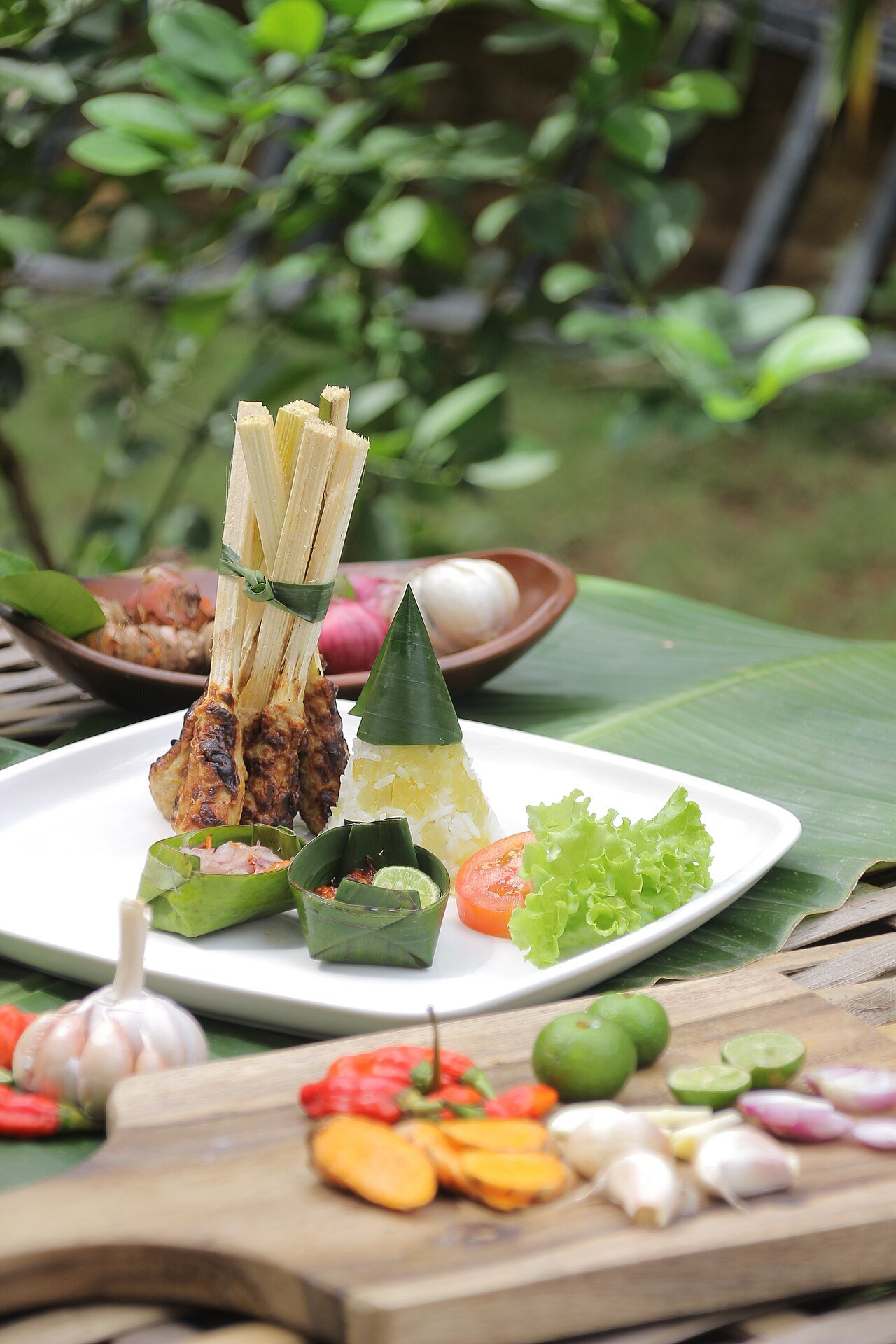
Shallots, garlic, ginger, galangal, turmeric, chilli and lime leaves can all contribute to the fragrant paste. Grated coconut adds body and richness. There is no single mixture for every household or warung; the point is to season the mince thoroughly so the flavour runs through each bite. Indonesia Travel’s Indonesian-language guide highlights the combination of minced protein, grated coconut, lemongrass and spices. When ordering, ask which protein was used. Fish and chicken are common, but pork versions also exist, and some seasoning pastes include shrimp paste.
What the skewer does
A cleaned lemongrass stalk can act as both handle and aromatic element; bamboo also works. The mince must cling firmly enough to hold its shape over the grill. Hot coals brown the outside while the interior cooks through. Turn the skewers carefully so the coating cooks evenly. A plated serving can make the finished sate look simple, but the preparation depends on the texture of the mince, the balance of spice and the heat of the fire.
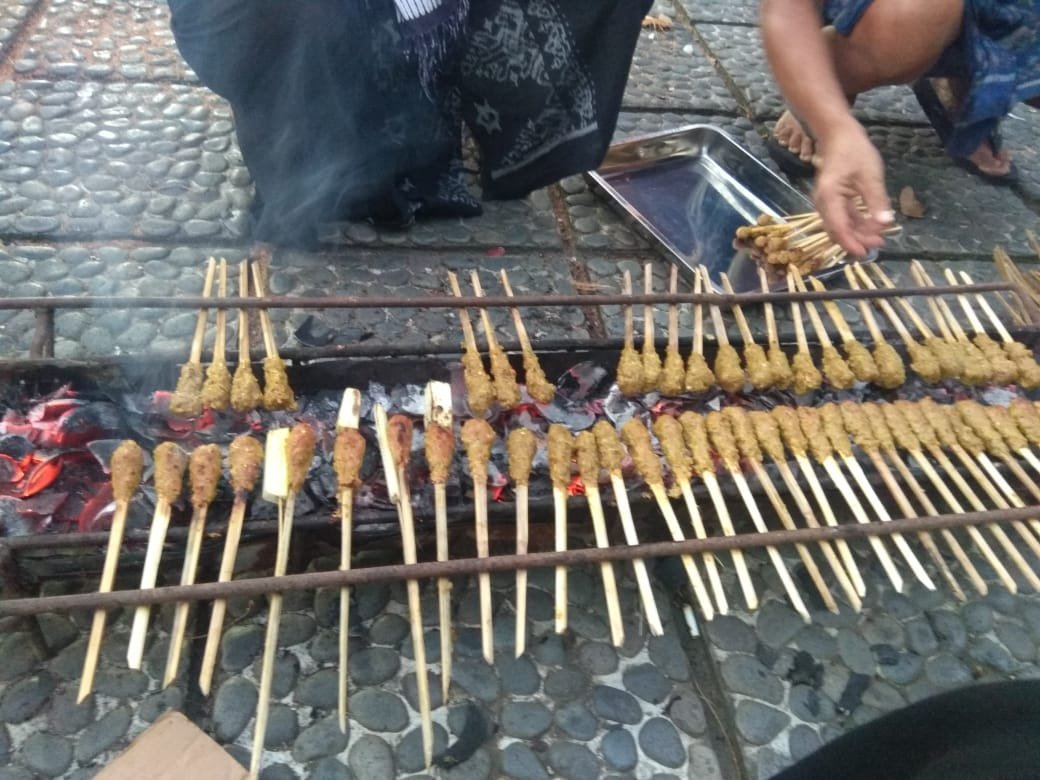
Serve it with rice and a fresh, sharp accompaniment such as sambal matah, or as part of a larger Balinese meal. The sambal’s shallots, chilli and citrus provide a lively counterpoint to the warm, rich sate. The photo above shows a Gianyar-style preparation on bamboo; it is one example, rather than a rule for every part of Bali.
Watch a Balinese chef prepare it
In the video below, Steve Owens cooks with Chef Sigit Purwanto in Bali. Watch how they prepare the spice mixture, press the mince onto the stalks and grill it. Their version also includes sambal matah, giving a useful view of the finished meal.
Video played through Steve Owens’s original YouTube player.