



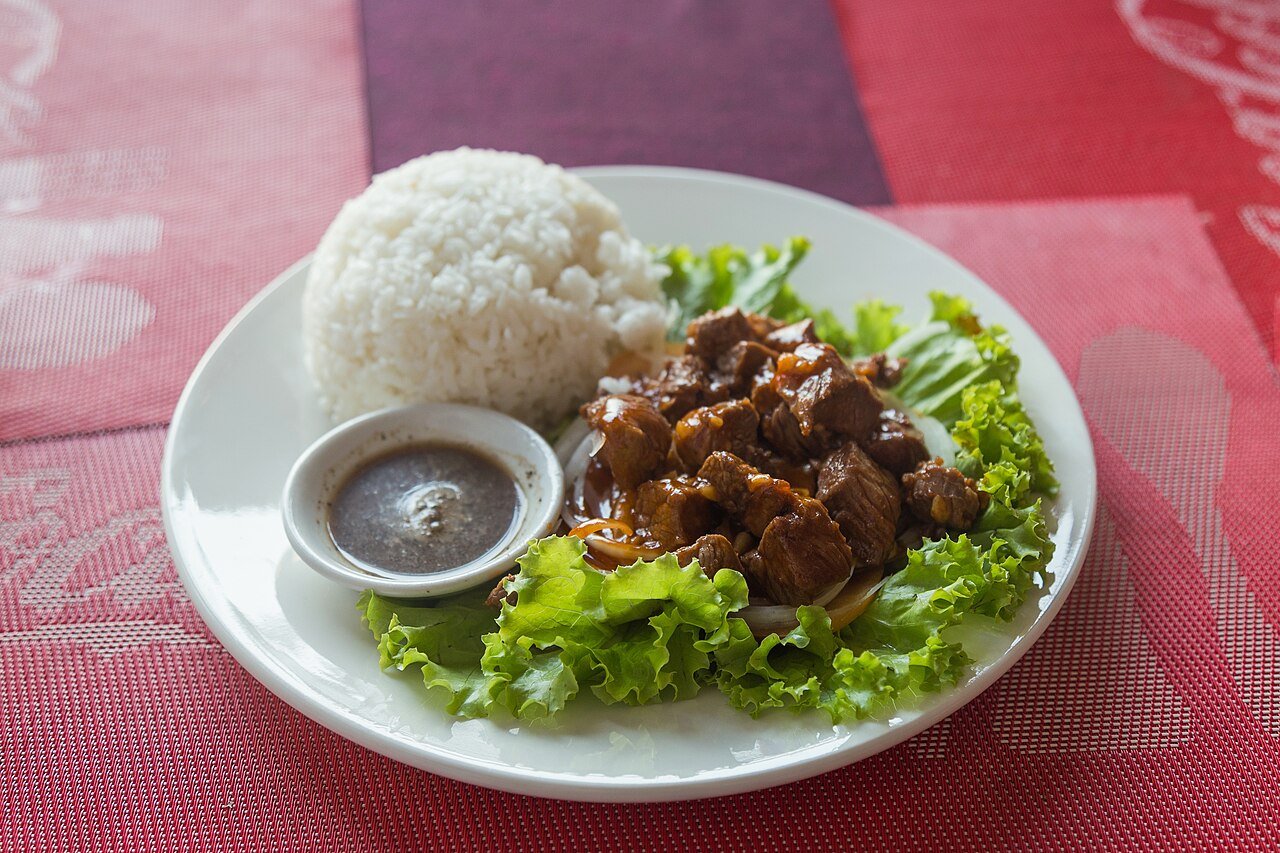
Lok lak is built around a contrast: warm, savoury beef next to cool vegetables and a sharp dipping sauce. The beef is cut into bite-sized pieces and cooked quickly over high heat. On the plate, it may sit with lettuce, tomato, onion, cucumber and rice. A lime-and-pepper dip brings the acidity that makes the next bite feel fresh. The exact arrangement changes between homes and restaurants, as the two photographed servings below show.
Quick heat, tender pieces
The cooking stage is short. A hot pan browns the outside of the beef while keeping the pieces tender enough to eat with rice and vegetables. In a demonstration by Lasses Kitchen Cambodia, the beef is stir-fried and served with a tangy lime-and-pepper dip. That video offers one cook’s sequence rather than a single rule for every lok lak.
When tasting the beef on its own, notice whether the surface has a little sear and whether the seasoning supports the meat. Then add a piece of lettuce or tomato. The cool vegetables change the texture and help balance the rich pan sauce.
Mix the dip to taste
A small dish of pepper and lime gives each diner control over the final flavour. Dip one piece lightly first. The lime should brighten the beef without hiding its savoury taste, and the pepper should add fragrance as well as heat. Some servings include a fried egg; others do not. Rice may be on the same plate or offered separately.
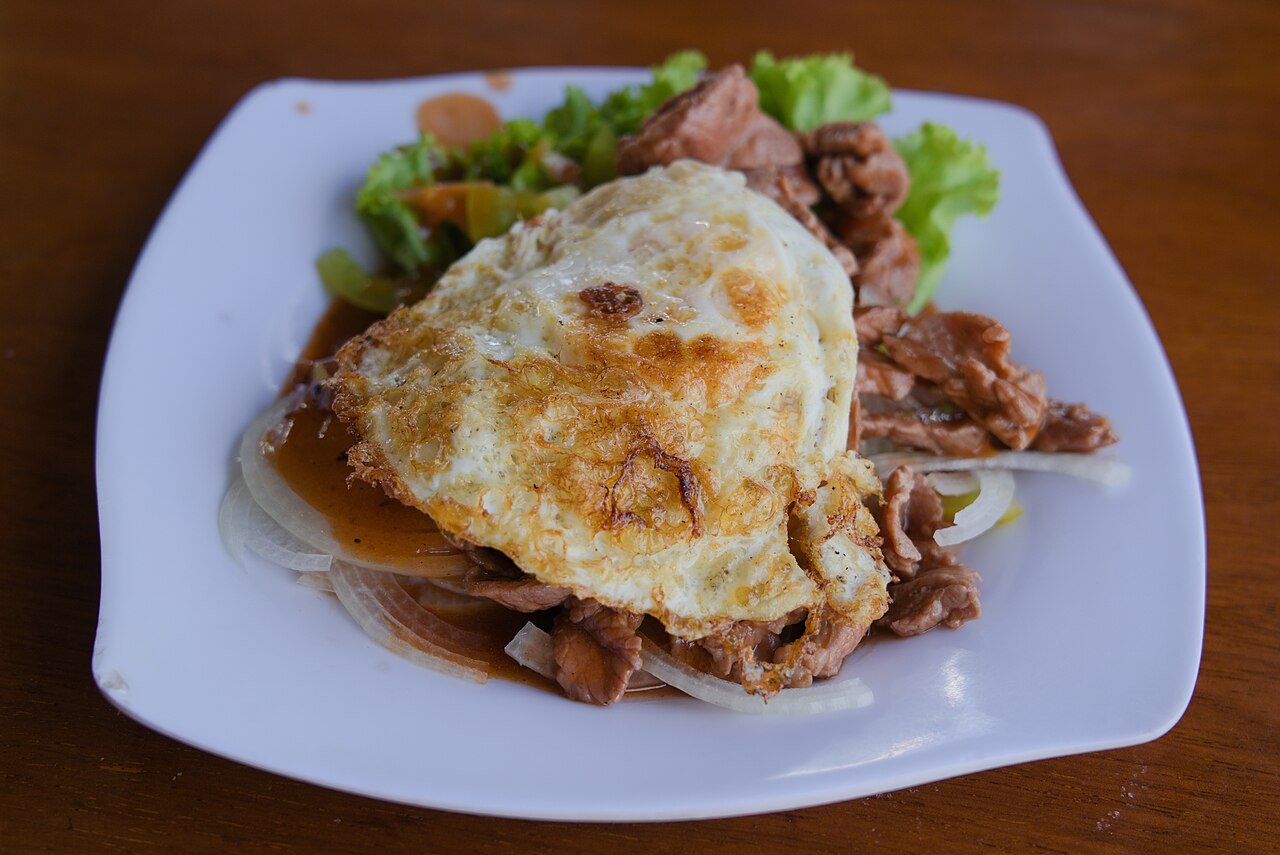
These variations make lok lak easy to explore. Compare the proportion of beef to vegetables, the tenderness of the meat and the strength of the pepper-lime sauce. A good bite lets all three contribute rather than allowing one to dominate.
Watch a Cambodian cook prepare it
Lasses Kitchen Cambodia’s video shows the stir-frying and the dipping sauce in one place, making it a useful companion to the photographs.
Watch through the creator’s original YouTube player.