



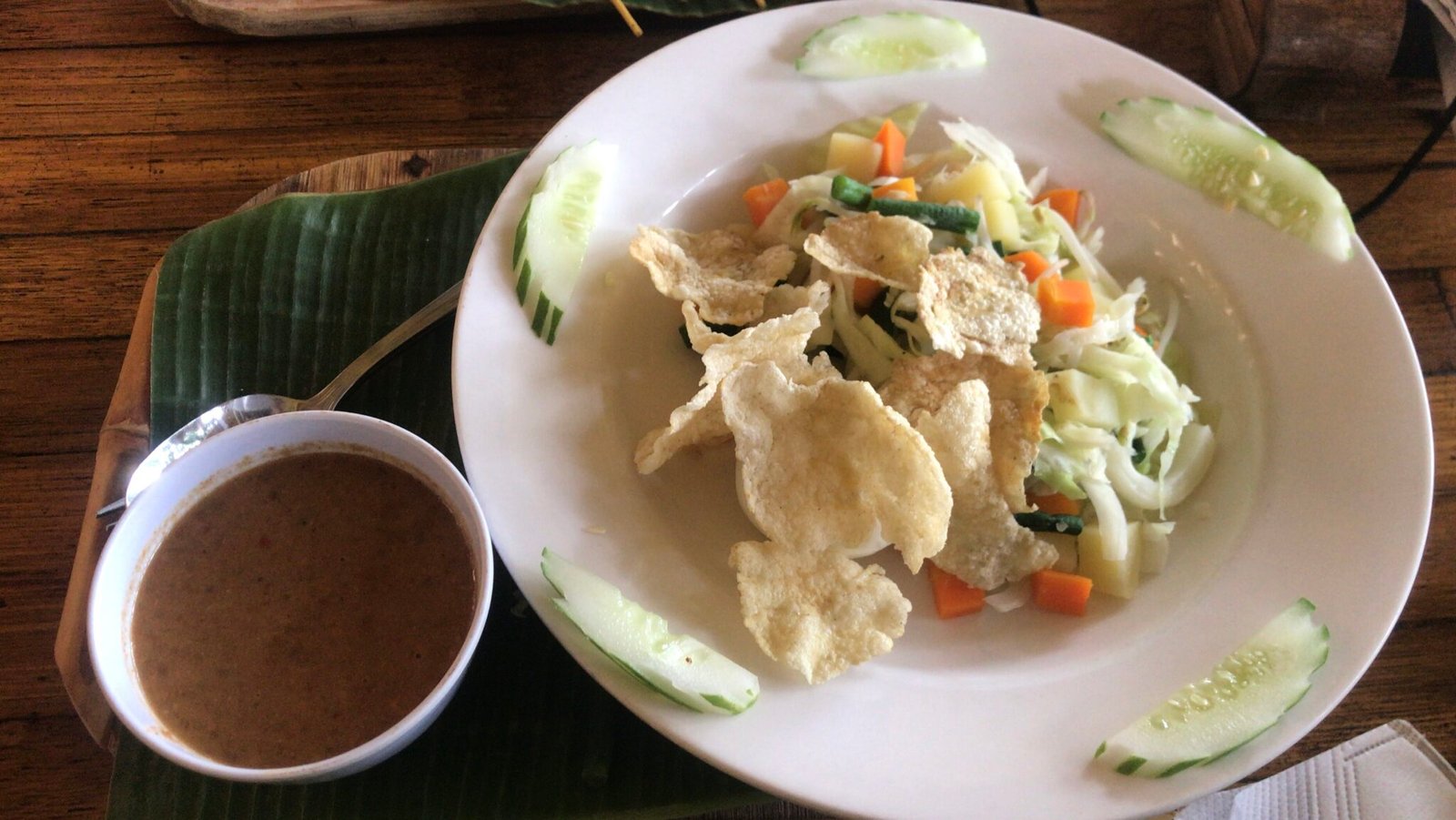

A plate of gado-gado is built from contrasts: vegetables with different bites, soft tofu and tempeh, a substantial peanut sauce, and something crisp on top. Balance the cooked and fresh elements rather than treating the dish as a fixed list of ingredients.
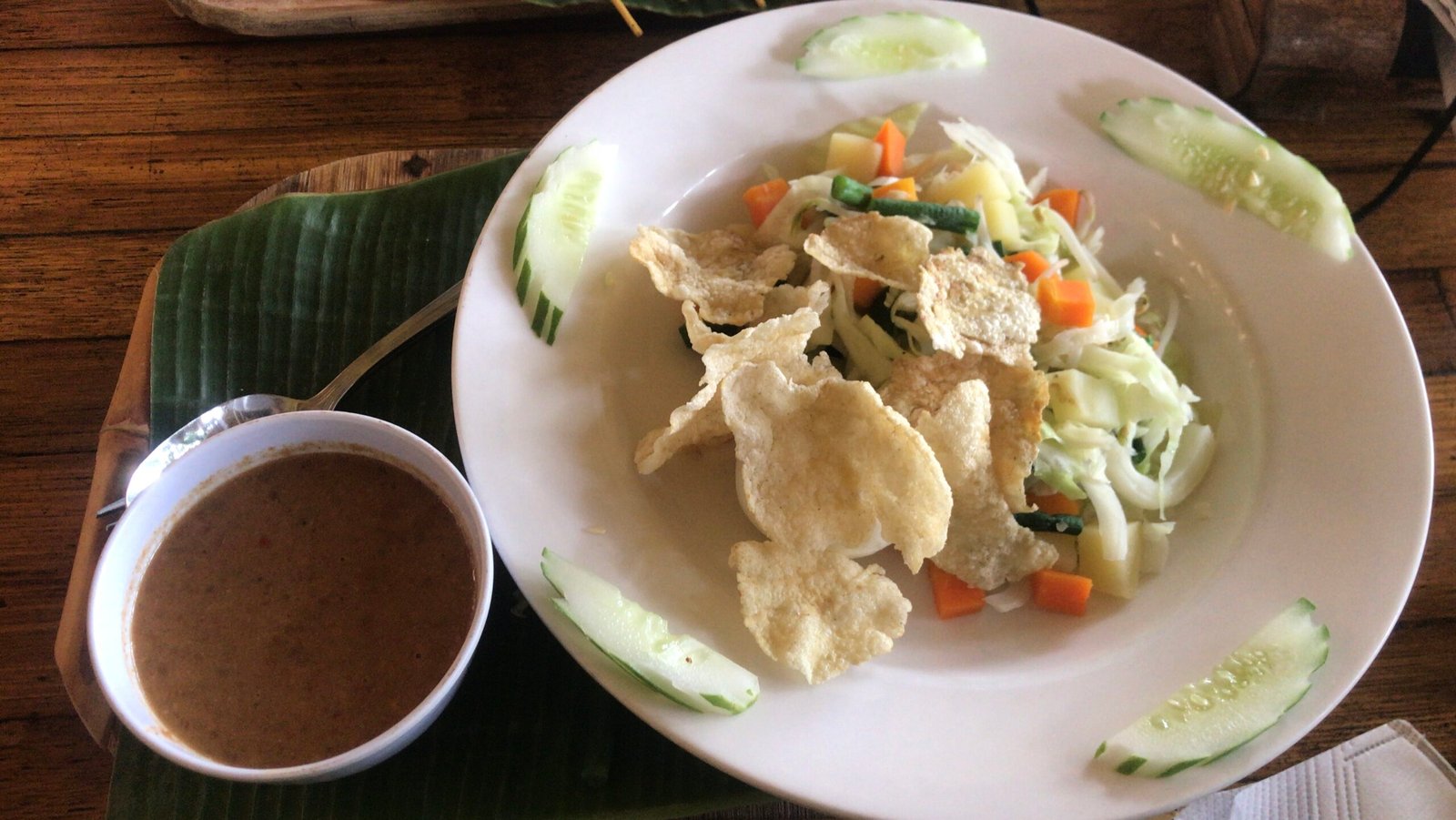
Begin with the vegetables
In Mariska’s West Java-style gado-gado, filmed with Maangchi, greens, beans, cabbage and sprouts are blanched, while cucumber stays fresh. Fried tempeh, tofu and egg make the plate more filling. This is one cook’s regional approach, not a rule for all Indonesia. Choose vegetables with distinct textures, cook each only as long as needed and drain them well.
Wet vegetables dilute the sauce. Let blanched vegetables drain and cool before assembly. Keep cucumber until close to serving so it stays crisp. You can prepare components ahead and bring them together at the table.
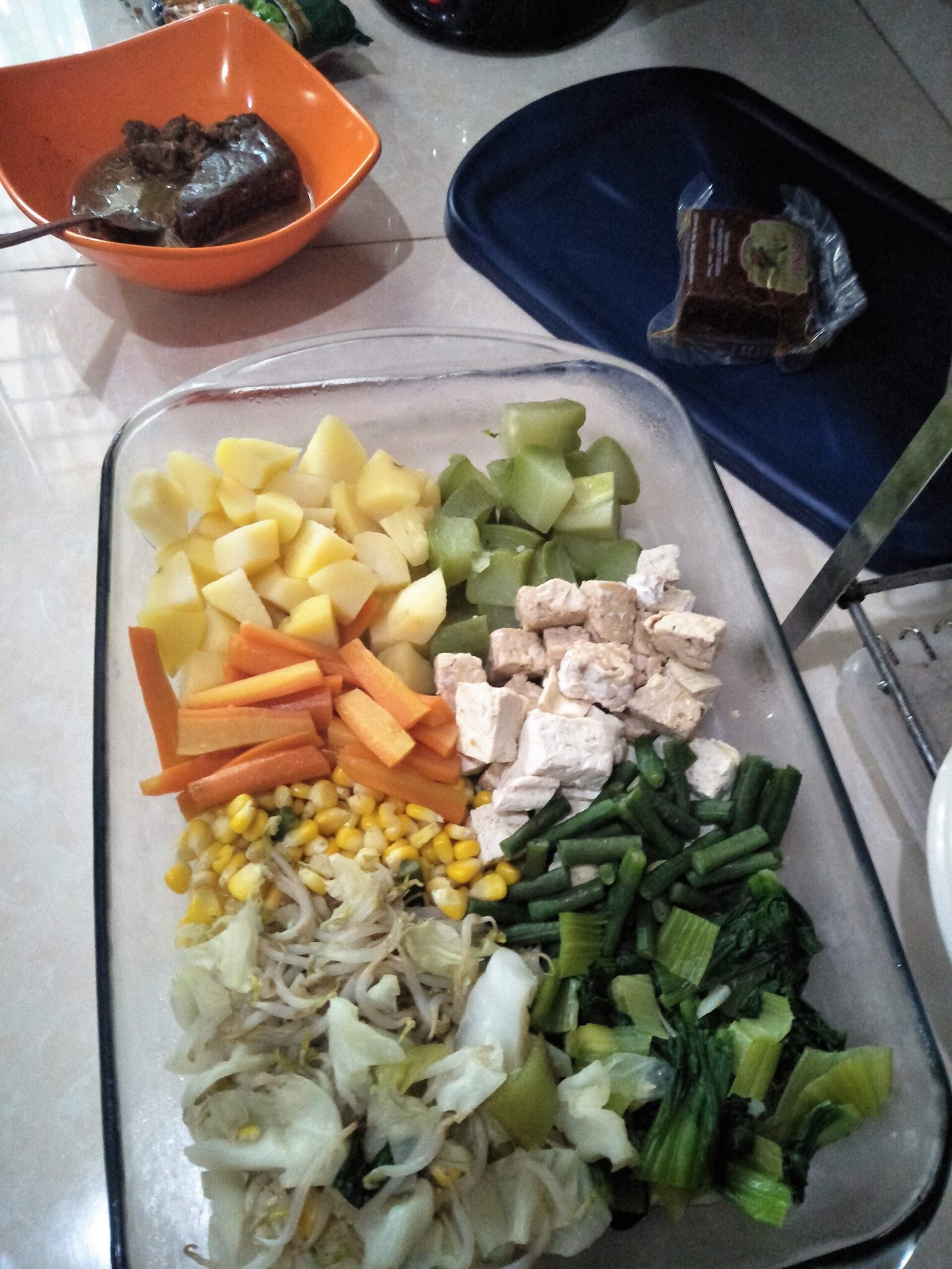
The peanut sauce is the link
Mariska’s version combines roasted peanuts with chilli, palm sugar, tamarind, salt and terasi (shrimp paste). Sweetness, acidity, heat and savouriness should remain distinct. Add water gradually: too thick and the sauce sits in clumps; too thin and it runs off the vegetables. Taste it with a vegetable, rather than by the spoonful alone.
Chef Yongki Gunawan’s gado-gado siram demonstration arranges the ingredients first, then pours sauce over them. The original video below lets you see the consistency and final assembly. Other cooks mix the vegetables into the sauce; both are valid approaches.
Finish with contrast
Fried shallots, emping or crackers add a crisp finish. Add them at the last moment. Serve with lontong or rice for a more substantial meal. A satisfying mouthful has vegetables, enough sauce to bind them and at least one texture that has not gone soft.
Cooking references: Mariska with Maangchi and Chef Yongki Gunawan. This is an original editorial guide comparing approaches.