



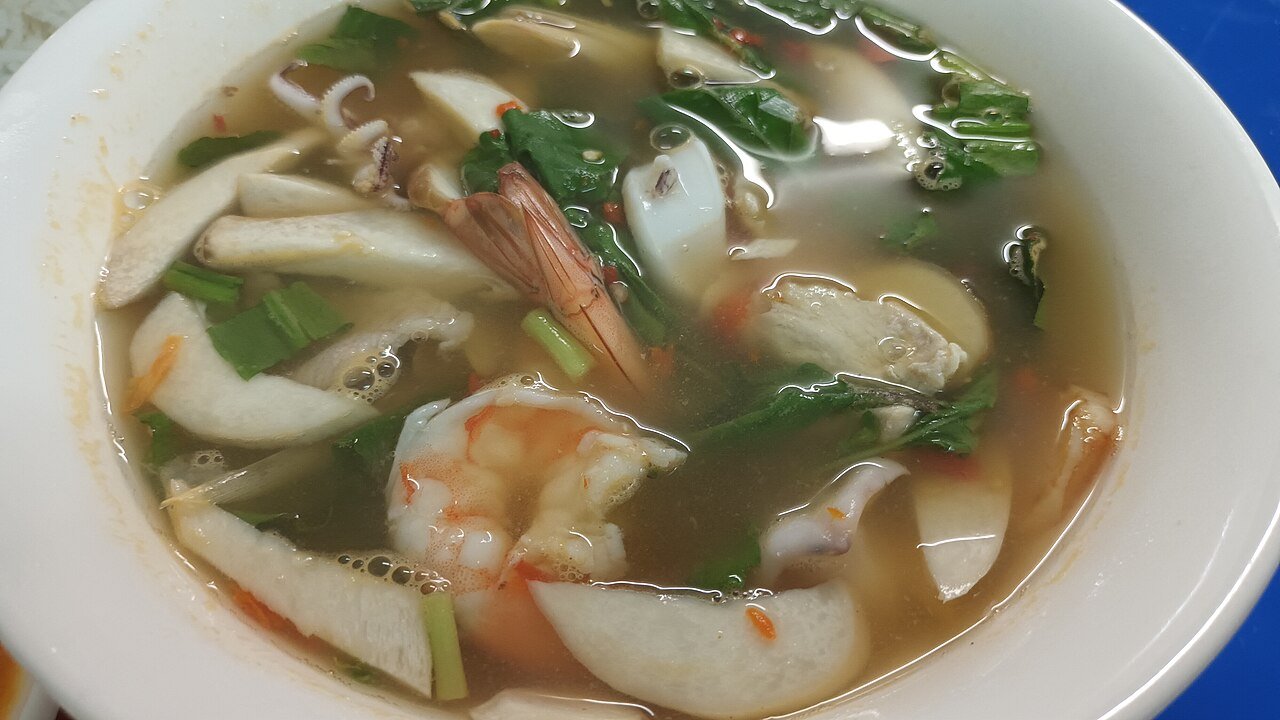
Tom yum is often described as hot and sour, but a good bowl offers more than two loud notes. Lemongrass, galangal and makrut lime leaves scent the broth before chilli brings heat and lime juice sharpens it. Fish sauce adds savoury depth; the stock and main ingredient give the soup its body. Thai cook Pailin Chongchitnant identifies those three herbs as the classic aromatic base of tom yum. Her prawn version is one example of a family of soups that can be clear or creamy and can feature different proteins or mushrooms.
The herbs build the first layer
Bruise lemongrass and tear makrut lime leaves so their aroma reaches the liquid. Galangal contributes a distinct, pine-like warmth. Simmering these with stock gives the broth its recognisable fragrance before the final seasoning is added. The large herb pieces are commonly left in the bowl for aroma, but they are tough and are not intended as the main thing to eat. If serving guests, mention this or remove the pieces after infusing. Mushrooms can be added for texture and to absorb the broth.
Sourness and heat need room to move
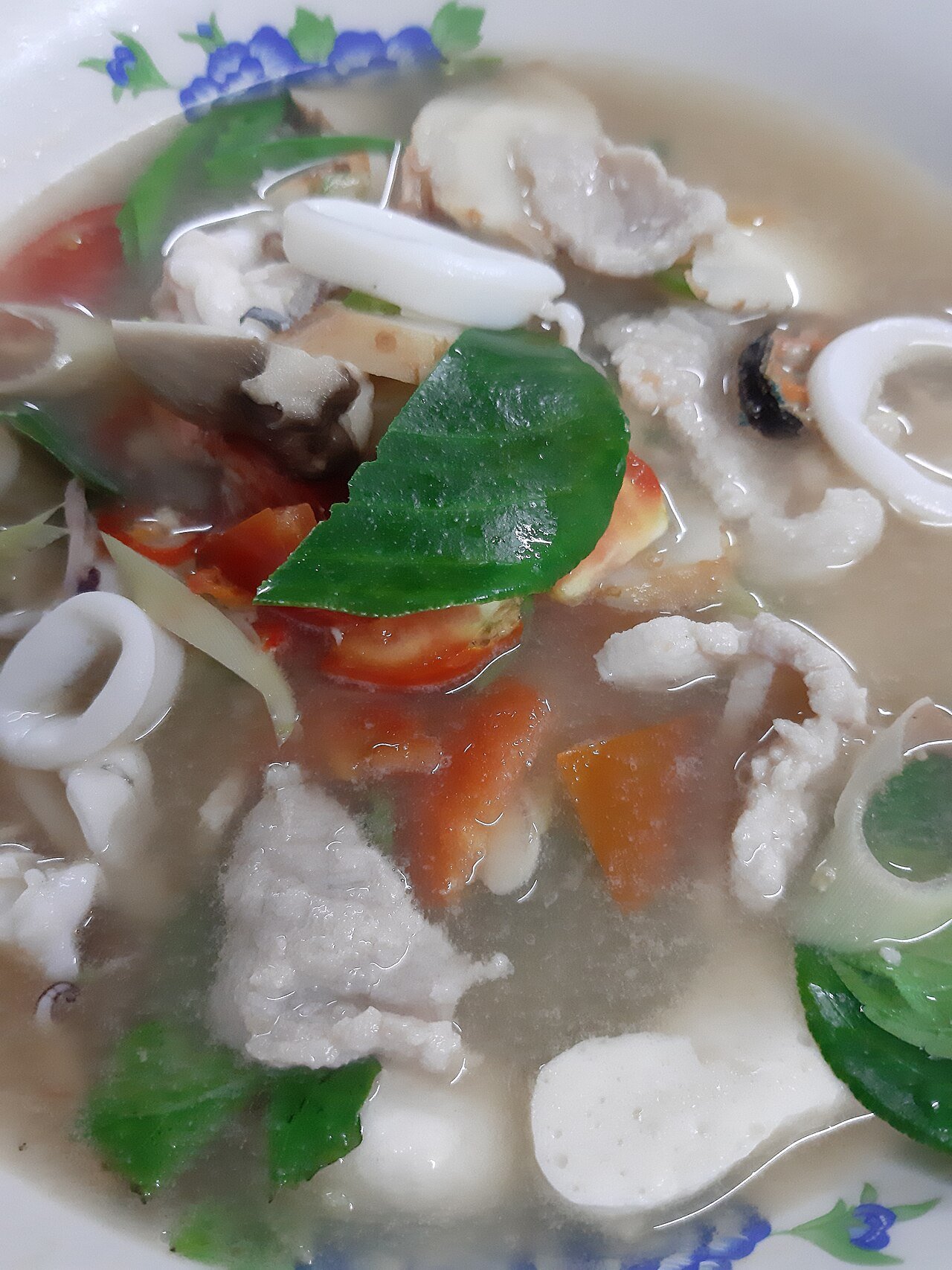
Thai chillies can make the soup fiery, but the quantity is adjustable. Fresh lime juice is best added near the end; Pailin’s method turns off the heat before adding it. Taste after the fish sauce, chilli and lime have joined the stock. If one element overwhelms the others, adjust gradually rather than adding a large amount at once. A spoonful of chilli paste can give some versions extra colour and a richer, slightly sweet-savoury note. Clear tom yum and creamy tom yum may look different, but both rely on the aromatic and sour-spicy balance.
A soup that changes with its main ingredient
Prawn tom yum gains flavour from seafood stock; chicken or mushroom versions have a different base. Cook the main ingredient only as long as needed, particularly prawns, which can become firm if boiled too long. Serve the soup hot with rice as part of a meal. The point is not a single fixed shade of red or a single heat level, but a broth in which the herbs, sourness, chilli and savoury seasoning remain easy to notice.
Watch a Thai cook make tom yum goong
In the embedded video, Pailin Chongchitnant of Hot Thai Kitchen demonstrates tom yum goong and explains the role of the ingredients. Her prawn version gives a clear view of when the aromatics and final seasonings enter the pot.
Video played through the creator’s original YouTube player.