




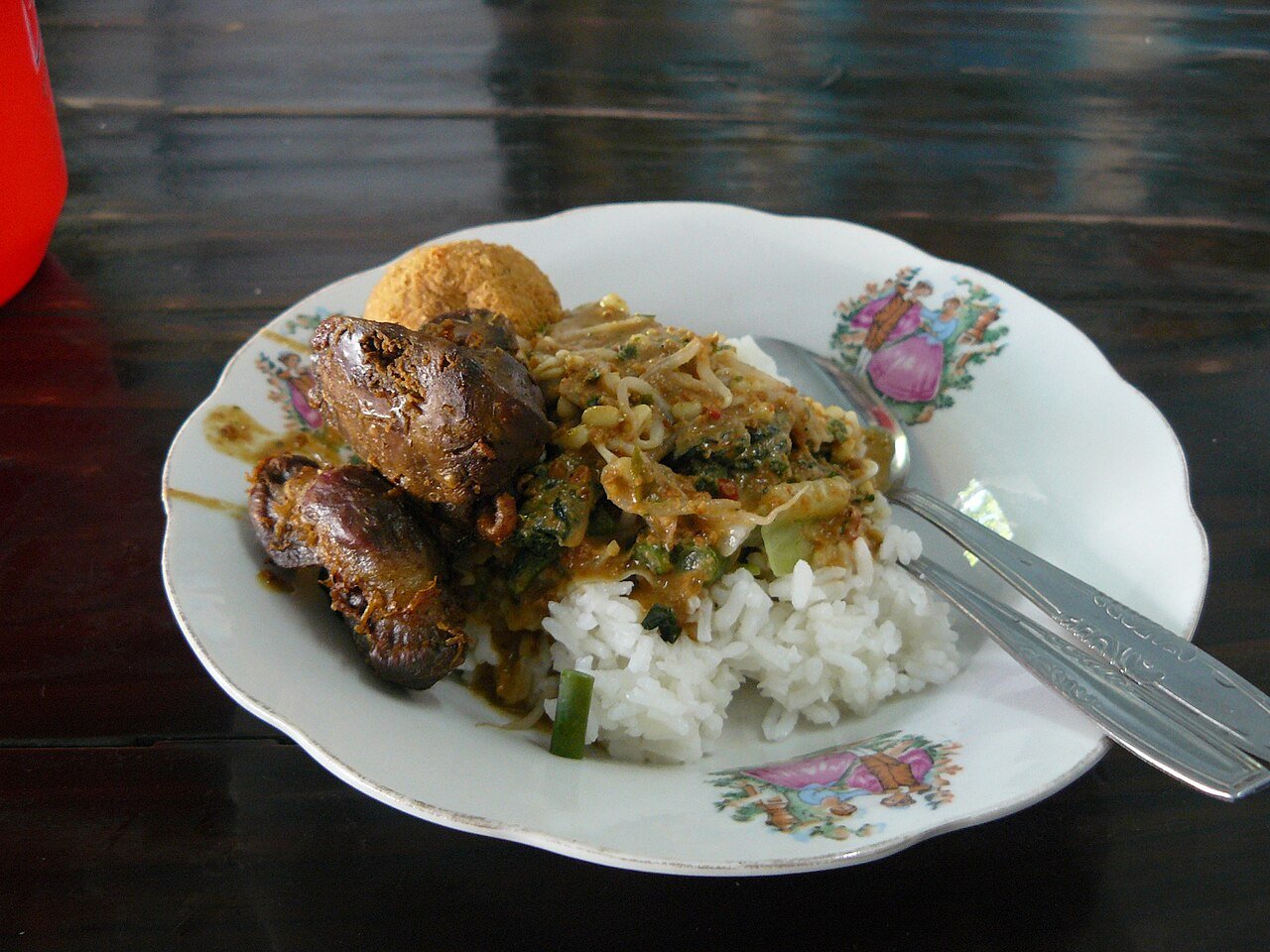
On a plate of pecel, vegetables do much of the work. Warm rice may sit underneath, while cooked greens and bean sprouts are dressed with peanut sauce. A crisp rempeyek or another side can add contrast. Madiun in East Java is closely associated with this style of pecel, but each seller can vary the vegetables, sauce and accompaniments.
Build the plate in layers
Start with rice if you want a full meal. Add a selection of cooked vegetables, such as long beans, water spinach or bean sprouts, allowing each to drain well. Water left on the vegetables can thin the sauce and make the last bites less vivid. The Indonesian Ministry of Tourism’s guide to East Java food describes pecel Madiun as vegetables covered in a spicy-sweet peanut dressing, often with a crunchy peanut cracker.
This is one reason pecel is more than a generic “salad with peanut sauce.” It is a composed meal in which the warmth of rice, the bite of the vegetables and the richness of the dressing meet at serving time. Diners may add tempeh, egg or another lauk, but the vegetable and sauce pairing remains the centre of the plate.
The sauce should coat, not drown
A home-style pecel sauce often begins with peanuts ground with chilli, garlic, palm sugar and aromatics such as kencur or lime leaf. Recipes differ. Add warm water gradually to a prepared peanut paste until it pours but still clings to the vegetables. Taste for a balance of nuttiness, sweetness, heat and salt; a little sourness may be present. Pour just before eating so the vegetables keep their texture.
Read the accompaniments
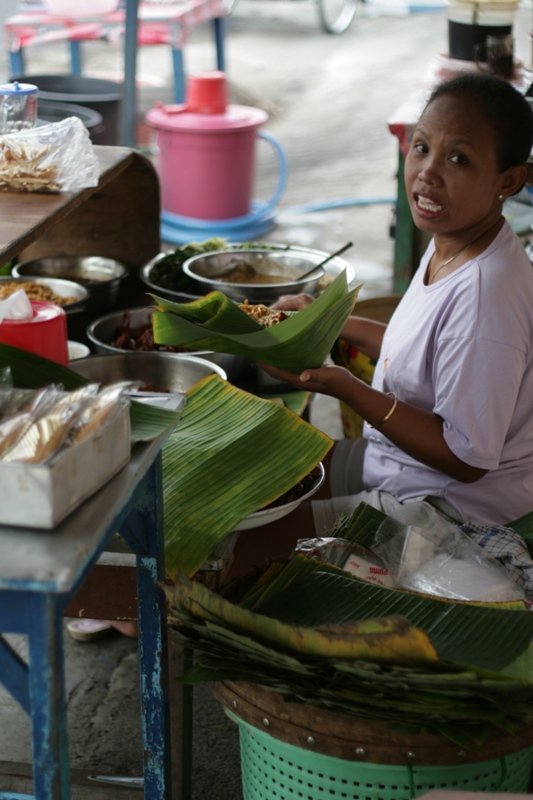
Rempeyek, a thin fried cracker, brings crunch against the soft rice and sauce. A banana-leaf pincuk is another familiar way to serve pecel. The second photograph shows a seller handling a banana-leaf serving in Madiun; it documents one moment in a food stall rather than a claim about how every vendor works today.
If you are trying pecel Madiun for the first time, look at what vegetables and sides the seller has prepared before choosing lauk. Then taste a forkful with the sauce and a piece of cracker together. At home, the same approach works: cook and drain the vegetables, prepare the sauce separately, and assemble only when ready to eat.
Watch one home preparation
Siwi sheancy demonstrates a nasi pecel Madiun preparation in the creator video below. Its choices of vegetables, dressing and presentation are one version of a dish that changes between households and stalls.
Video: Siwi sheancy on YouTube; embedded from the creator’s original player.